



Government cargo from Vatry to Conakry
May 26, 2026 at 2:44 PM
GLS France acquires network of Relais Colis
May 26, 2026 at 3:15 PM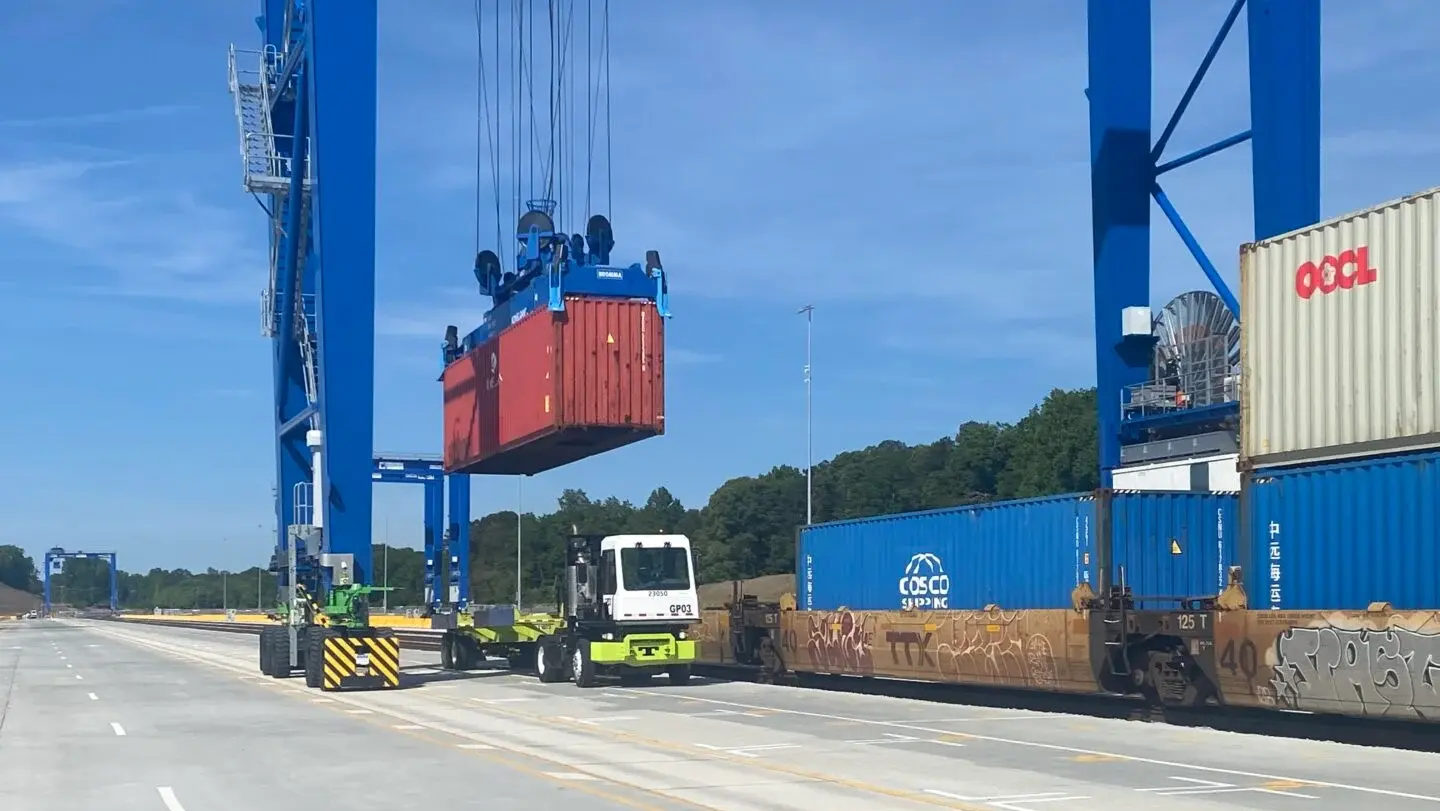
The Georgia Ports Authority (GPA) commenced operations at the Gainesville Inland Port on May 4, 2026. Since then, trains and trucks have been processed daily at the new facility, which provides a direct connection between the inland hub for the manufacturing industry and the Port of Savannah. According to Griff Lynch, President and CEO of the Georgia Ports Authority, the new location extends the reach of the Port of Savannah deep into Northeast Georgia. Manufacturers in the region benefit from seamless rail connectivity, linking over 40 weekly ship arrivals with global markets.
The Gainesville Inland Port offers shippers an alternative to a nearly 1,000 km round trip by truck, which is expected to reduce the number of trucks on Georgia’s roads and in the Atlanta area. The GPA anticipates shifting 26,000 containers to rail in the first year of operation, which could improve traffic flow on the roads and reduce emissions.
Currently, about 80% of the cargo from Savannah is transported by truck and 20% by rail. Rail becomes particularly cost-effective at distances over 400 km, especially in light of rising diesel prices. The port is characterized by high speed and flexibility: there are 40 weekly ship arrivals, 42 double-stack trains connecting inland markets, and an industry-leading dwell time of 20 hours or less for trains. The truck gates process between 14,000 and 16,000 movements daily, with turnaround times for double trips under 50 minutes and for single trips at 30 minutes.
The GPA is collaborating with Norfolk Southern on the new service. At full capacity, the Gainesville Inland Port will achieve an annual capacity of 200,000 containers. To minimize the traffic impacts of the new freight terminal on local communities in Gainesville, the GPA has invested $4.8 million in road projects in Hall County. This includes the elimination of a railroad crossing, the rerouting of White Sulphur Road, and the paving of Cagle Road. The new White Sulphur route south of the inland terminal ensures free access for emergency vehicles and avoids traffic disruptions caused by trains. The paving of Cagle Road also provides an improved alternative for residents. Both projects were completed in late summer 2025.