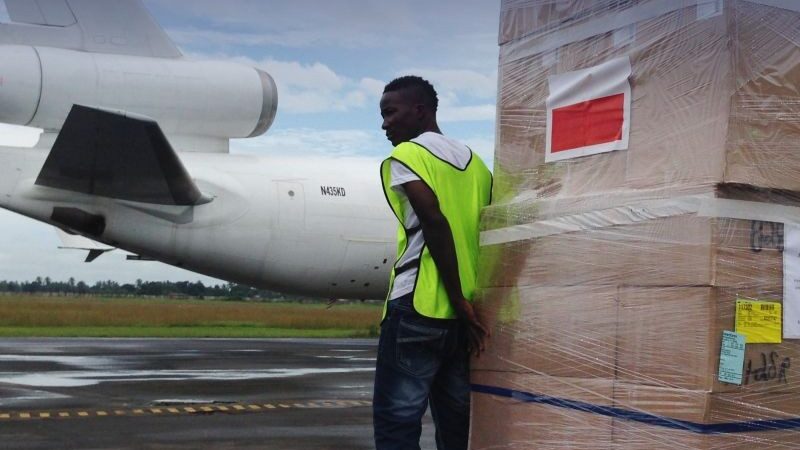





Air cargo hub planned in Algiers
Apr 14, 2026 at 7:35 AM
CargoBeamer opens Stuttgart-Milan connection
Apr 14, 2026 at 9:55 AM
The increasing use of Artificial Intelligence (AI) in the field of customs and compliance presents both opportunities and risks. According to a recent survey by the Customs Support Group (CSG) among 200 European manufacturing companies, 20% of firms are already using AI-powered systems to manage the complex requirements of customs processing. Despite these advancements, there is a significant discrepancy between the use and trust in these technologies. Many companies believe that while AI can be helpful, it is not sufficiently reliable to take responsibility for critical customs processes.
Challenges from AI errors
Bee Newboult, Head of Regional Marketing & Expansion at the Customs Support Group, points out that a central issue with the application of AI in customs is the so-called „hallucinations,“ explaining: „These are plausible but incorrect outputs generated by AI models.“ An example of this is a query from professionals at the International Meat Trade Association (IMTA), who asked an AI model whether it was legal to export chicken feet from the United Kingdom to China. The model incorrectly responded with „yes.“ Such errors can lead to delays and penalties at the border, highlighting the need for human oversight.
Newboult: „The causes of these hallucinations are varied. On one hand, the data used to train the models may contain contradictions or incomplete information. On the other hand, large language models are designed to predict probabilities rather than provide exact answers. When the training data is ambiguous, the model fills in the gaps with plausible-sounding but incorrect information.“
The role of human expertise
The CSG survey shows that companies in Europe are taking a cautious approach to implementing AI in customs compliance. The figures suggest that many firms are experimenting initially rather than immediately adopting AI. The accuracy of classification and responsibility for regulatory requirements take precedence over automation for many companies.
„Despite the growing interest in AI-powered customs tools, it is important for companies to use these technologies responsibly,“ emphasizes Newboult. Clear formulations and careful reviews of the results are crucial to harness the benefits of AI while minimizing risks. While AI tools can automate many manual steps in the customs processing workflow, human expertise remains indispensable. Success in customs strategy continues to depend on the combination of AI technology and human knowledge.