



Cargo flights from Glasgow to Hong Kong announced
Apr 23, 2026 at 12:00 PM
Toga Freight from Ireland joins ASTRE Europe
Apr 23, 2026 at 12:21 PM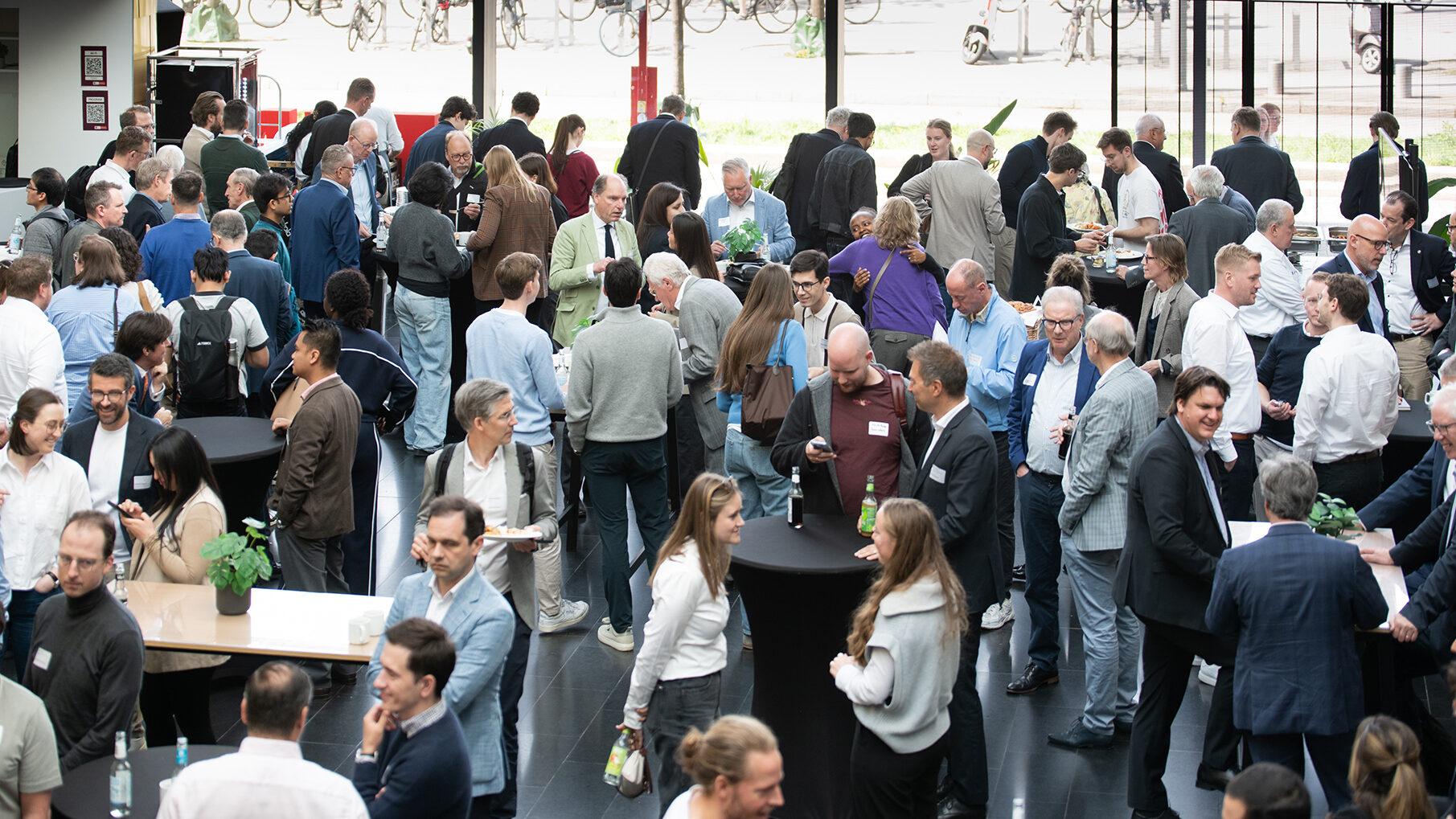
The era of globalized supply chains has fundamentally changed. Companies are responding to the challenges of today by rethinking their production strategies. Instead of purely global just-in-time supply chains, many firms are opting for nearshoring, re-industrialization, or regional partnerships. These changes lead to more complex and expensive, but also more resilient supply chains. The 20th Logistics Day of the Kühne Foundation, held on April 17, 2026, at the Kühne Logistics University (KLU) in Hamburg, addressed these developments and the new requirements for leaders associated with them.
Leadership in Times of Uncertainty
“Disruption is no longer the exception, but the norm. Companies need guidance and judgment,” explained Prof. Dr. Andreas Kaplan, President of KLU, in his opening speech. He emphasized that the logistics industry has traditionally been good at weighing conflicting goals, such as speed versus sustainability or resilience versus efficiency. In times of uncertainty, those responsible for logistics and supply chain management are particularly challenged to master these issues.
Change in Global Trade Structures
In his keynote, Prof. John Manners-Bell, founder of the Foundation for Future Supply Chains and CEO of Ti Insight, outlined a paradigm shift in the structure of global supply chains. He pointed out that the global supply chains, which in the past lifted millions out of poverty and promoted economic growth, are under pressure. Political tensions and trade conflicts have significantly influenced global trade in recent years. Manners-Bell noted that companies are increasingly restructuring their supply chains and considering alternative models such as re-industrialization and circular economy.
The numbers support this change: Chinese exports to the USA fell by 29.7 percent in 2025, while exports from Southeast Asia rose by 28.9 percent. “This is not a decline in global trade, but a redistribution,” said Manners-Bell. Companies are actively responding to the new conditions and adjusting their strategies accordingly.
Practical Challenges Using Nike as an Example
A concrete example of the impact of these changes was provided by Manners-Bell through the sportswear manufacturer Nike. Tariffs on Chinese exports led to additional costs of around one billion dollars for the company. Nike is increasingly shifting its production to Vietnam, Indonesia, and the Philippines, while the share of production in China is decreasing. Manners-Bell explained that Nike is planning a comprehensive transformation of its supply chain and is faced with the decision of whether to raise prices, shift production to other Asian countries or the USA, or lower margins.
New Requirements for Leadership Skills
Dr. Niklas Wilmking, Managing Director of the Kühne Foundation, emphasized that today it is no longer just about moving goods efficiently. Rather, it is crucial to implement strategic goals under uncertainty. According to Wilmking, the best leaders will be those who take responsibility for invisible structures and complex conflicting goals. He pointed out that the bottleneck in the future will no longer be computing power, but the ability to prioritize and take responsibility in leadership.
The Logistics Day of the Kühne Foundation, held in collaboration with HELP Logistics and the Kuehne Climate Center, provided more than 200 participants with the opportunity to discuss topics such as AI in supply chain planning, CO₂ removal technologies, and the role of electric trucks in Africa in specialized sessions. A central concern was the question of how companies can reconcile resilience and sustainability without driving costs up.