




WLFC: Marilyn Gan leads Origination APAC
Mar 5, 2026 at 3:53 PM
Promotions at Fleet Advantage
Mar 6, 2026 at 7:29 AM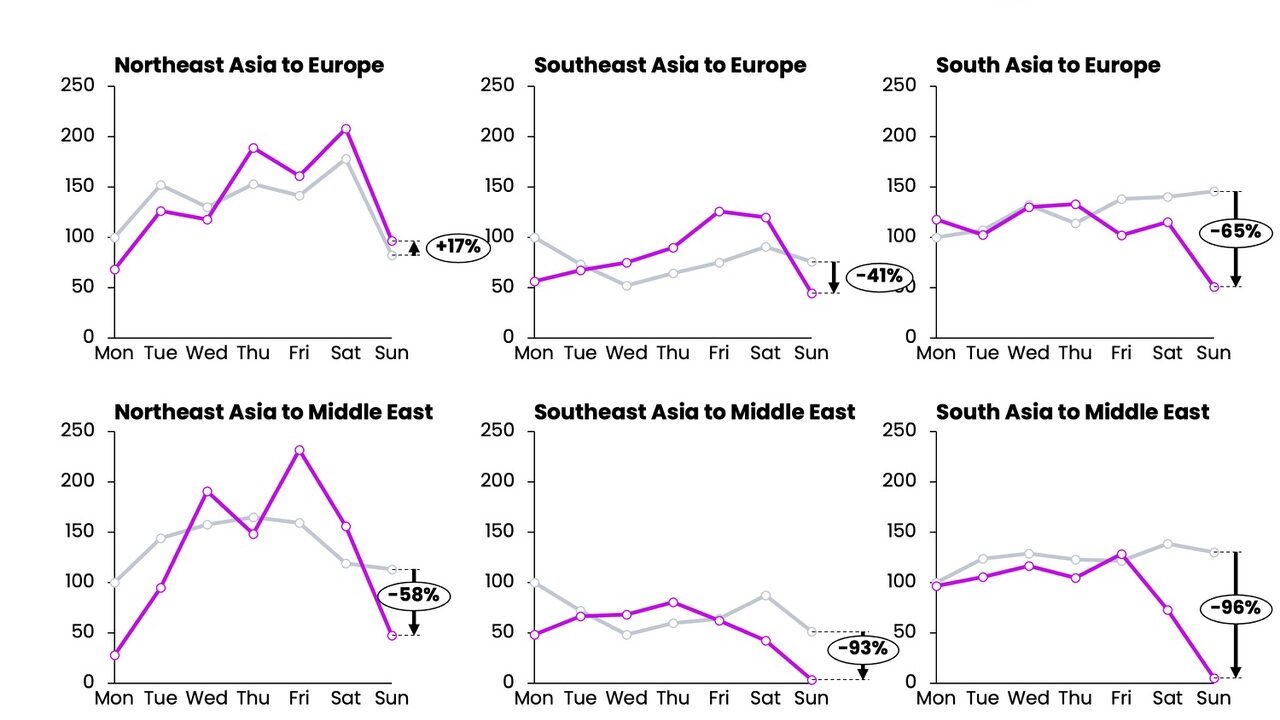
The demand in the air freight market increased by 6% in February 2026 compared to the previous year, continuing the positive trend of recent months. This development indicates a certain resilience of the market, despite the global trade and economic turbulence of the past year. However, the outlook for the market could be called into question again due to the escalating conflict in the Middle East, according to Xeneta, a company specializing in market analysis.
In February, demand growth exceeded capacity increase, which was at 4% year-on-year. This led to an increase in the so-called dynamic load factor by two percentage points to 62%. Air freight spot rates recorded their first increase since May 2025 in February, rising by 5% to $2.58 per kg.
Regional Challenges
At the regional level, the Europe-North America route saw the largest increase in air freight spot rates in February, with a year-on-year rise of 21%. The demand for semiconductors also contributed to the price recovery in the Northeast Asia-North America corridor, which also experienced double-digit growth of 10%.
However, there were also negative impacts on demand from China to the USA, while volumes from China to Europe remained relatively stable. These developments suggest that the typical pre-Christmas demand in 2025 was not repeated, raising questions about market development in 2026.
Impact of the Middle East Conflict
The military attacks on Iran by the USA and Israel, which began on February 28, have severely disrupted international air traffic in the Middle East and immediately led to a 12% decline in global air freight capacity. Key regional hubs such as Doha, Dubai, and Abu Dhabi temporarily suspended flight operations, which had immediate effects on the air freight corridor between Asia and Europe.
The uncertainties regarding fuel prices, influenced by rising crude oil prices, pose an additional challenge. Analysts are already reporting Brent crude oil prices above $80 per barrel, which could potentially exceed $100 if oil production infrastructure is attacked due to tensions in the Middle East.
Outlook for 2026
Niall van de Wouw, Chief Airfreight Officer of Xeneta: “On February 21, we thought the main discussion of the month would be the US Supreme Court’s decision to overturn the comprehensive ‚emergency‘ tariffs of the Trump administration. But then we experienced the attacks on Iran on February 28 and the subsequent events. Reactions to previous macroeconomic events show that the global air freight industry is capable of finding creative solutions. However, this will result in higher logistics costs for the goods owners. In the coming weeks, the vulnerability and strength of the air freight industry may again be in focus.”