



Amazon uses Shinkansen for package delivery
Jun 4, 2026 at 1:55 PM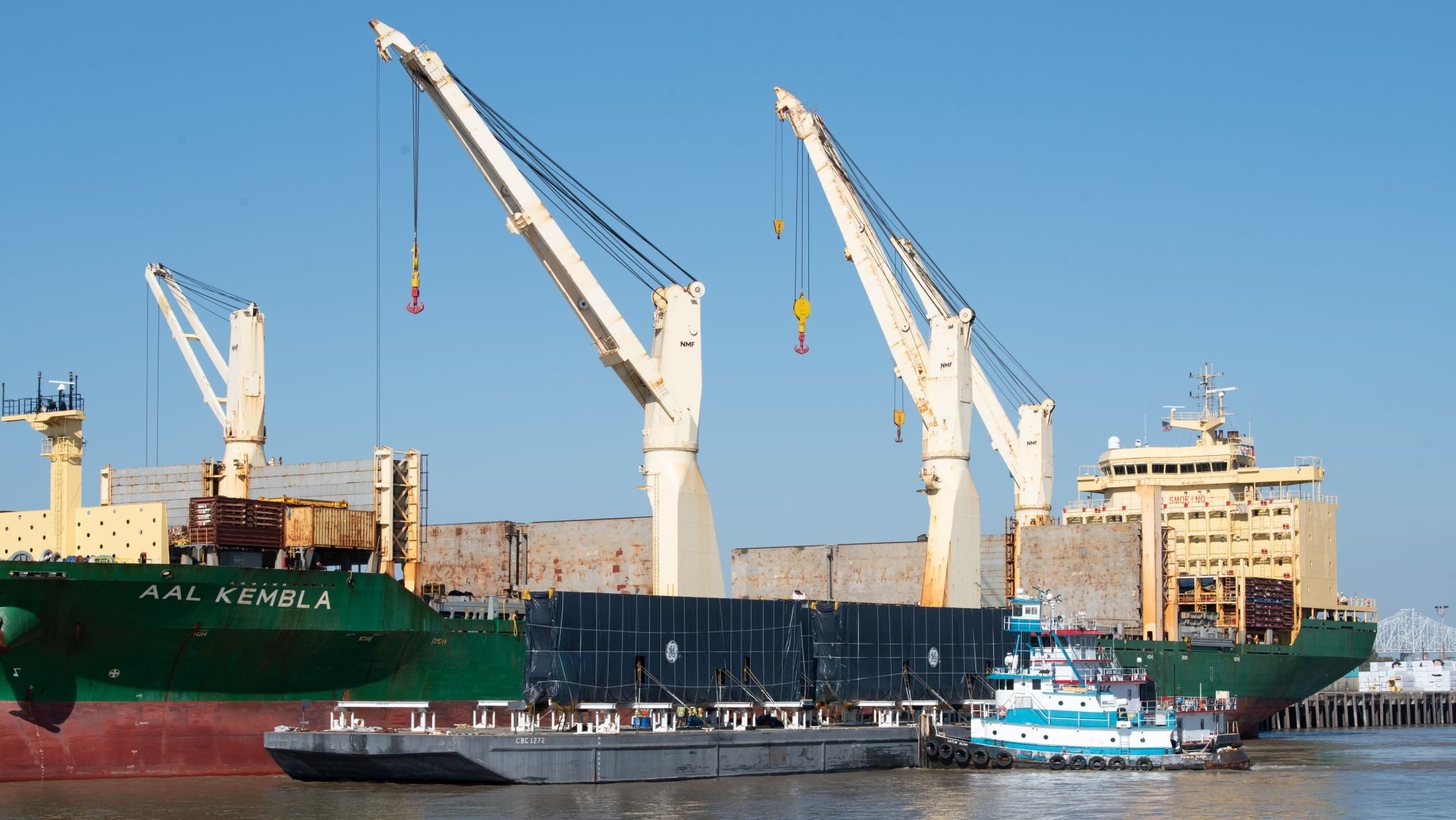
The Port Authority of New Orleans (Port NOLA) and the New Orleans Public Belt Railroad (NOPB) have announced a partnership with the newly established logistics company UTC Transoceanic. The aim of this collaboration is to integrate advanced technologies in artificial intelligence and digital rail technologies into one of the key hubs for oversized transport in the United States.
The partnership seeks to address one of the largest challenges in global logistics: the safe and efficient transport of extremely large and heavy industrial equipment through the U.S. rail network. Given the increasing demand for energy infrastructure, data centers, and industrial manufacturing, the transport of oversized shipments, such as large transformers, components for wind turbines, and industrial generators, is becoming increasingly important. A significant portion of this equipment is delivered by ship from overseas and must then be transported inland by rail, as roads are often not suitable for the size and weight of the cargo.
Optimization of the transport process
The Port of New Orleans already serves as a significant hub for heavy loads and project cargo, with direct access to all six major U.S. railroads via the New Orleans Public Belt Railroad. However, planning such oversized transports can take weeks or even months, as each shipment must be carefully checked for bridge clearances, tunnel restrictions, and track infrastructure.
The partnership with UTC Transoceanic aims to significantly simplify this process. UTC Transoceanic is a recently established joint venture between the New Orleans-based company Transoceanic, led by Greg Rusovich, and the global logistics company UTC Overseas from Houston. Together, the companies are utilizing patented technologies for rail freight clearance and a digital model of the NOPB rail network based on the Palantir Foundry platform.
“This technology changes the game for customers conducting oversized transports,” said Beth Branch, President and CEO of Port NOLA and CEO of the New Orleans Public Belt Railroad. “Planning a large industrial transport can today require weeks of engineering services and coordination among multiple railroads before a customer even knows if a route is feasible. What UTC Transoceanic brings to New Orleans helps provide answers almost immediately. This is a significant advantage for shippers, manufacturers, and project developers making multimillion-dollar logistics decisions.”
At the heart of the partnership is a new application called TEID-RDC, which allows shippers to input the dimensions, weight, and specifications of the railcars into a digital platform. This platform can quickly determine whether the cargo can be transported through the rail network and recommend the best routing options.
Beneath this application lies a “digital twin” of the New Orleans Public Belt Railroad, which represents a live digital replica of the rail network and continuously tracks information on clearances, bridge assessments, and infrastructure conditions in real-time.
For the maritime community, the introduction of this technology could have significant implications. It positions New Orleans as an intelligent and predictable hub for project cargo, while global supply chains are increasingly characterized by speed, visibility, and data analytics capabilities. Shippers of oversized transports often choose ports not only based on their port infrastructure but also on how efficiently the cargo can be transported inland after leaving the port.