




IFR VDMA AER sign declaration in Barcelona
Jul 13, 2026 at 8:11 AM
Rock-It opens branch in Abu Dhabi
Jul 13, 2026 at 8:57 AM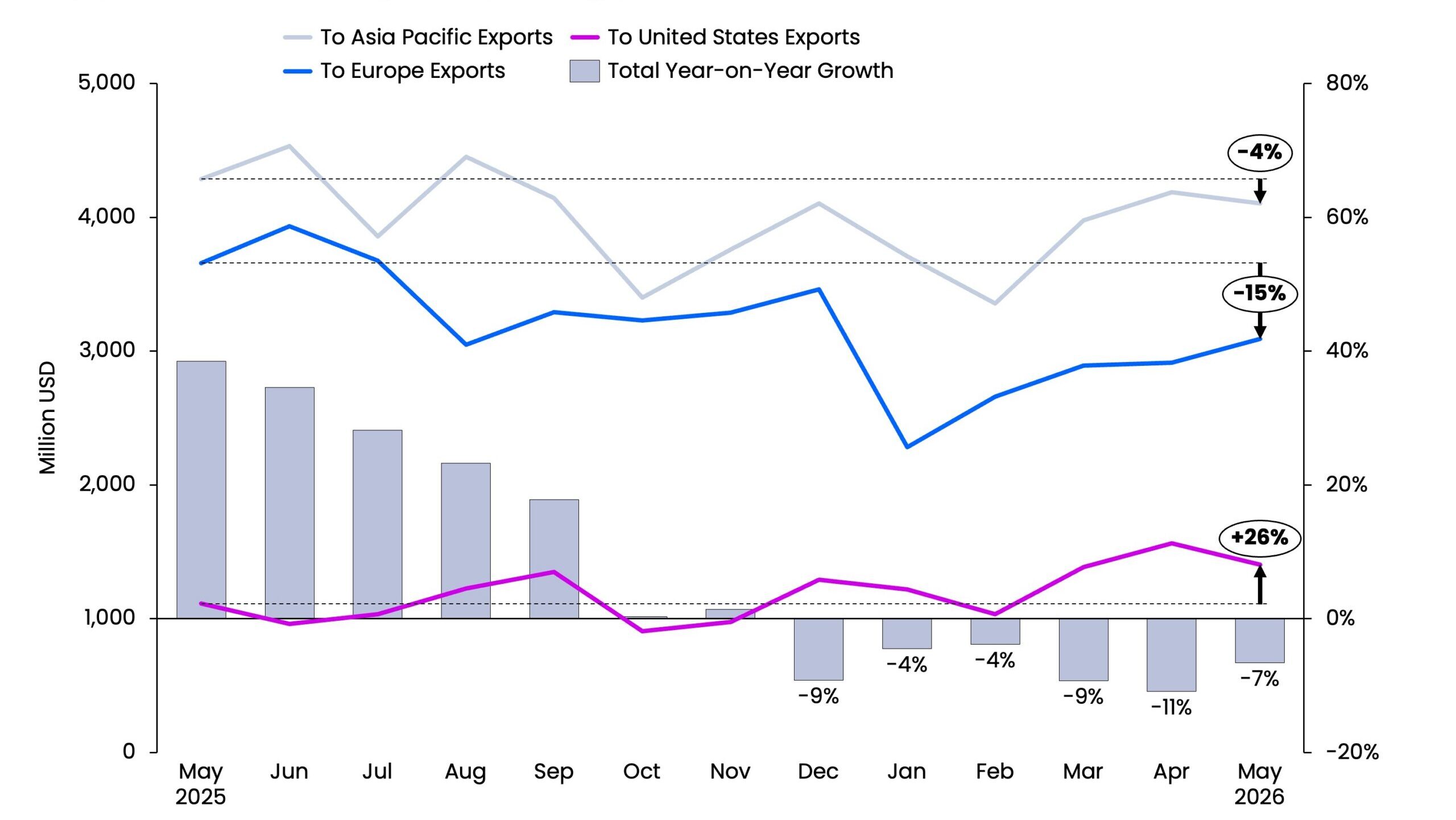
The global demand for air freight increased by 7% in June 2026, primarily due to the exceptional demand for semiconductors and AI-related hardware products. However, according to the latest market data from the analysis company Xeneta, there are signs of a calming in spot prices, which are declining in line with expectations following the easing of the conflict in the Middle East, the restoration of capacities at major airports in the Gulf region, and a decrease in jet fuel prices.
Global spot prices for air freight rose by 38% in June compared to the previous year, averaging $3.40 per kg. However, Xeneta noted that growth is slowing, having been at 41% in May. This suggests that the market is stabilizing in terms of pricing.
Sustainable demand driven by AI
Demand remains surprisingly strong, as volumes in the field of Artificial Intelligence (AI) offset the decline in e-commerce, which has been the main growth driver for air freight over the past two to three years. Niall van de Wouw, Chief Airfreight Officer at Xeneta, described the demand growth in June as remarkable, pointing out that current air freight volumes „defy gravity,“ mainly due to the rising AI-related shipments on routes between the Asia-Pacific region and North America.
„The impacts of AI are easy to underestimate, as it constitutes only a small part of the total air freight volume – less than 10% of what is transported. But the facts confirming its role as a key driver of air freight growth are undeniable,“ said van de Wouw.
Global semiconductor sales more than doubled in April compared to the previous year, rising by 106%, marking the strongest growth since the World Semiconductor Trade Statistics Organization began recording data in 1986. This increase has made the transpacific route the strongest air freight corridor this year, even as volumes between China and the USA declined due to tariffs.
Although global air freight prices show signs of easing, prices on the corridors from Northeast and Southeast Asia to North America, which benefit most from AI-related shipments, are a clear indication of success in the AI sector. These increased by 41% and 42% in the last week of June compared to the end of February.
Sustainable demand and e-commerce decline
Despite the slowing price growth, demand shows little sign of cooling. The 7% growth in June exceeded expectations, while supply grew by 3%, mainly due to the return of capacities that had been suspended due to disruptions in the Middle East. This imbalance increased the dynamic load factor by three percentage points compared to the previous year to 62%.
Demand for air freight is expected to rise by 4% in the first six months of 2026 compared to the previous year, which was not anticipated according to Xeneta in its latest Air Freight Outlook Update.
However, the e-commerce demand that has driven air freight growth in recent years shows signs of decline. China’s e-commerce exports (chart) and low-value goods fell by 7% in May compared to the previous year, marking the sixth consecutive decline. The situation varies by destination: shipments to Europe fell by 15%, to Asia-Pacific by 4%, while flows to the USA increased by 26%, but remain below pre-ban levels of the de minimis exemption.
Part of the decline could represent a shift, as individual B2C packages are being converted into larger, consolidated air freight deliveries that are not captured in e-commerce package data. Nevertheless, the underlying trend is clear: after years as the largest growth element of air freight, the B2C e-commerce engine has come to a standstill.