





Customs accelerates lobster landings
Jun 11, 2026 at 11:35 AM
WACO elects new board team in Athens
Jun 11, 2026 at 11:59 AM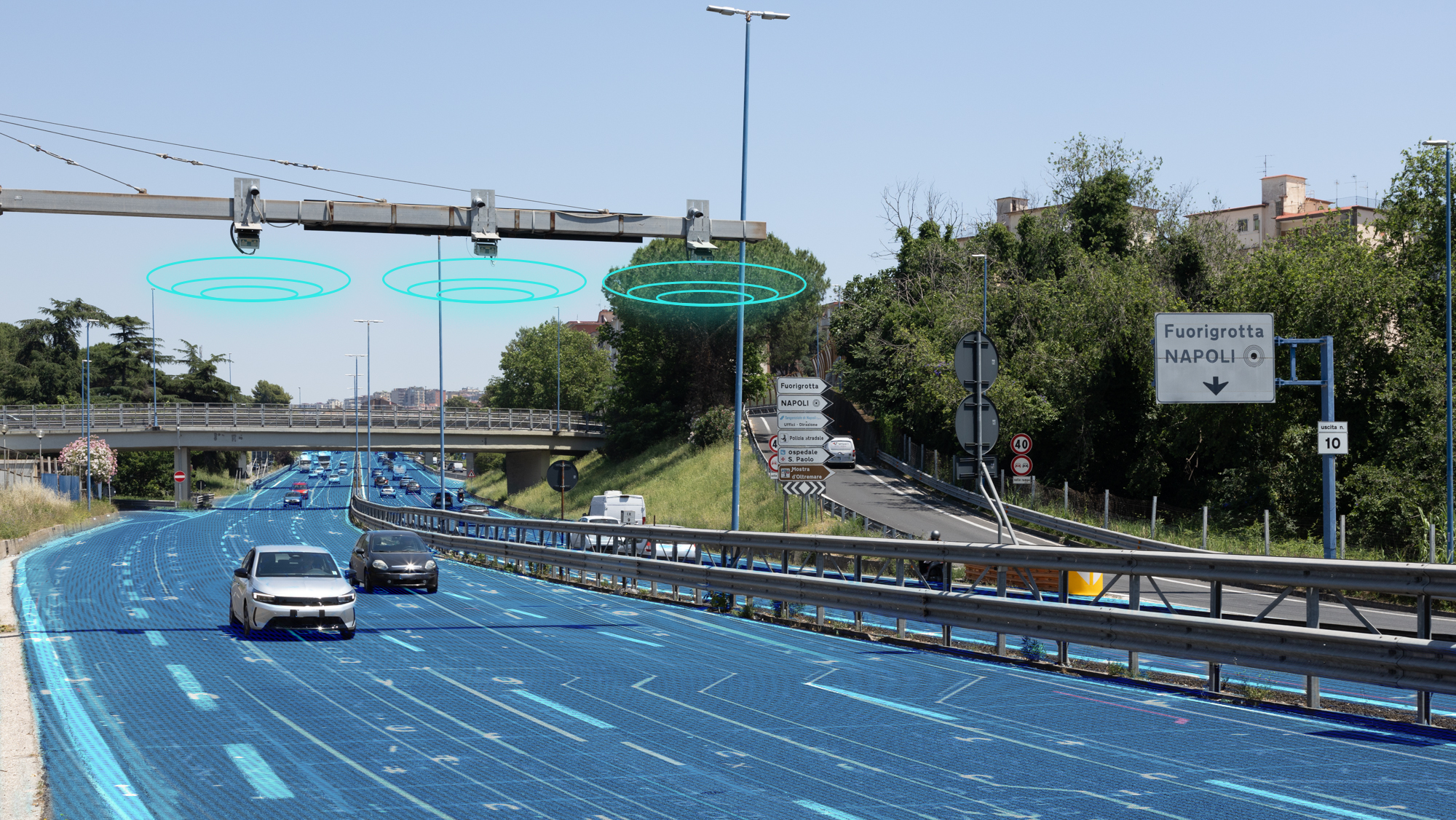
The Tangenziale di Napoli has become the first road in Italy to receive official certification as a Smart Road. This was announced on June 10, 2026. The certification was granted by the Ministry of Infrastructure and Transport (MIT) and is based on the requirements of Ministerial Decree 70/2018. The Tangenziale di Napoli, which belongs to the Autostrade per l’Italia group, has thus adapted to the technological standards necessary for the digitization of traffic management and communication with connected and autonomous vehicles.
Technological innovations in traffic
The project to transform the Tangenziale into a Smart Road was carried out in collaboration with the MIT and the National Center for Sustainable Mobility (MOST), with technological support from Movyon, an innovation center of the group. The Tangenziale will thus become a testing ground for smart mobility in Italy.
Arrigo Giana, the CEO of Autostrade per l’Italia, emphasized the importance of this step:
“We are aware of the responsibility that comes with managing Italy’s most important highway infrastructure. It is crucial that this continuously evolves to ensure a high level of safety for the infrastructure and its users.”
The Smart Road is characterized by three main features:
1. Traffic Monitoring: Sensors along the road collect traffic data that is used to support decision-making in traffic management.
2. Weather and Risk Monitoring: Sensors measure meteorological data and the condition of the roadway to detect potential hazards such as flooding or landslides early.
3. Communication between Vehicle and Infrastructure: Technologies enable bidirectional communication, allowing vehicles to receive information about traffic conditions and hazards in real-time.
The Tangenziale di Napoli will be equipped with a variety of smart cameras, sensors, and communication antennas that collect and analyze data on traffic flows, speeds, and critical events in real-time. Currently, there are 217 cameras, 15 detection portals, eight weather stations, and 40 antennas installed along the 22 km stretch, enabling comprehensive monitoring and communication.
Practical applications and future developments
The infrastructure allows for the real-time communication of potential hazards such as construction sites or technical breakdowns to connected vehicles. Additionally, an optimal speed is recommended to avoid traffic jams. A notable test was conducted in the section between Vomero and Fuorigrotta, where an autonomous vehicle adjusted its speed in real-time based on the information provided by the infrastructure.
The certification as a Smart Road not only enhances safety and traffic management in urban areas but could also serve as a model for the introduction of similar technologies throughout Italy. The Tangenziale di Napoli thus represents a significant step towards connected and cooperative mobility.