



VELUX & LOTS Group launch electrification project
May 26, 2026 at 6:29 AM
Hans Heiner Honold passes away on May 17, 2026
May 26, 2026 at 7:23 AM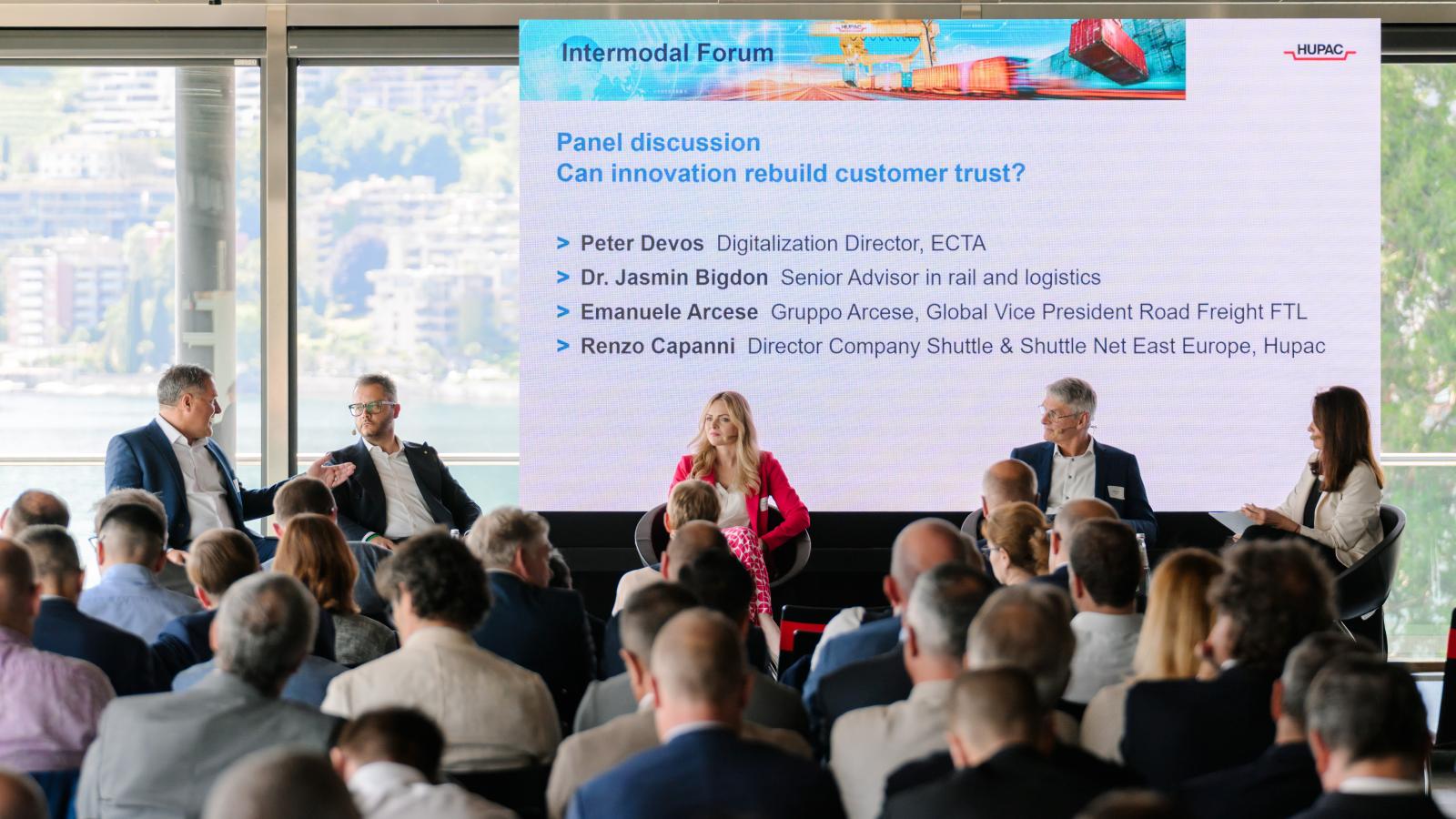
On May 22, 2026, over 200 guests from across Europe gathered in Lugano, Switzerland, for the Hupac Intermodal Forum. Under the motto „Building Trust, Delivering Reliability – The Future of Intermodal Transport,“ leading representatives from logistics, industry, and politics discussed the challenges and perspectives of intermodal transport. Four main presentations and in-depth panel discussions addressed key topics and issues in the sector.
Challenges in intermodal transport
At the center of the debates was the question of how to strengthen and sustainably regain customer trust in combined transport. Participants recognized that construction work and capacity bottlenecks will be unavoidable in the coming years. This means that customers will have to expect increasing irregularities and restrictions. Against this backdrop, it is even more important for the industry to offer reliable solutions despite these challenging conditions to win and retain customers in combined transport in the long term.
Hans-Jörg Bertschi, Chairman of the Hupac Board of Directors, emphasized: „Combined transport is at a crucial turning point. The coming years will determine whether Europe can shift freight transport from road to rail.“
Essential prerequisites for a successful transformation were highlighted, including a reliable infrastructure with internationally coordinated planning and execution of construction work, high-capacity diversion routes that ensure at least 90 percent of regular track capacity, and the early integration of large construction projects into the annual scheduling process.
Digital transformation as the key
Another central theme was digital transformation, which poses a significant challenge for the sector. To make the entire transport chain efficient, actors, systems, and processes must be seamlessly digitally interconnected. This requires common standards as well as interoperable digital platforms and handling systems.
Furthermore, political decision-makers are also called upon to provide the shipping and logistics industry with planning and investment security. In this context, Switzerland has taken a pioneering role and set important priorities. This spring, the parliament decided to continue operating cost subsidies for combined transport beyond the year 2030. Another central issue remains the reform of the track pricing system in Germany, which is necessary to strengthen the long-term competitiveness of rail transport compared to road transport.
During the forum, several experts delivered keynote speeches that illuminated central aspects of intermodal transport.
– Logistics expert Dr. Maria Schmidt addressed the need for integrated infrastructure and presented innovative approaches to optimizing the transport chain.
– Transport economist Prof. Klaus Müller discussed the economic challenges of intermodal transport and the role of political framework conditions.
– Digitalization specialist Anna Weber presented solutions for the digital networking of actors in intermodal transport and emphasized the importance of interoperable systems.
The keynotes and discussions at the Hupac Intermodal Forum highlighted the urgency of addressing the challenges in intermodal transport and setting the course for a sustainable future development.