



Robin van Veldhoven becomes Operations Manager at Broekman
May 5, 2026 at 2:54 PM
Amazon invests in France
May 6, 2026 at 6:41 AM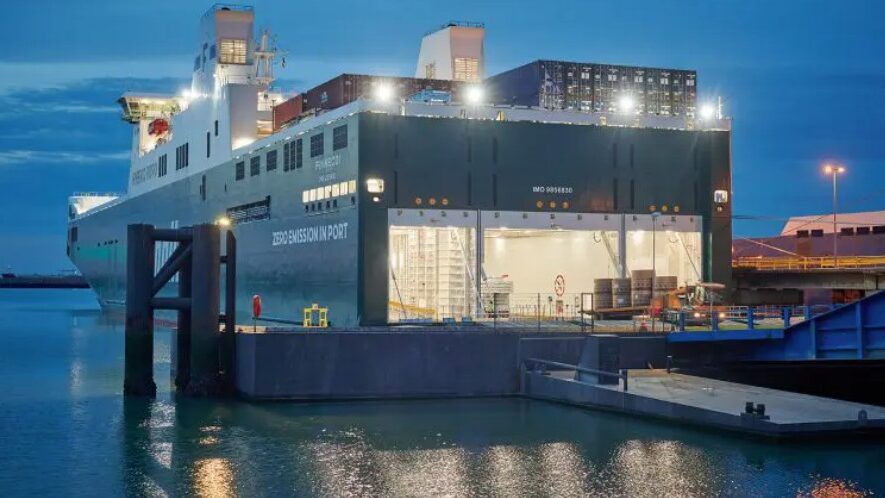
Finnlines achieved stable results in the first quarter of 2026, despite the global challenges characterized by geopolitical tensions and economic uncertainties. The company emphasizes its commitment to ensuring reliable commercial and industrial transport under all circumstances and responding to changes in the business environment through long-term investments.
Geopolitical Influences on the Market
The first three months of the year were marked by structural volatility for the entire shipping industry. In particular, the conflict in the Middle East, triggered by the U.S. and Israeli attack on Iran on February 28, 2026, and the closure of the Strait of Hormuz, led to significant disruptions in the global oil market. Finnlines was immediately faced with a rise in fuel prices and increased price volatility. The delay in adjusting the increased fuel costs in the bunker adjustment factor (BAF) had short-term negative effects on the company’s financial results.
In addition to the challenges posed by the global energy crisis, new requirements of the EU Emissions Trading System (ETS) came into effect on January 1, 2026, mandating that ships must cover 100 percent of their emissions. This resulted in significant new carbon surcharges, further increasing costs for intra-European trade.
Financial Stability in the First Quarter
Despite these challenges, Finnlines recorded a stable financial start in the first quarter of 2026. The revenue of the Finnlines Group amounted to EUR 176.9 million from January to March, compared to EUR 166.0 million in 2025. The company’s financial position remains strong. Earnings before interest and taxes (EBIT) were EUR 10.3 million, while earnings before taxes (EBT) slightly exceeded the previous year’s figure of EUR 7.9 million, reaching EUR 8.0 million, attributed to lower financing costs.
Overall, Finnlines transported approximately 196,000 cargo units in the first quarter, including 19,000 cars (excluding passenger vehicles) and 297,000 tons of non-uniform cargo. Additionally, 162,000 private passengers and professional drivers traveled with the company.
Commitment to Maritime Logistics
Despite geopolitical uncertainties, Finnlines reaffirms its commitment to providing critical maritime logistics infrastructure that ensures the integrity of the European internal market, thereby contributing to Europe’s strategic autonomy. The company sees it as its mission to reliably facilitate the flow of trade and industrial transport under all conditions and to respond to changes in the business environment through long-term investments.
By continuously investing in new and energy-efficient ships, Finnlines not only reduces its emissions but also its vulnerability to rising energy costs. Combined with the ongoing optimization of services, capacities, and routes, Finnlines will play a central role in supporting economic growth, ecological responsibility, and supply security in the Baltic Sea region.