



Outokumpu to Produce Biochar at Mukran Port
Dec 8, 2024 at 7:47 PM
Martin Haller Resigns as Head of Gateway Basel Nord
Dec 12, 2024 at 7:40 PM
Every year, THE FREIGHT RAILWAYS determine the capacity increase in the currently 33,400 kilometers long DB rail network through newly constructed and expanded lines. This year, the federal government as the client and financier and DB InfraGO as the builder are still not steering towards a shift in traffic. The promised improvement of the situation on the rail network by the federal government and DB will not be achieved at this pace.
(Berlin) DB InfraGO will have only 48.2 kilometers of newly constructed or expanded railway lines in operation by 2024. This corresponds to approximately the distance from Cologne to Düsseldorf. The road network has grown by about 10,000 kilometers in the same period, which is 200 times faster. However, more capacity in the rail network is urgently needed for the shift in traffic and transport. “If Germany continues to build at this pace, it will be difficult to meet the transport policy goals of the coming years,” estimates Ludolf Kerkeling, Chairman of the Board of THE FREIGHT RAILWAYS. One such goal is to increase the market share of rail in freight transport to 25 percent by 2030. Kerkeling is concerned that the government and DB now want to further slow down the already minimal new construction and expansion. They refer to the undoubtedly necessary renovation of the existing network. “Capacity for more trains can only be created through new construction and expansion. We need renovations and new construction at the same time; otherwise, we will squander the future opportunities of rail in freight and passenger transport,” says Kerkeling.
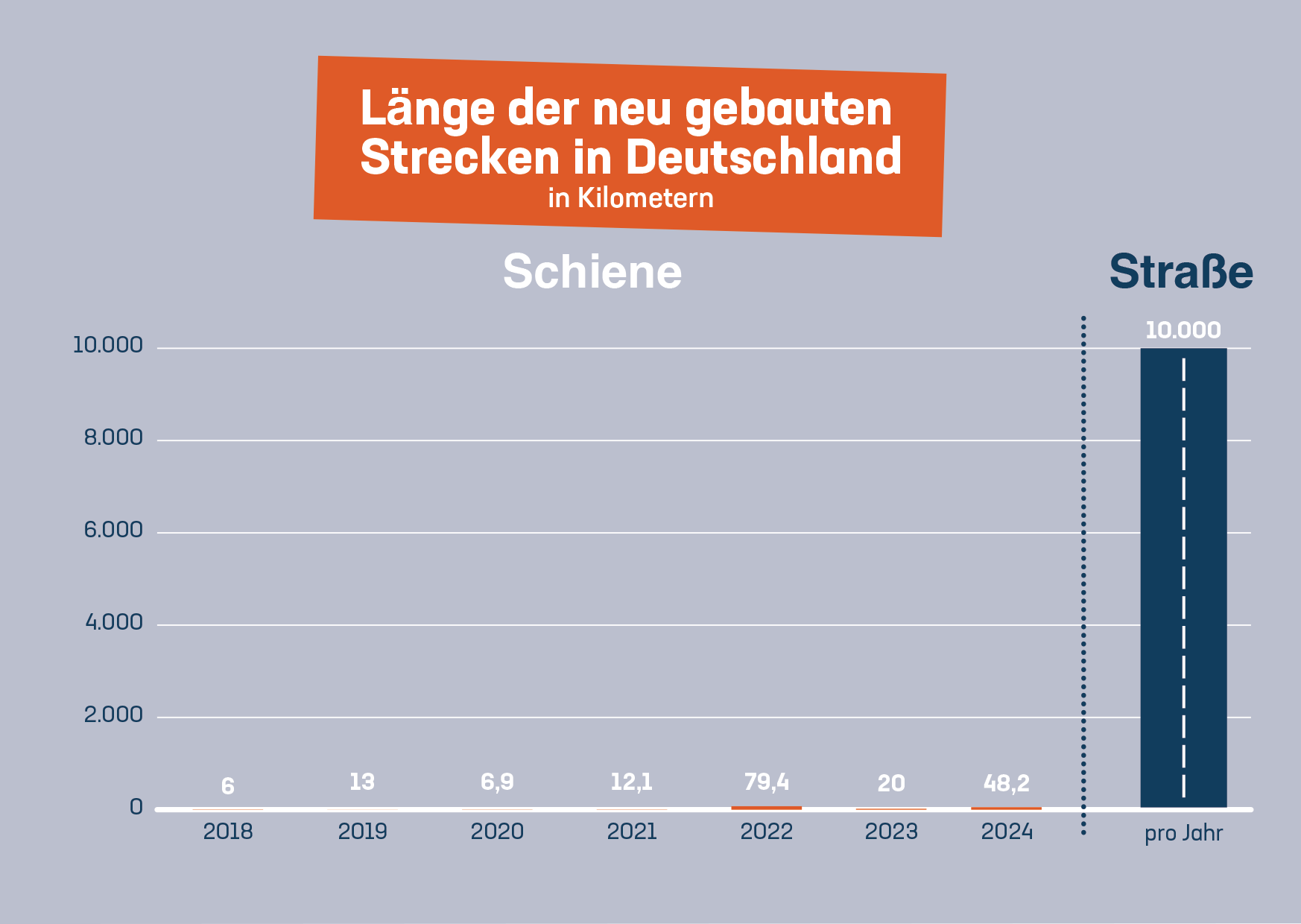
Only 2180 kilometers of rail in 30 years
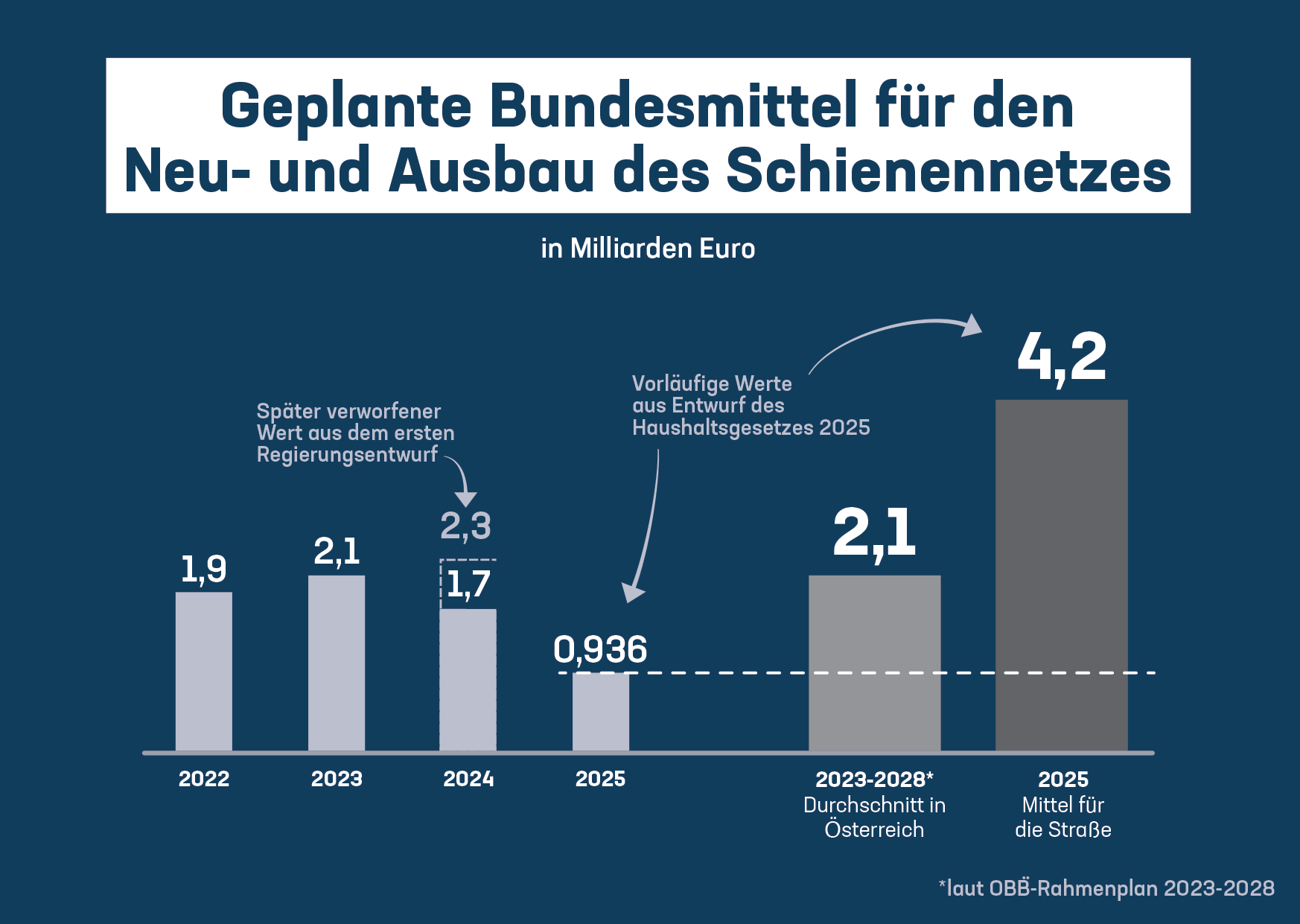
In the budget draft for 2025, four times as much money was allocated for the expansion of federal highways (4.2 billion euros) as for the railways (0.936 billion euros). “The government must now catch up on the expansion needs of the railways with limited resources. Since the railway reform 30 years ago, only 2,180 kilometers of new railway lines have been built – once from Berlin to Valencia. Since then, the road network has been extended by about 250,000 kilometers, which corresponds to six road rings around the equator,” says Kerkeling.
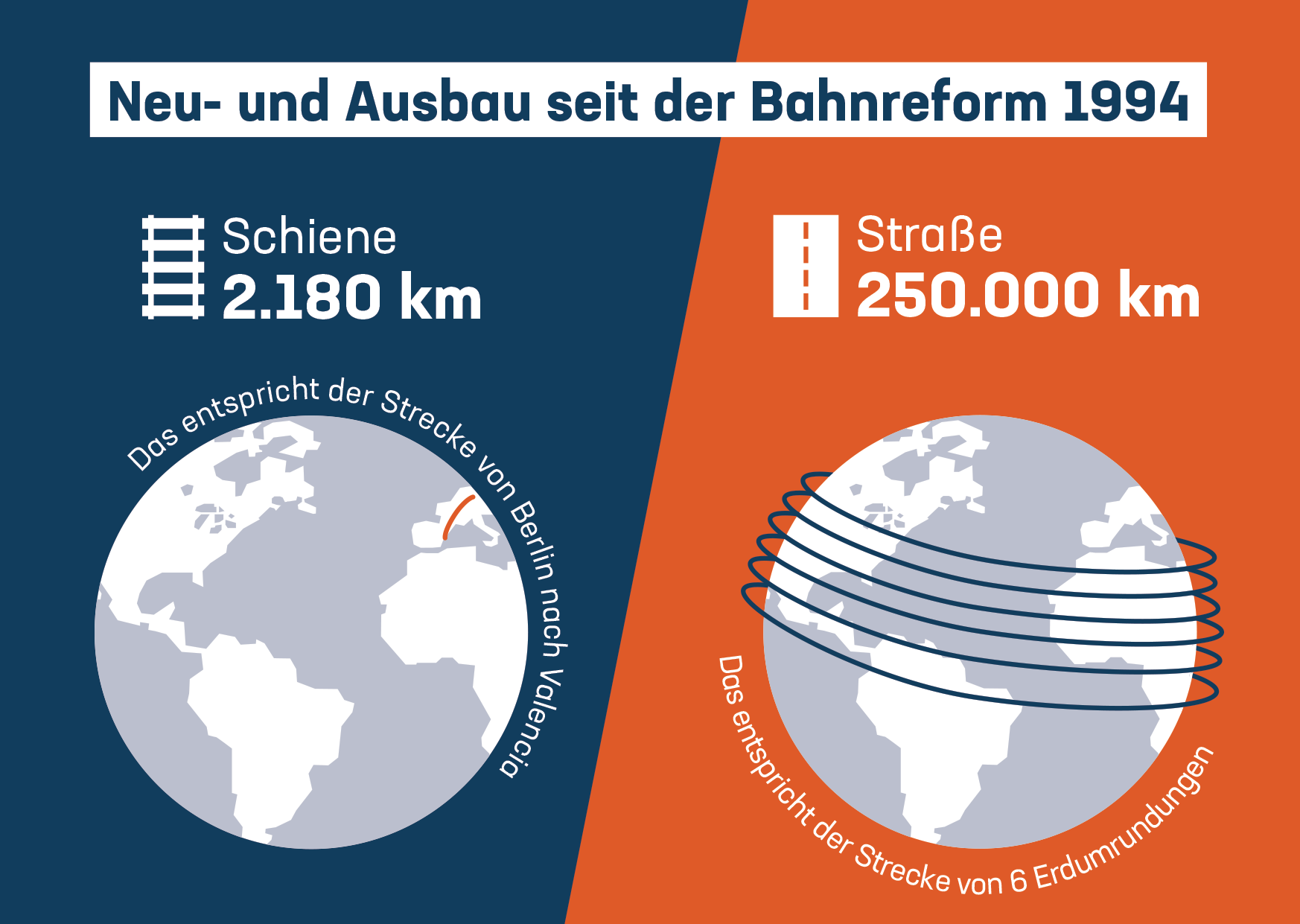 The low capacity increase in 2024 is not much different from the weak previous years 2023 (20 kilometers), 2022 (79.4 kilometers), or 2021 (12.1 kilometers). Only one of the seven projects in 2024 provides relief on one of the 23 rail routes officially designated as “overloaded.” With 18.8 kilometers of new construction of a second track between Wolfsburg and Braunschweig, the Weddeler Loop is the “largest” completed project this year. In the 1990s, only one of the two planned tracks was built for cost reasons, creating a bottleneck.
 Only five kilometers of new overhead lines seem grotesquely few, as the previous government coalition intended to electrify around 4,000 kilometers of track by 2030. Kerkeling. “The current toxic mix of lack of ambition, few new construction funds, uncertain budget situation, and an exaggerated promise of mere renovations undermines the idea of giving Germany the positive vision of smooth rail traffic that can accommodate more. The hesitation in new construction and expansion must come to an end. For this, we need three things: a reliable new construction plan, a multi-year rail infrastructure fund, and the separation of rail infrastructures from the DB Group.”
For the calculation:
THE FREIGHT RAILWAYS have, as in previous years, inquired with both the Federal Railway Authority (EBA) and DB InfraGO about which routes will be put into operation in 2024 or will go into operation at the timetable change on the weekend. Unfortunately, neither the authority nor DB has reliable statistics. The “rail monitoring” demanded by the Rail Acceleration Commission on December 13, 2022, still does not exist. Therefore, the association also conducts its own research to achieve the most accurate result possible. In this context, some older and previously unregistered projects were also added.
Last year, DB began to communicate in “track kilometers.” This affects the comparability with the previous indication of route kilometers and seems driven by the desire to increase the new construction kilometers, as double-tracked routes can be counted twice.
Since this year, THE FREIGHT RAILWAYS distinguish between pure new construction and expansion and electrifications of already existing routes as well as “other” capacity-relevant measures (e.g., the extension of overtaking tracks). Kilometer information for new construction and expansion on the one hand and electrification of existing routes on the other has also been retrospectively separated in the association’s representations. Therefore, the number of an additional 822 route kilometers that have been electrified since 1994 is new – including the only five kilometers of overhead line that were first erected in 2024 above the existing route between Hofheim and Bürstadt in the Hessian Ried.