

First Train of the ‘LOG4NRW’ Project Has Started
Nov 11, 2023 at 5:01 PM
Evy Solution and SLS works seal strategic partnership
Nov 14, 2023 at 4:04 PM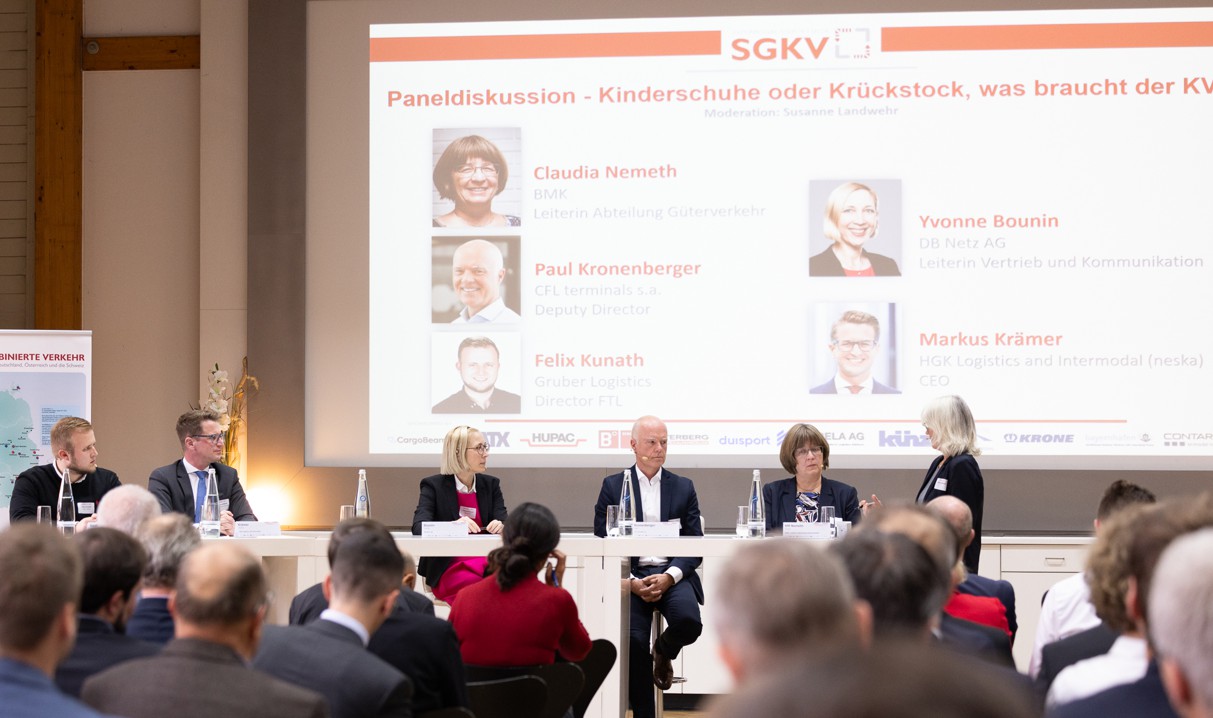
As a network platform, the SGKV creates the opportunity for the actors of the intermodal chain to engage in exchange once a year with its KV Congress, intensively discussing and jointly advancing the strengthening of the potentials of combined transport. The renewed participation record at this year’s 8th Terminal Day highlights the high importance of this networking opportunity for combined transport, as the challenges for the industry are undeniably high.
(Berlin) With a share of 40% of the total rail freight transport (SGV), combined transport is no longer a niche and has actually outgrown its infancy. The potential remains enormous, especially in light of the SGV-25% target by 2030. However, insufficient network capacities and unresolved questions regarding the targeted development of the European combined transport network, as well as ongoing demand fluctuations due to economic downturns, currently shape the discussion and hinder this development. What does the future direction of combined transport look like? How can developments and system interrelations be actively managed to create a meaningful framework for combined transport?
Ms. Nemeth, head of the Goods Transport Department at the Austrian Federal Ministry for Climate Protection, Environment, Energy, Mobility, Innovation and Technology (BMK), illuminated current developments and measures in combined transport in Austria in her keynote. On the one hand, it became clear that the market share of unaccompanied combined transport is steadily growing despite declines in SGV. On the other hand, combined transport faces pressing challenges, such as unfair competitive conditions due to a lack of internalization of external costs, the enormous increase in rail electricity prices by 195% from 2022 to 2023, and a lack of track capacities in Europe. In this context, Ms. Nemeth presented various measures for combined transport in Austria to further promote rail as an environmentally friendly and energy-efficient transport system. She emphasized the necessity of bundling measures for combined transport, which must be coordinated internationally.
Declining Development Across All Modes of Transport
Dr. Bammerlin, head of the Department for Goods Transport and Logistics at the Federal Ministry of Transport (BMDV), mentioned in his keynote the enormous potential of combined transport as an environmentally friendly transport system, which also proved to be particularly strong and resilient during the COVID-19 crisis. After the peak in 2022, combined transport is currently experiencing a slight decline in 2023, which is partly due to the rise in electricity prices and the economic situation. However, this development affects all modes of transport, although the decline is less pronounced for road transport than for rail. Referring to the long-term forecast of the BMDV, Mr. Bammerlin highlighted the significant growth of transport, with combined transport accounting for the majority of the growth on rail. Furthermore, Dr. Bammerlin referred to the initiated combined transport strategy dialogue, which aims to shape measures, and addressed the recently published draft guidelines for the revision of the EU Combined Transport Directive (Directive 92/106/EEC).
The central panel discussion involving Claudia Nemeth (BMK), Felix Kunath (Gruber Logistics), Markus Krämer (HGK Logistics and Intermodal), Yvonne Bounin (DB Netz), Paul Kronenberger (CFL Terminals), and moderator Susanne Landwehr addressed the current challenges and outlooks for combined transport. These particularly concern the increasing price pressure on rail and combined transport, the growing relevance of climate protection/CO2 savings, and the reliability and infrastructure capacities in the network, especially in light of the upcoming corridor renovations starting mid-2024. The panelists agreed: despite many hurdles, combined transport is a central building block for achieving climate goals in transport, which requires special attention and joint efforts.
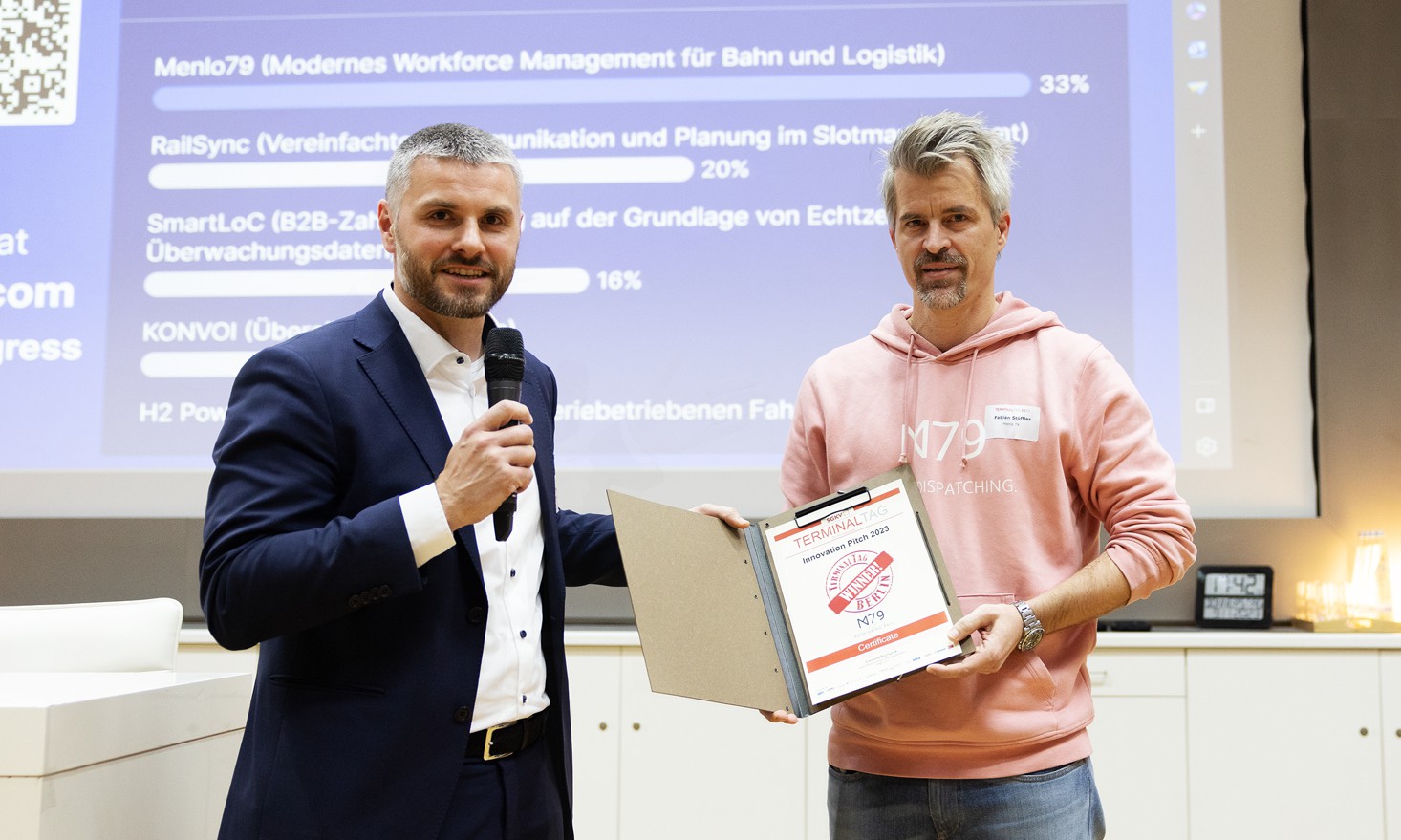
(l.r.) Clemens Bochynek (SGKV) presents the victory certificate for the Innovation Pitch to Fabian Stöffler (Menlo79)
Efficient Rail Requires Political Will
In five expert presentations, topics such as education and training in combined transport (SGKV), infrastructure and performance of rail (SBB, ProRail), digitalization measures (KTL Ludwigshafen), truck processing (Eurogate), and magnetic levitation technology in combined transport (Nevomo) were discussed. Education and training are a necessary prerequisite for the growth of combined transport. Currently, the positive future forecast for combined transport contradicts the low share of combined transport in education, as stated by Jan Schlierf, project manager of SGKV. The SGKV will launch its new education and training platform “Intermodal Academy” starting in spring 2024. Daniel Scherrer (SBB) and Klaas Hofstra (ProRail) vividly illustrated the enormous challenges of the currently “non-drivable” rail system in Europe. An efficient rail system requires political will, prioritization, funding, a culture of openness to new approaches, systems thinking, and communication, according to Scherrer and Hofstra. Additionally, Harald Schlegel (KTL) presented six best-practice examples in the context of the digitalization of terminals, electromobility, and optimization of terminal parking capacities. Michael Kuls (Eurogate) informed about digital truck processing using various tools in collaboration with CONROO. To conclude the session, Stefan Kirch (Nevomo) took a look into the future and showed how magnetic levitation technology could be integrated as an upgrade into the existing rail technology for use in combined transport. Initial practical tests are already underway.
A lot of innovation potential was also demonstrated by the participants of the concluding Innovation Pitch. Seven start-ups presented their solutions for more efficient and transparent processes. In a close race at a very high level, Fabian Stöffler from Menlo79 ultimately prevailed with his digital solution WILSON. WILSON is a modern platform for personnel management to efficiently deploy operational staff in the rail and logistics sector, thus addressing the shortage of skilled workers.
Better Framework Conditions Are Needed
Conclusion: Whether in its infancy or as a crutch, there is really no two ways about it, according to Clemens Bochynek, managing board member of SGKV. Better framework conditions are needed for combined transport, meaning suitable shoes with sufficient growth potential.
Photos: © SGKV