




Wiliot expands leadership team for growth
Apr 15, 2026 at 7:06 AM
TGP establishes office in Finland
Apr 15, 2026 at 7:34 AM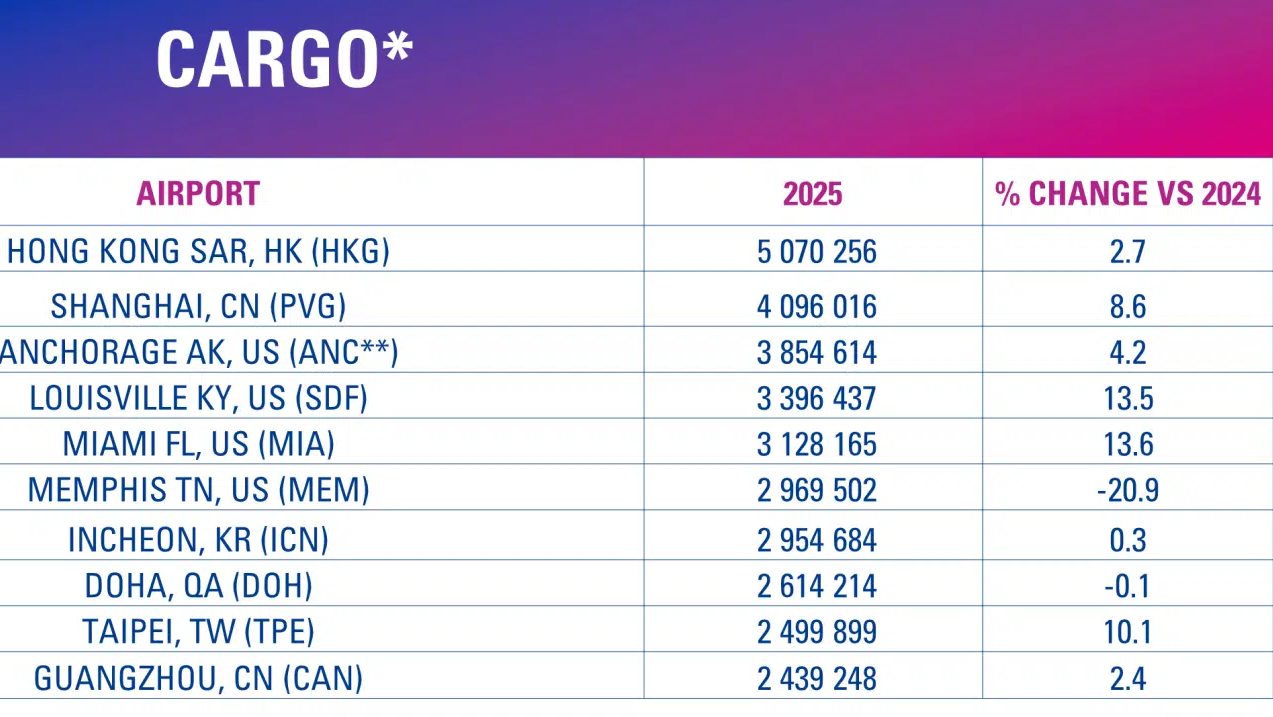
The latest rankings from the Airports Council International (ACI) show significant developments in air freight traffic for the year 2025. According to the published data, air freight volumes increased by 2.9% compared to the previous year, reaching nearly 128.9 million tons. This represents an increase of almost 8.8% compared to the figures from 2019. The growth in air freight traffic is significantly influenced by e-commerce and adjustments in global supply chains.
Growth of air freight and leading airports
The ten busiest airports for loading and unloading air freight and mail account for nearly 26% of global traffic. Hong Kong and Shanghai Pudong occupy the first two positions, while Anchorage (with transit freight) ranks third. These airports are crucial for maintaining global trade flows and underscore the central role they play in the international air transport system.
The demand for air freight has changed significantly in recent years, with adjustments in supply chains and the stabilization of air freight volumes considered critical for maintaining trade flows. The concentration of air freight traffic at major airports highlights the importance of these hubs for global trade.
Global trends and challenges
Developments in air freight traffic are part of a larger trend that also includes passenger numbers and aircraft movements. In 2025, a global passenger volume of approximately 9.8 billion is expected, representing an increase of 3.6% compared to the previous year. Airports in the Asia-Pacific region are showing a strong recovery, which is also reflected in the global airport rankings.
However, the economic conditions remain fragile. The global economy grew by about 3.0 to 3.2% in 2025, which is above expectations but below historical norms. Factors such as trade conflicts and political uncertainties could continue to affect the demand for air travel. Additionally, growth is increasingly constrained by infrastructural and operational limitations.
The return of the Chinese travel market has accelerated growth in the Asia-Pacific region and strengthened global connectivity. At the same time, air freight volumes stabilized near record levels, supported by e-commerce and faster, restructured supply chains.
The current developments in air freight traffic highlight the central role of airports in the global economy. Given the growing demand, it is important for governments and airport operators to invest in infrastructure to enhance efficiency and capacity.