





OnTrac appoints Mike Brown as CEO
Jan 14, 2026 at 8:11 AM
OrbitMI opens office in Tokyo
Jan 14, 2026 at 8:30 AM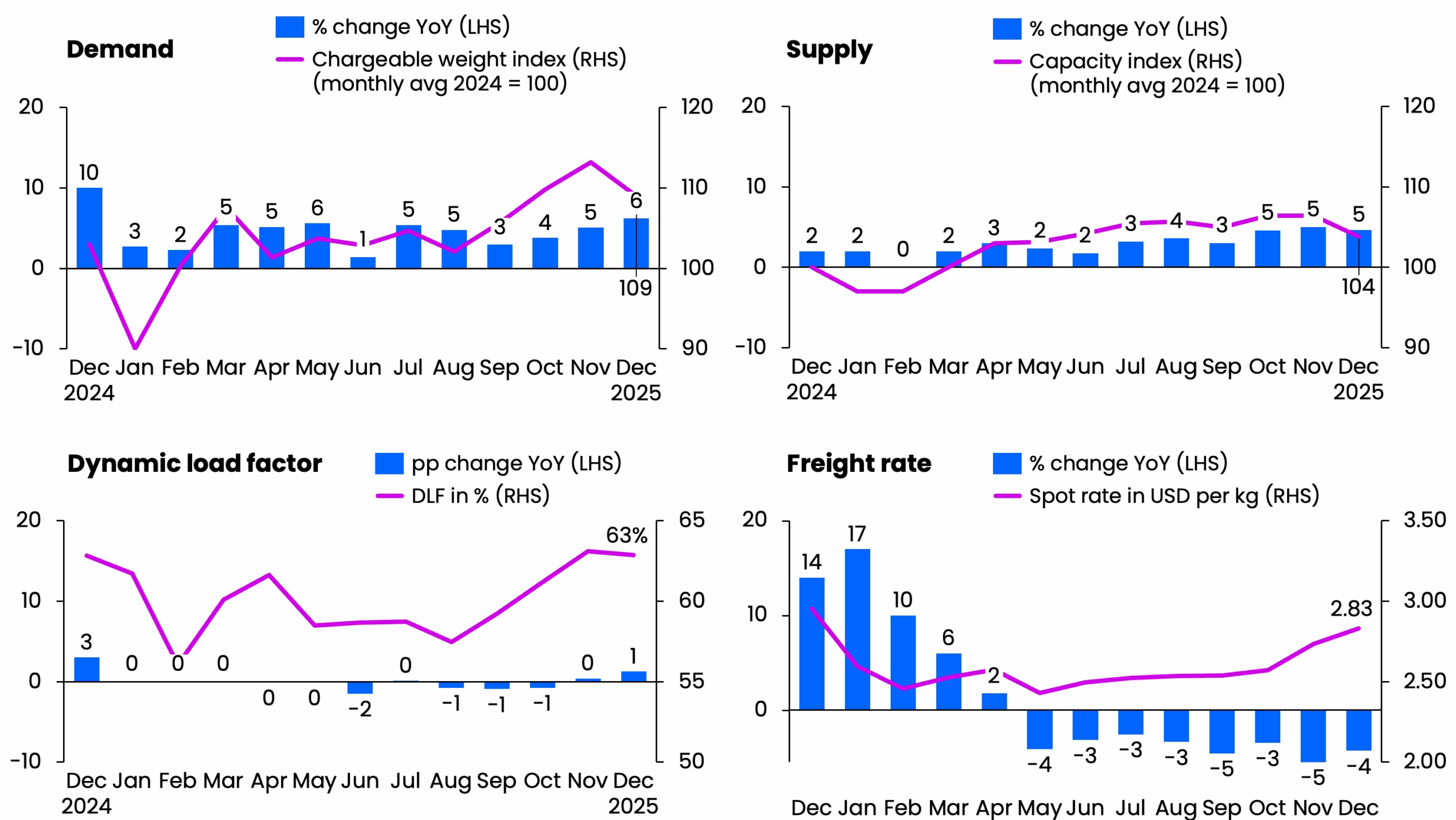
The global demand for air freight concluded the year 2025 with a 6% increase in December. This indicates a positive trend compared to the previous year, although stagnating e-commerce deliveries from China raise concerns among airlines and freight forwarders. This is evident from an analysis by Xeneta.
Growth Despite Challenges
In the fourth quarter of 2025, the air freight industry recorded a better-than-expected volume, leading to an annual growth of 4% in transported cargo. This development reflects the willingness of many shippers to switch to the speed and reliability of air freight during times of disruption and economic uncertainty. Niall van de Wouw, Chief Airfreight Officer at Xeneta, stated that the year 2025 „had something to offer for everyone,“ as service providers benefited from higher volumes and shippers could take advantage of lower prices in the second half of the year.
However, for 2026, Xeneta expects more cautious growth of 2 to 3%. Van de Wouw expressed that there may be „a price to pay,“ as uncertainties in trade and geopolitical tensions could weigh on air freight volumes. Despite the demand growth at the end of the year, global air freight rates in recent months remained below the values of 2024. In December, prices fell by 4% compared to the previous year to an average of $2.83 per kg.
Impact of E-Commerce
Future developments will be heavily influenced by e-commerce demand, particularly from China and Europe. Van de Wouw pointed out that investments in artificial intelligence supported air freight demand in 2025, while the less optimistic signals for e-commerce, especially regarding cross-border exports from China, are concerning. According to Chinese customs statistics, exports of low-priced and e-commerce goods rose by only 1% in November compared to the previous year, after stagnating in October. Exports to the USA recorded a decline of 52% in November compared to the previous year, marking the steepest drop since records began.
While e-commerce volumes between China and the EU continued to grow, they did so at a slower pace, with a 29% increase in November compared to 47% in October. Additionally, the State Council of China has introduced new tax reporting regulations for online platforms, which will come into effect in October 2025. This regulation could increase delivery costs and tighten compliance requirements for exporters.
Regulation in International E-Commerce
The international cross-border e-commerce sector is facing an increasingly regulated landscape. The USA and the EU are introducing new regulations, while countries like Japan and Thailand are also discussing similar measures. The EU decided in December to introduce a fixed customs fee of €3 on small packages under €150 starting July 1, 2026, to close loopholes for low-priced deliveries. This could lead to slower growth of e-commerce volumes in 2026, although they are expected to grow faster than the overall air freight market.
Van de Wouw emphasized that air freight e-commerce volumes could also be affected by declining consumer purchasing power, as consumers face higher prices for everyday goods and are becoming more conscious of their spending.
Market Development and Price Trends
In December, the declines in spot prices on the main corridors continued. The strongest drop of 13% was recorded on the transatlantic west route from Europe to North America. Demand fell by 2%, which was faster than the capacity decline of 1%. Monthly, however, spot prices rose by 17% due to reduced passenger capacities, marking the fastest increase among the main corridors, yet still remaining below the previous year’s level.
Airlines have quickly redirected their freighter capacities from the USA to Europe, where demand is more stable. Nevertheless, spot prices from China to Europe and North America show only a slight decline of 1% compared to December 2024.
Contract negotiations have also changed. Almost half of the freight forwarders‘ volumes were purchased on the spot market for up to one month, a habit that has persisted since the pandemic. In the fourth quarter of 2025, one-year contracts accounted for only 24% of new agreements, representing a decline of 20 percentage points compared to the previous quarter.
Market conditions indicate a downturn, and van de Wouw sees the greatest risks for the year 2026. He expressed concern that a crisis could once again impact air freight growth rates.