




Kühne+Nagel reports slight revenue decline in 2025
Mar 3, 2026 at 9:59 AM
Röhlig Logistics achieves growth in 2025
Mar 3, 2026 at 10:27 AM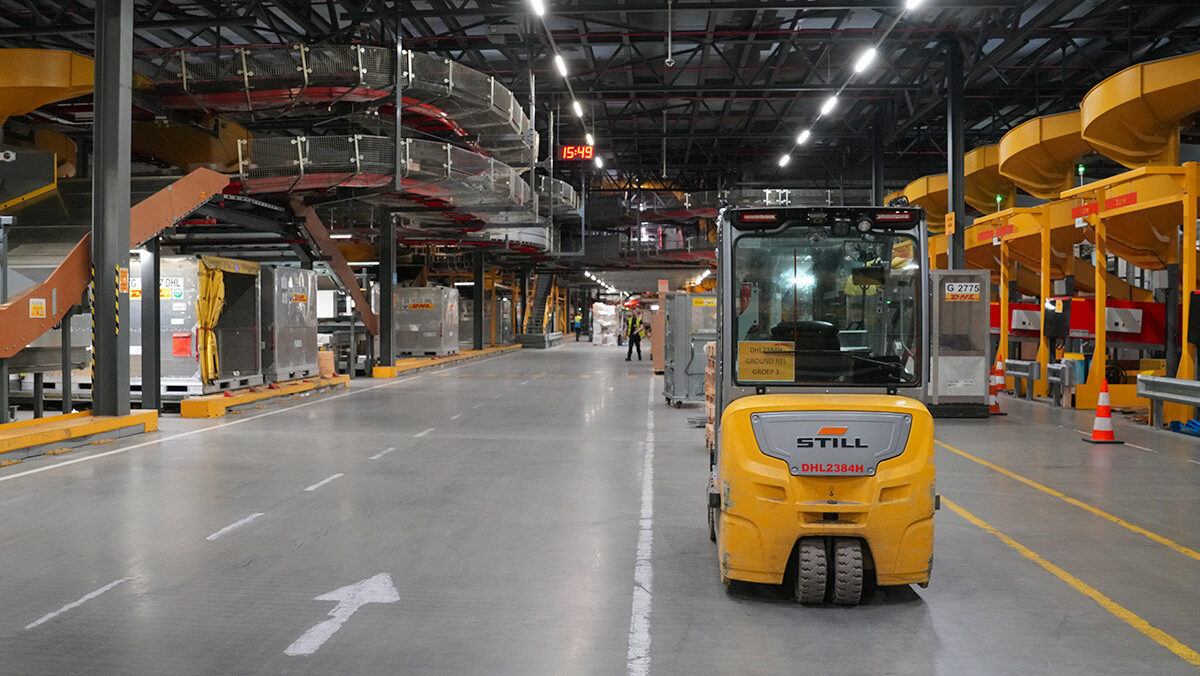
DHL Aviation has launched a new fleet of lithium-ion industrial trucks in Brussels, becoming the first of five European DHL Aviation hubs to transition to this technology. This change is part of the company’s sustainability strategy, which focuses on the intelligent management of energy consumption. Together with partner STILL, an energy management system has been developed that integrates the STILL Smart Energy Unit.
DHL Aviation is a key component of the global network of DHL Express, shipping time-sensitive shipments from Brussels to over 220 countries. Marcel De Kelver, Senior Manager Facilities & Equipment at DHL Aviation, emphasizes the importance of reliability and safety in an environment that operates nearly around the clock, processing over 200,000 shipments daily. Jelle De Parade, Project Engineer at DHL Aviation, highlights that investments in electric equipment have reduced energy consumption and optimized space requirements.
Efficient Industrial Trucks for Logistics Operations
For the new fleet, DHL Aviation has once again chosen STILL, as the company has had positive experiences with the equipment and service. The new RX 20 series electric forklifts are compact and agile, making them ideal for the demands of logistics operations. Despite the size of the site at 330,000 m², space is particularly valuable, and the new lithium-ion forklifts allow for decentralized charging, thereby reducing internal transport.
With 117 new industrial trucks, including electric pallet trucks and electric forklifts, the Brussels hub has made a significant transition to lithium-ion technology. De Parade points out that the new forklifts are not only more reliable but also more energy-efficient. By introducing 93 new chargers, DHL Aviation can reduce energy consumption by 16%, which is necessary given the increasing electrification.
Positive Impacts on Sustainability and Costs
DHL Aviation aims to align all equipment and facilities with the highest standards regarding safety, efficiency, and sustainability. A key component is the development of energy management and control systems that enable real-time monitoring of energy consumption. De Kelver highlights the collaboration with STILL, which has facilitated a customized charging infrastructure to meet the complex requirements of the logistics center.
By implementing these solutions, DHL Aviation can balance energy consumption and remain within agreed usage limits. De Parade emphasizes that this not only contributes to achieving sustainability goals but also enables cost savings, as exceeding agreed energy quantities leads to higher bills.