



VDR regrets delay in climate regulations for shipping
Oct 18, 2025 at 8:09 PM
Forto Launches Agent-Based AI Platform FortoLabs
Oct 20, 2025 at 8:46 PM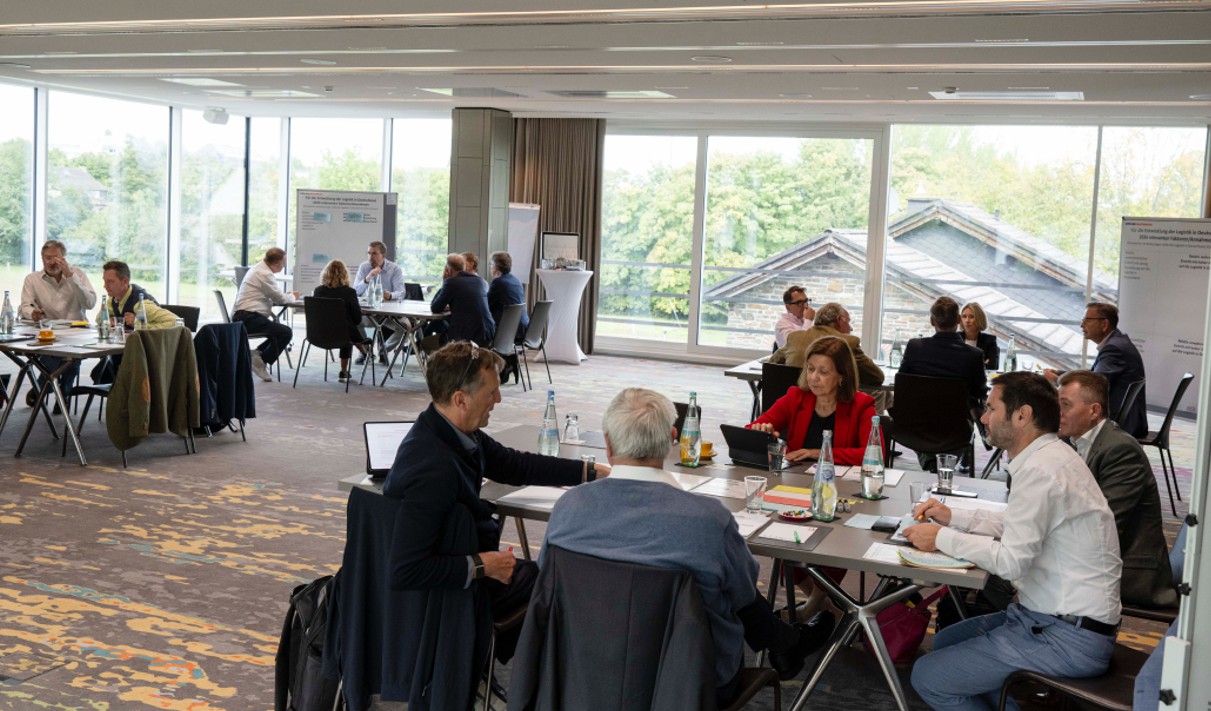
The German logistics sector is facing a year of significant challenges and at the same time considerable opportunities. At the autumn summit of the initiative for forecasting the development of the logistics location Germany, leading experts from science, logistics services, industry, trade, as well as logistics technology and services came together on September 26, 2025, in Koblenz to analyze the development of the logistics economic sector in Germany for 2026 and to develop a concrete forecast.
(Koblenz) In light of the volatile global economic and geopolitical situation, the expert group developed three different scenarios for the year 2026 for the first time. The trend scenario, considered the most likely development, predicts a real growth of 0.5 percent and a nominal growth of 2.6 percent. In the optimistic best-case scenario, the logistics sector could grow by 1.1 percent in real terms (nominally 3.2 percent), while the pessimistic worst-case scenario anticipates a real decline of 0.4 percent (nominally plus 2.1 percent). The current mood in autumn 2025 shows a slightly negative assessment of the business situation with stable investment intentions. The experts emphasize that the overall sentiment remains cautious and that the broad forecast corridor reflects significant uncertainties.
Seven Theses on the Economic Situation
The expert group summarizes the situation of the logistics economic sector in seven central theses: First, the global and trade policy situation remains uncertain. Second, cyber-attacks are expected to increase and will tie up a relevant share of IT budgets. Third, hope for recovery lies in German politics and its economic policy measures. Fourth, expectations for efficiency gains through automation, digitization, and particularly the use of AI are high, despite or precisely because of the current economic situation. Fifth, even with a relaxed personnel situation, there is still a lack of IT, planning, and driving personnel. Sixth, the relevance of sustainability issues is decreasing, at least for projects with short- and medium-term durations as well as for tenders. Seventh, collaboration between companies in certain market areas will necessarily increase due to the market situation.
Comprehensive Scenario Analysis
The three scenarios consider different developments in five dimensions:
- In the best-case scenario, economic policy measures show measurable and psychological effects, the global economy recovers, the geopolitical situation stabilizes, the economy is ready to perform, and productivity gains through automation and AI become noticeable.
- The trend scenario assumes that economic policy measures remain ineffective, investment reluctance continues due to uncertain global and trade policies, the construction and armaments industries have too small shares for a growth boost, households remain cautious due to insecurity, and IT budgets are tied up in cybersecurity projects.
- In the worst-case scenario, political measures have no measurable or psychological effects, the geopolitical situation remains tense with military conflicts, sales weaknesses among manufacturing companies increase, the population is insecure, and IT budgets are reserved for defense.
Action Package “Logistics Innovations Made in Germany”
In response to the identified challenges, the expert group presents a comprehensive action package with three areas of action. In the area of financing, an innovation program for logistics with a strictly practice-oriented funding approach is proposed, where impulses come exclusively from practice and research institutions as well as startups act as partners. Instead of classical funding, market and capital instruments should be used, and the special fund should be leveraged through private capital. Regarding networking, the expert group recommends simplification through open source and shared governance, utilization of cross-industry innovation potentials, joint resource utilization, and Coopetition 2.0. In the area of implementation in companies, the focus is on modernizing the corporate culture with more know-how at the decision-making level, awakening a hunger for innovation with bottom-up and top-down ideas, as well as tolerance for mistakes and positioning as an integration-ready economic sector.
Photo: © Sarah Reuther