



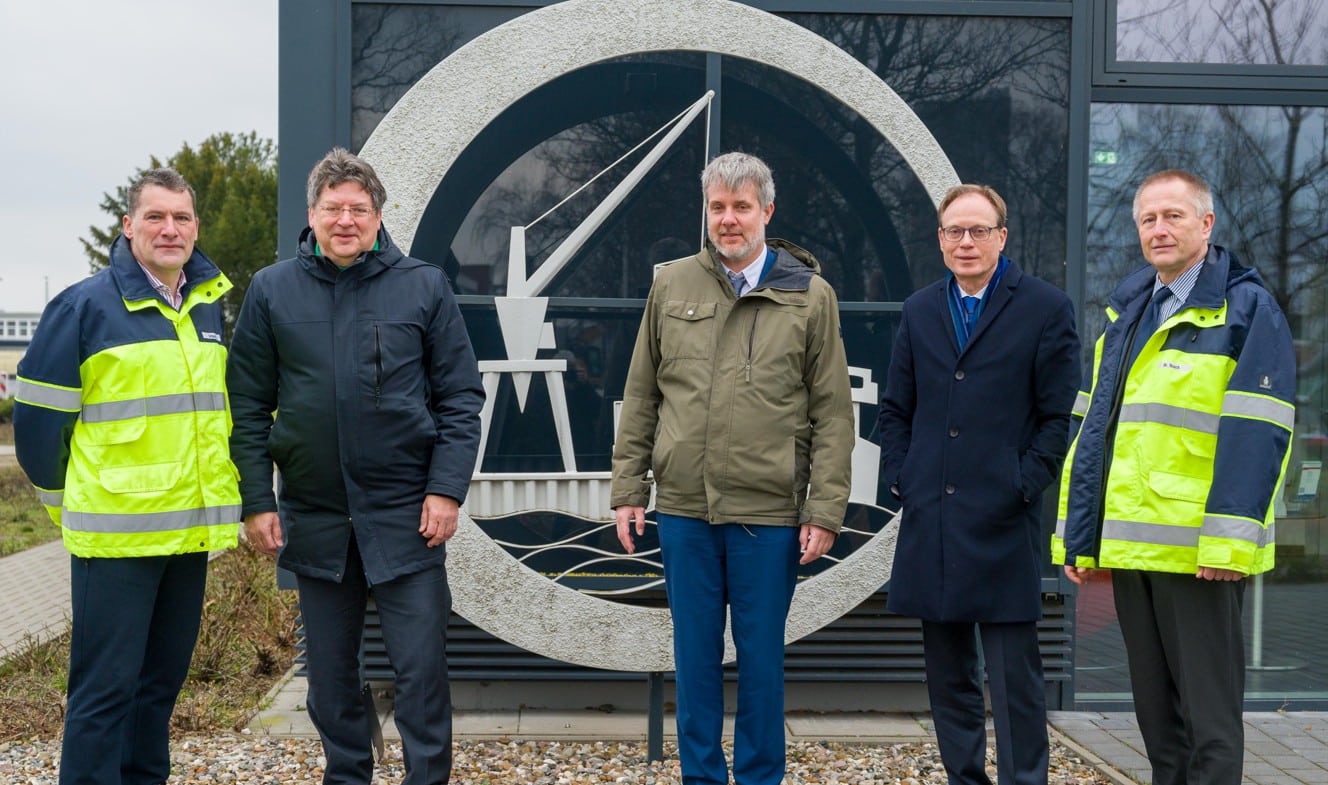
Maritime Coordinator Visits the Rostock Overseas Port
Feb 21, 2023 at 3:00 PM
Eco2Way: Raben Group Opens Four New Contract Logistics Locations
Feb 21, 2023 at 3:10 PM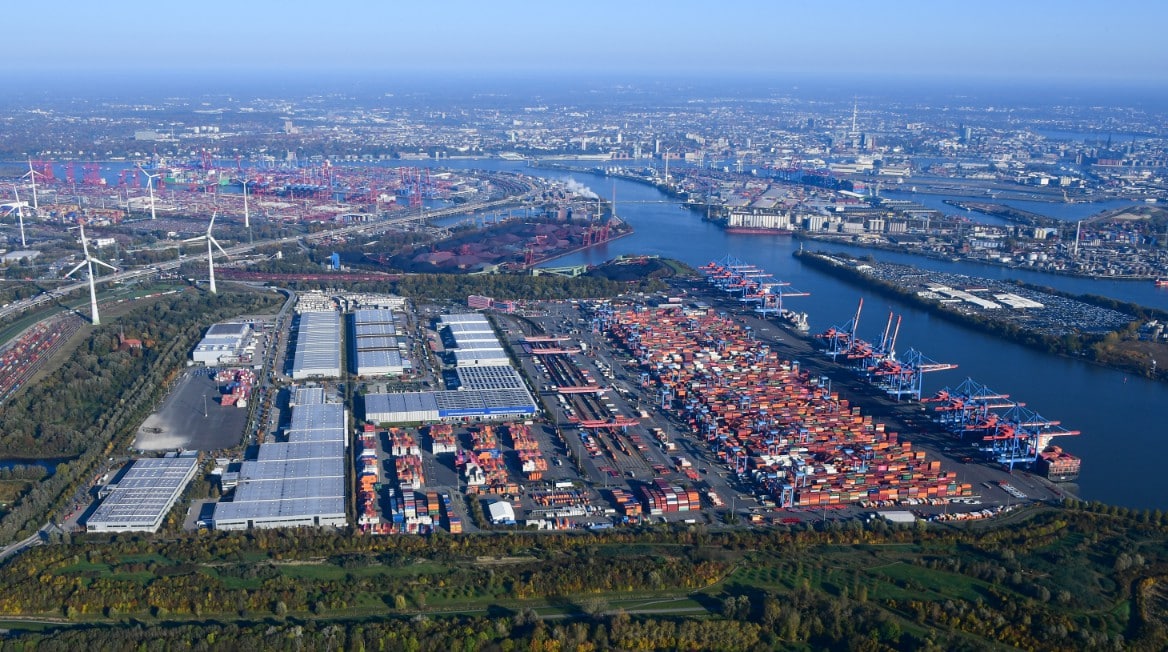
International crises shaped the seaborne cargo handling in the Port of Hamburg in 2022. The Hamburg terminals handled 119.9 million tons of seaborne goods, which corresponds to a decrease of 6.8 percent compared to the previous year. Conventional breakbulk developed positively with an increase of 11.2 percent to 1.4 million tons. However, the handling of breakbulk fell to 83.7 million tons (-5.8 percent). Thus, 36.2 million tons (-8.9 percent) of bulk goods passed through the quays of the Port of Hamburg.
(Hamburg) “The war in Ukraine, along with the associated sanctions against Russia, as well as the global supply chain issues due to the Corona pandemic, impacted the handling of the Port of Hamburg throughout the year. Additionally, labor disputes in the port at the beginning of the second half of the year and a very high inflation rate in the fall caused consumer sentiment to plummet,” explains Axel Mattern, board member at Hafen Hamburg Marketing e.V. The lower quantities of bulk goods are directly and indirectly attributable to intensified sanctions against Russia. Both suction goods (-6.0 percent/6.0 million tons) and grab cargo (-6.3 percent/20.2 million tons) as well as liquid cargo (-15.2 percent/10.0 million tons) recorded a decline.
Different Developments Throughout the Year
In the Port of Hamburg, 8.3 million TEU (Twenty-foot Equivalent Unit) were handled last year. This corresponds to a decrease of 5.1 percent compared to the previous year. A comparison of the quarters shows that container handling developed positively until mid-year. However, in the second half of the year, and particularly in the 4th quarter (-12.3 percent), handling declined sharply. “Normally, we see an increase in handling figures in the last quarter of the year due to the upcoming Christmas holiday. This did not happen last year. The reasons for this were primarily the increased energy costs and high inventory levels in the industry,” explains Mattern. Accordingly, the import of sea containers showed a decrease of 6.1 percent with 4.2 million TEU. In comparison, 4.1 million TEU were exported in 2022, which corresponds to a decrease of 4.1 percent compared to the previous year.
China Remains the Number 1 Trading Partner by a Wide Margin
The top 10 list of partner countries for 2022 brings some positive surprises. The handling with Poland developed very positively with 294,000 TEU and an increase of almost 25 percent, placing the country in 4th place. Similarly, the quantities handled with Finland developed positively, with 213,000 TEU, corresponding to an increase of 22.3 percent, placing Finland in 6th place. With an increase of 6.6 percent and just over 196,000 TEU, Canada also sends a positive signal in the exchange of goods with the Port of Hamburg, rising from 12th to 9th place. Traditionally, China leads the top 10 list of partner countries this year as well, with 2.46 million TEU (-3.8 percent). The USA follows in 2nd place with 605,000 TEU, which corresponds to a decrease of 2.1 percent. Nevertheless, the number of loaded boxes in container traffic with the USA increased by 0.6 percent to 540,000 TEU. Singapore consistently holds 3rd place with 423,000 TEU (-1.1 percent). In the extended list of partner countries, both Sri Lanka and Malaysia stand out positively. Malaysia climbs to 13th place with an increase of 10.7 percent and a handling of 177,000 TEU. With 128,000 TEU and an increase of 8.8 percent, Sri Lanka improves to 17th place. While Russia was in 4th place among the top partner countries last year, it now ranks 27th with a handling of around 80,000 TEU.
Calls by Megamax Container Ships Continue to Increase
Ships of the so-called Megamax class with over 18,000 TEU called at Hamburg a total of 234 times last year. This represents an increase of six percent. “The increasing number of Megamax container ships clearly shows that the adjustment of the fairway is still being accepted even with a temporarily reduced depth. Shipping companies have quickly adapted to the new conditions,” says Mattern. The calls of the second-largest category between 14,000 and 17,999 TEU also increased by five percent. However, calls of ships in the size class between 10,000 and 13,999 TEU decreased by 16.6 percent. Overall, there was a decline of 1.2 percent in calls of large container ships to 486 calls. The calls of medium-sized container ships with capacities between 8,000 and 9,999 TEU (Very-Large-Container-Ships) increased by eleven percent. Only smaller container ships and feeders came to the port less frequently, especially in the second half of the year.
Hinterland Traffic Remains Nearly Stable
A closer look at container handling reveals that transshipment traffic was responsible for over 90 percent of the decline. Thus, handling fell by 12.1 percent to 2.90 million TEU. Hinterland traffic, on the other hand, remained almost stable. The quantity of TEU here fell by only 0.9 percent to 5.4 million TEU. In the modal split of hinterland traffic, rail maintains its leading position. More than half of all containers are still transported by rail. With 50.5 percent (-1 percentage point), the overall result is slightly declining. However, rail remains the most important mode of transport for the hinterland with 2.7 million TEU. Despite a decline of 2.8 percent, rail achieved the second-best annual result in its history in this segment. Looking at the tonnage in the modal split of hinterland traffic, rail even increased by 1.1 percentage points and transported 53.9 percent of the goods. With 47.3 million tons, it was the third-best result after 2021 and 2019.
Outlook for 2023
The ongoing uncertain situation in global markets makes it difficult to provide a forecast for 2023. “We hope that the global economy will recover. This will also support and increase the handling of the Port of Hamburg,” summarizes HHM board member Mattern. At the same time, all stakeholders in the Port of Hamburg will actively work towards the transformation to a climate-neutral, efficient, and modern port.
Photo: © HHM – Hasenpusch Productions / Image Caption: In the Port of Hamburg, 8.3 million TEU (Twenty-foot Equivalent Unit) were handled last year.