



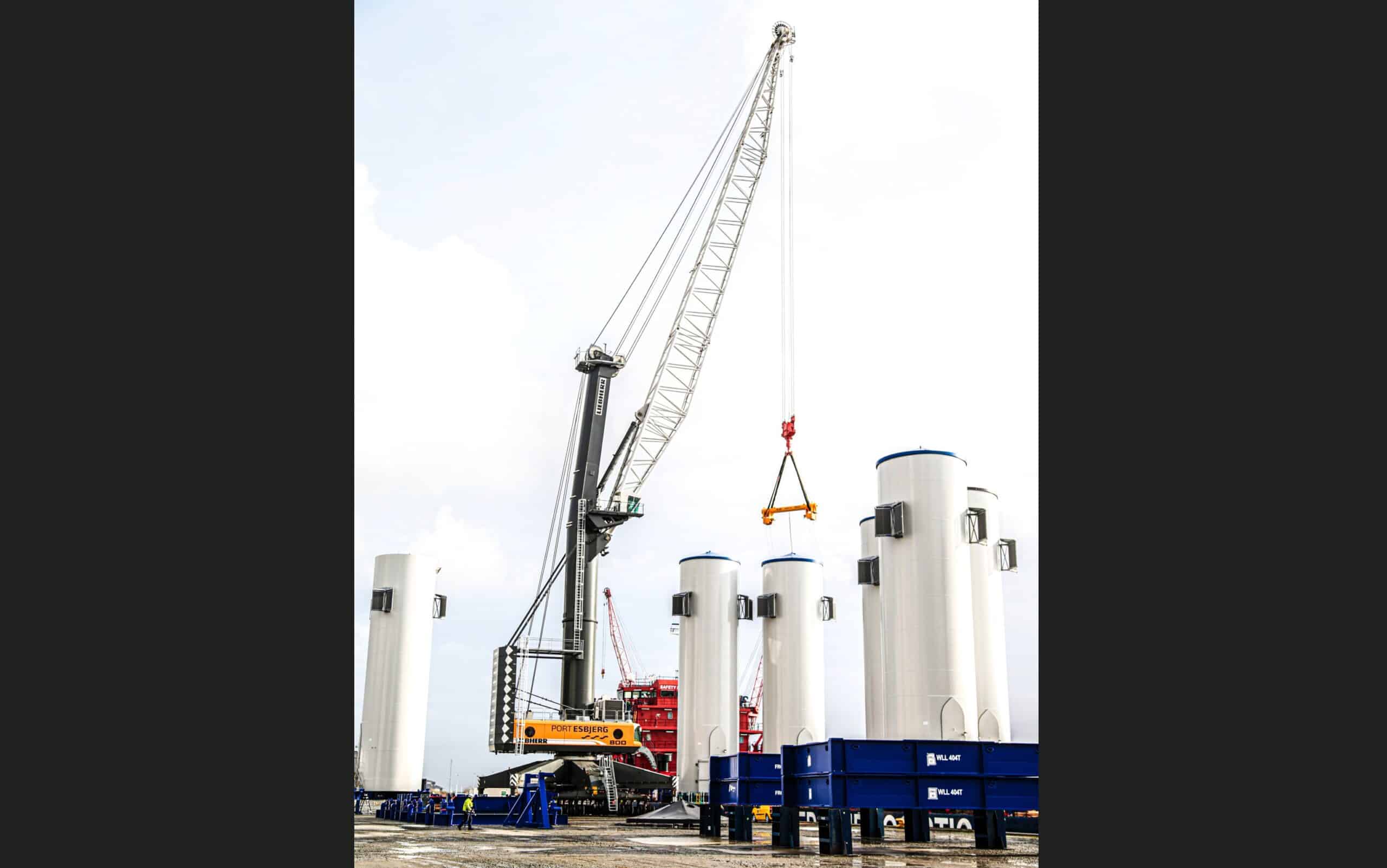
Port Esbjerg Orders Second Liebherr LHM 800
Jul 18, 2022 at 7:50 PM
Körber Business Area Supply Chain Keeps Supply Chains Running
Jul 18, 2022 at 8:00 PM
The security of supply chains (83 percent) and the significantly increased cost pressure (72 percent) are currently the priorities of companies. Additionally important are the topics of digitization and how companies are dealing with the acute shortage of skilled workers. Due to two years of pandemic, the war in Ukraine, and the associated energy crisis, the topic of sustainability (31 percent) has somewhat fallen out of focus.
(Wiesbaden/Eschborn) This is one of the statements from the survey “Sustainability in Procurement,” conducted by Expense Reduction Analysts in collaboration with the Federal Association of Materials Management, Purchasing, and Logistics e.V. (BME) among 216 participants. Another result of the survey is that the pressure on costs and supply chains, as well as increasing sustainability requirements, is promoting the redesign of products.
Cost Savings Come at the Expense of Sustainability
“The study clearly shows that monetary aspects still take precedence over sustainability criteria,” says Matthias Droste, Country Manager DACH of Expense Reduction Analysts. One reason is the current global crisis hotspots. Droste: “At the moment, companies prioritize the urgent over the important. Nevertheless, sustainability and the reduction of CO2 emissions remain the topics of the decade.”
“According to the now available study results, many companies are redefining their priorities due to the acute geopolitical situation,” emphasizes BME Federal Board Chair Gundula Ullah. This also offers them the opportunity to incorporate the topic of sustainability into crisis management, especially since the tense supply situation forces everyone to rethink.
Lack of Transparency, Standards, and Metrics in Sustainability
Another reason why companies are not progressing faster in sustainability activities is the lack of transparency, standards, and metrics. Droste: “Here we clearly see the legislator called upon to create clear and comprehensible framework conditions that companies can reliably orient themselves to.” Since 49 percent see sustainable business practices as a societal task, this could significantly accelerate the activities of companies.
ESG Criteria Rarely Integrated into Tenders
The driving force behind sustainability initiatives in most companies is the management. Their support is the key to success. Only then can procurement also become sustainably active. According to the survey results, only a few companies have integrated fixed ESG (Environmental, Social, Corporate Governance) criteria into their tenders (15 percent) or equate social or ecological aspects with monetary ones (seven percent). This also leads to little external pressure to initiate sustainability activities. So far, there are hardly any cases where companies have lost contracts due to a lack of sustainability efforts.
About 40 Percent Have a Sustainability Report
Nevertheless, 42 percent of companies have created a sustainability report, even though not all are legally required to do so. Additionally, 41 percent are audited or certified according to sustainability standards, and 23 percent publish sustainability activities on common platforms.
Study “Sustainability in Procurement” available for download:
https://de.expensereduction.com/studie-nachhaltigkeit-im-einkauf/
Photo: © Pixabay.com