


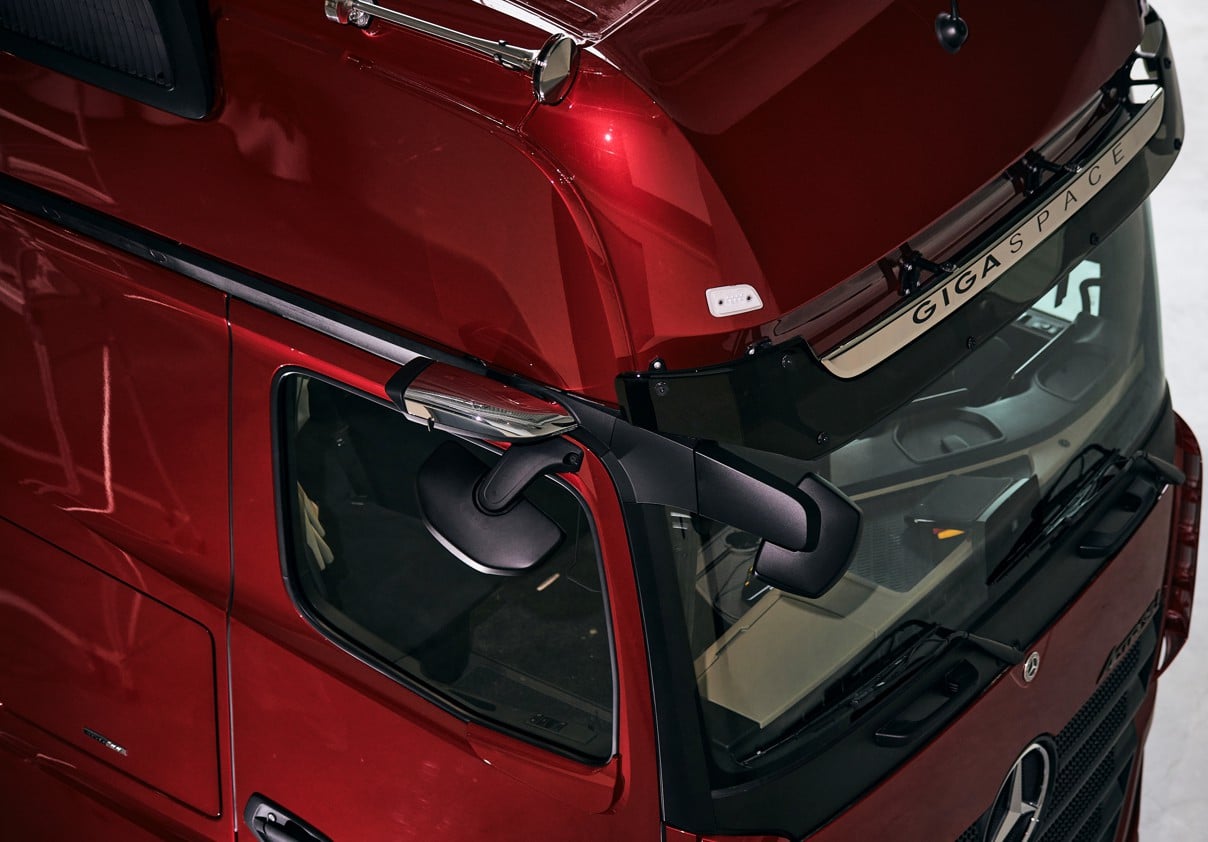
Mercedes-Benz Trucks Advances Mirror Camera System
May 5, 2022 at 1:07 PM
Jungheinrich starts the 2022 fiscal year as expected
May 8, 2022 at 1:07 PM
Germany’s manufacturers have started the second quarter on a weaker note. The war in Ukraine and the lockdowns in China dampened demand in April and disrupted supply chains. Due to the decline in new orders and widespread delivery delays, production rates also shrank. As a result, the seasonally adjusted S&P Global/BME Purchasing Managers’ Index (EMI) fell from 56.9 in March to a 20-month low of 54.6 points in April.
(London/Eschborn) “The EMI had to take another hit in April,” emphasized Gundula Ullah, Chairwoman of the Federal Association of Materials Management, Purchasing and Logistics e.V. (BME), on Thursday in Eschborn. This is especially true for the production sub-index, which slipped into negative territory for the first time since the introduction of the Corona restrictions in the first half of 2020. According to Ms. Ullah, a potential recovery in the manufacturing sector of Europe’s largest economy will largely depend on whether and how quickly the war in Ukraine can be resolved. The Corona crisis is also far from over, as evidenced by the ongoing lockdowns in China and their associated negative impacts on global supply chains.
“Stagflation is the current topic,” commented Dr. Gertrud R. Traud, Chief Economist of Helaba Landesbank Hessen-Thüringen, on Thursday in response to the current EMI data. The only remaining question is to what extent inflation will rise and how weak growth will be. This depends on two factors: “Will there be an energy embargo beyond the current sanctions, and when will it come? In our baseline scenario, we still expect growth in Germany’s gross domestic product of 2.2 percent and an inflation rate of six percent. However, if a comprehensive ban on oil and gas deliveries were to occur in a few weeks, our negative scenario with an inflation rate of at least ten percent and a significant decline in GDP would come into effect,” added the Helaba bank director in her statement for the BME.
War in Ukraine and Lockdowns in China
“Even with the currently imposed sanctions, the German economy can grow slightly this year. However, the economic outlook hinges on the very uncertain geopolitical framework conditions,” said Dr. Ulrich Kater, Chief Economist of DekaBank, to the BME on Thursday.
“The war in Ukraine and the strict lockdowns in China are taking a toll on the German economy. Supply shortages, price increases, and concerns about secure energy supply are not only causing the business expectations of German companies to collapse but are also burdening the global economy as a whole. These are bleak prospects, especially for the export-oriented industry,” reported DIHK economic expert Dr. Jupp Zenzen to the BME on Thursday.
Regarding the recent development of the EMI sub-index for purchase prices, Dr. Heinz-Jürgen Büchner, Managing Director of Industrials, Automotive & Services at IKB Deutsche Industriebank AG, provided the following assessment to the BME on Thursday: “The tight market supply for most raw materials continues. Even in April, there were still slight price increases in some areas; overall, however, a sideways movement was observed. In several publicly traded metals, prices were seen to decline in the second half of the month due to recession concerns. An oil embargo against Russia now seems more manageable, but a halt to gas deliveries would still have serious consequences for the German industry. Overall, we expect prices to remain at a high level over the next three months. For heavy plates, they could even increase further: In addition to the production stoppage at thyssenkrupp in 2021, there are now missing deliveries from Ukraine and Russia, resulting in a market shortfall of around 30 percent. This is likely to significantly increase the cost of building wind towers, which are predominantly made of heavy plates. Not a good sign for the energy transition.”
Overview of the Development of EMI Sub-Indices
Production: The seasonally adjusted production sub-index fell into the contraction zone in April for the first time in nearly two years. The decline was spread across all three areas covered by the survey and was mostly attributed by respondents to supply shortages or slightly declining demand.
Order Intake: For the first time since June 2020, Germany’s manufacturers reported a decline in new orders. This was often attributed to the effects of Russia’s invasion of Ukraine, the increasing reluctance of customers, economic sanctions, and production stoppages due to material shortages.
Export Order Intake: Export orders also shrank again. After the first decline in nearly two years in March, the decrease was even slightly stronger a month later. Many companies suffered from the foreign business due to the war in Ukraine and the subsequent sanctions against Russia and Belarus, while others registered a demand slump in China due to the lockdowns there.
Business Outlook: In assessing production levels over the next year, the majority of respondents remained pessimistic. The corresponding sub-index fell slightly again and recorded its lowest level since May 2020. Many managers cited the economic consequences of the war in Ukraine as the greatest risk. In this context, most fear rising prices, even more supply interruptions, and increasing uncertainty and reluctance from customers.
Employment: Contrary to the trends in production and order intake, employment in the industry rose again. Moreover, job creation even accelerated slightly and was significantly above the long-term average, but was among the weakest of the past twelve months. Companies that hired additional staff mostly justified this with capacity expansions.
Purchase Prices: Even at the beginning of the second quarter, cost pressure in the industry remains high. The inflation rate of purchase prices accelerated for the second consecutive month and approached last year’s all-time highs. The majority of survey participants attributed the renewed increase to skyrocketing energy and transport costs as well as higher raw material prices.
Selling Prices: The survey results show that more and more manufacturers are passing on rising costs to their customers in the form of higher selling prices. Thus, the inflation rate of selling prices rose again in April and significantly exceeded the previous record from November 2021. All three sub-areas recorded strong price increases, led by the intermediate goods sector.
EMI: Important Indicator of Business Situation in Germany
About the EMI: The S&P Global/BME Purchasing Managers’ Index (EMI) provides a general overview of the economic situation in the German industry. It is a snapshot of the business situation in the manufacturing sector and a weighted average of the metrics for new orders, production, employment, delivery times, and raw material inventories. The index has been published since 1996 under the auspices of the BME. It is produced by S&P Global, a publicly traded U.S. financial services company, and is based on a survey of around 500 purchasing managers and executives in the manufacturing industry in Germany (representative of the German economy by industry, size, and region). The EMI is modeled after the U.S. Purchasing Managers’ Index (S&P Global US Manufacturing PMI).
Photo: © iStock/industryview