




Logistics Experts See Improvement in Transportation Processes
Feb 1, 2022 at 6:12 PM
Jungheinrich Expands Warehouse Capacity of GSR in Vlotho
Feb 2, 2022 at 5:24 PM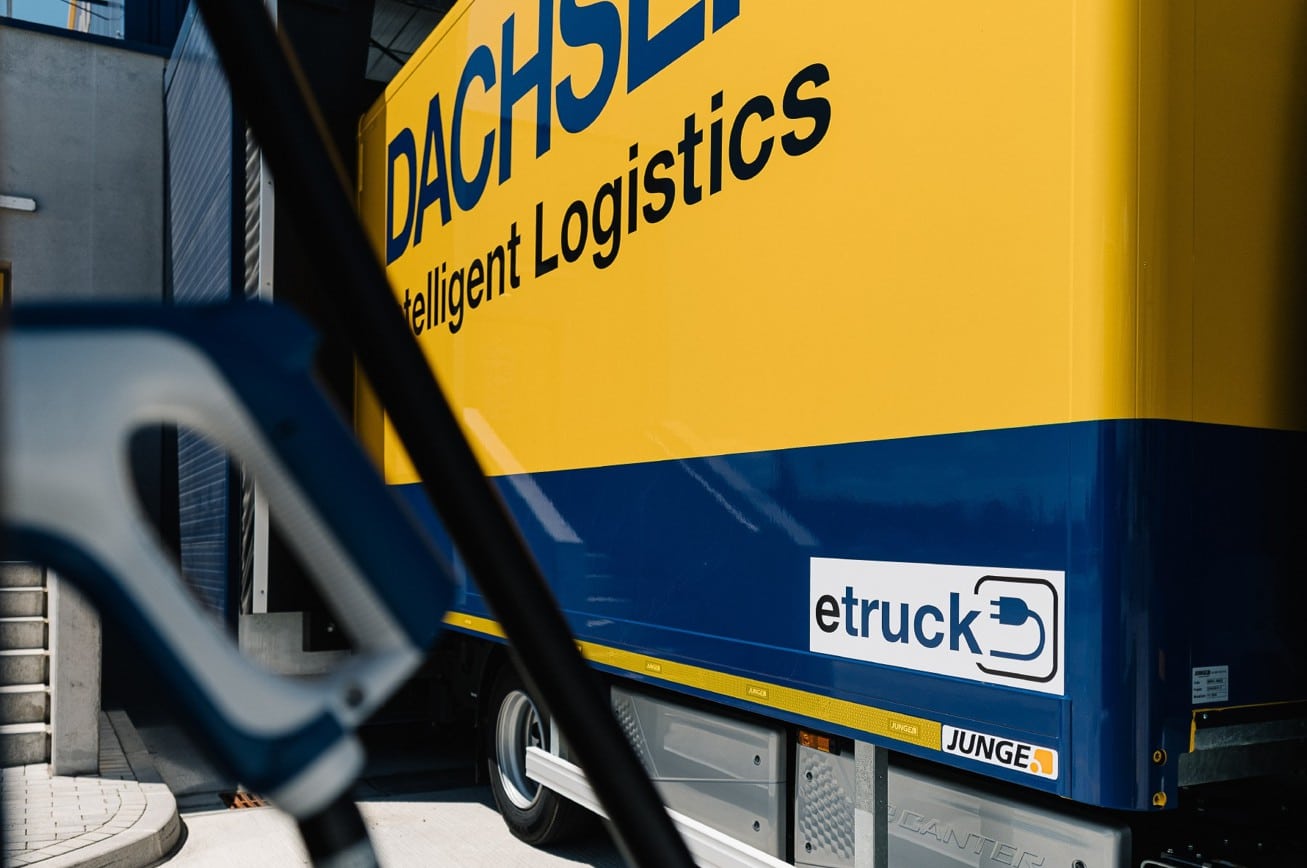
The logistics service provider Dachser is intensifying the use of zero-emission vehicles. These are trucks and cars that do not emit greenhouse gases or air pollutants directly. In a first step, the family-owned company will send at least 50 additional battery-electric trucks onto the roads of Europe by the end of 2023 and plans to incorporate around 1,000 electric cars into its company and service vehicle fleet.
(Kempten) Additionally, Dachser will advance the development and testing of trucks with hydrogen fuel cell technology as part of pilot projects. By 2023 at the latest, the first vehicles from various manufacturers are expected to be operating within the Dachser network.
“The transport sector can only achieve the long-term goal of the global community of net-zero emissions with zero-emission vehicles. Therefore, they also play a crucial role in the implementation of our own climate protection strategy,” explains Stefan Hohm, Chief Development Officer (CDO) at Dachser. “We will significantly expand the use of environmentally friendly vehicles in the coming years to gain valuable practical experience and contribute to increasing the numbers.”
In the Dachser general cargo network, battery-electric vehicles are currently mainly used for urban deliveries. In addition to electrically assisted cargo bikes, Dachser in Europe has primarily deployed electric vehicles with a permissible total weight of up to 7.5 tons in daily operations. Fully electric series vehicles in higher weight classes have been hardly available on the market so far. Currently, Dachser is only using a pre-series model of the 19-ton eActros in the state capital Stuttgart as part of an innovation partnership with Daimler.
More Zero-Emission Trucks to Follow
In the next two years, Dachser will acquire at least 50 additional zero-emission trucks, including heavy battery-electric motor vehicles and tractor units from various manufacturers, either on its own or in collaboration with transport partners.
“We are actively promoting the use of emission-free vehicles in our European network to optimally integrate them into our transport processes. These are investments in the future that will pay off in the long run,” explains Alexander Tonn, Chief Operations Officer (COO) Road Logistics at Dachser. “This year, we will expand the application area of the emission-free trucks to regional traffic and especially shuttle transports. Additionally, we want to use battery-electric yard vehicles for moving swap bodies and semi-trailers at our branches.”
Electric Company Car Fleet
Furthermore, by the end of 2023, every second company or service vehicle at Dachser in Europe is expected to be a battery-electric vehicle. This amounts to around 1,000 cars in total. Drivers of company cars and Dachser branches can choose from various models from different manufacturers. The transition to fully electric cars will occur gradually, as the required usage profile does not always match the technical capabilities of the vehicles. Additionally, due to very long delivery times, short-term needs cannot currently be met. Members of the Dachser Executive Board will switch completely to electric company cars in 2022.
In parallel, Dachser is creating sufficient charging points for electric company cars at its branches. Moreover, over 40 new fast charging stations for trucks with a charging capacity of 180 kW each are in planning. All charging points will be supplied with green electricity, which is either purchased or produced by its own photovoltaic systems.