
Idwal appoints chief commercial officer
Mar 4, 2026 at 10:02 AM
IAG Cargo with stable 2025
Mar 4, 2026 at 10:31 AM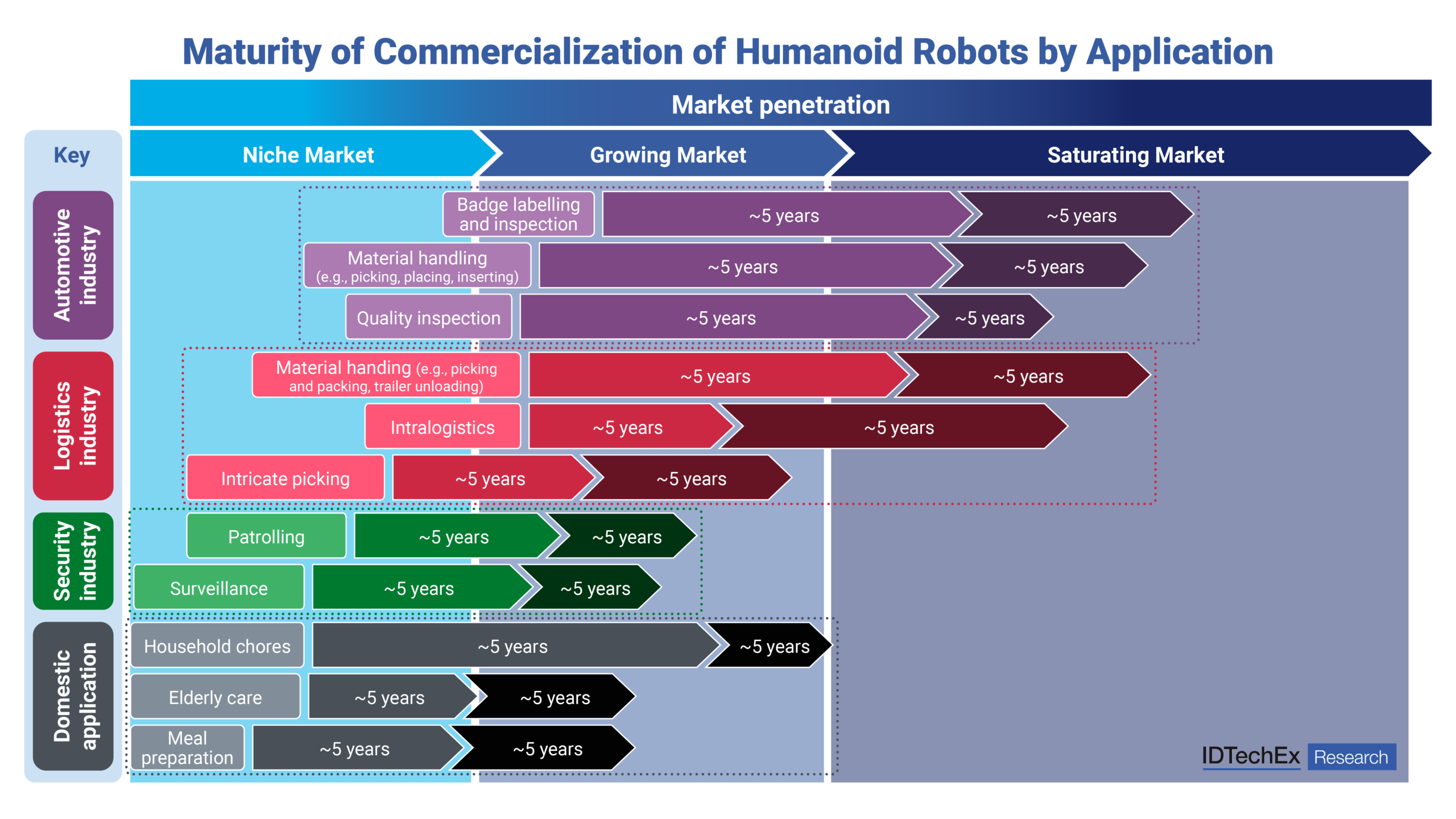
Humanoid robots are increasingly seen as a concrete opportunity to integrate artificial intelligence into human-designed environments. Over the past twelve months, the activity of demonstrations at trade shows has shifted towards structured pilot projects in production facilities, supported by larger and targeted investments. With the gradual stabilization of supply chains and initial cost reductions, operators are beginning to utilize real deployment data to define where humanoid robots can be meaningfully deployed in the short term.
The report „Humanoid Robots 2026-2036: Technologies, Markets and Opportunities“ by IDTechEx provides a detailed technical and commercial assessment of humanoid robots at the component level. It covers drives, motors, reducers, screws, bearings, cameras, LiDAR, radar, ultrasonic sensors, tactile sensors, software and AI stacks, batteries, thermal management, high-performance materials, and end effectors. The report evaluates the challenges in design and manufacturing, the potential for cost reduction, supply chain bottlenecks, and the realistic adoption of humanoid robots in key industries.
Key findings of the report include a ten-year market forecast for humanoid robots, segmented by applications in the automotive industry, logistics/warehousing, and private use. Additionally, the anticipated unit volumes and market sizes for humanoid robots are analyzed.
Industry Application: Logistics as the Second Market
The introduction in logistics and warehousing is expected to follow the automotive industry, although growth may be moderated by competition with existing automation solutions such as autonomous mobile robots (AMRs), automated guided vehicles (AGVs), and industrial robots. However, humanoid robots are increasingly positioned as a flexible alternative when mixed tasks are required in environments designed for humans. With declining hardware costs and improved performance capabilities, humanoid robots could become commercially attractive for basic pick-and-place tasks, package handling, and repetitive warehousing processes.
Despite the accelerated market growth, humanoid robots face significant technical and manufacturing challenges. Key bottlenecks include the energy density of batteries and limitations in thermal management, which restrict operational time and increase downtime. At the same time, scaling high-precision components such as screws, bearings, and high-performance drives remains a critical challenge, as current supply chains are not yet optimized for the mass production of humanoid robots.
With ongoing developments in embodied AI and cost reductions in hardware, IDTechEx forecasts that the market for humanoid robots will reach approximately $29.5 billion by 2036.