


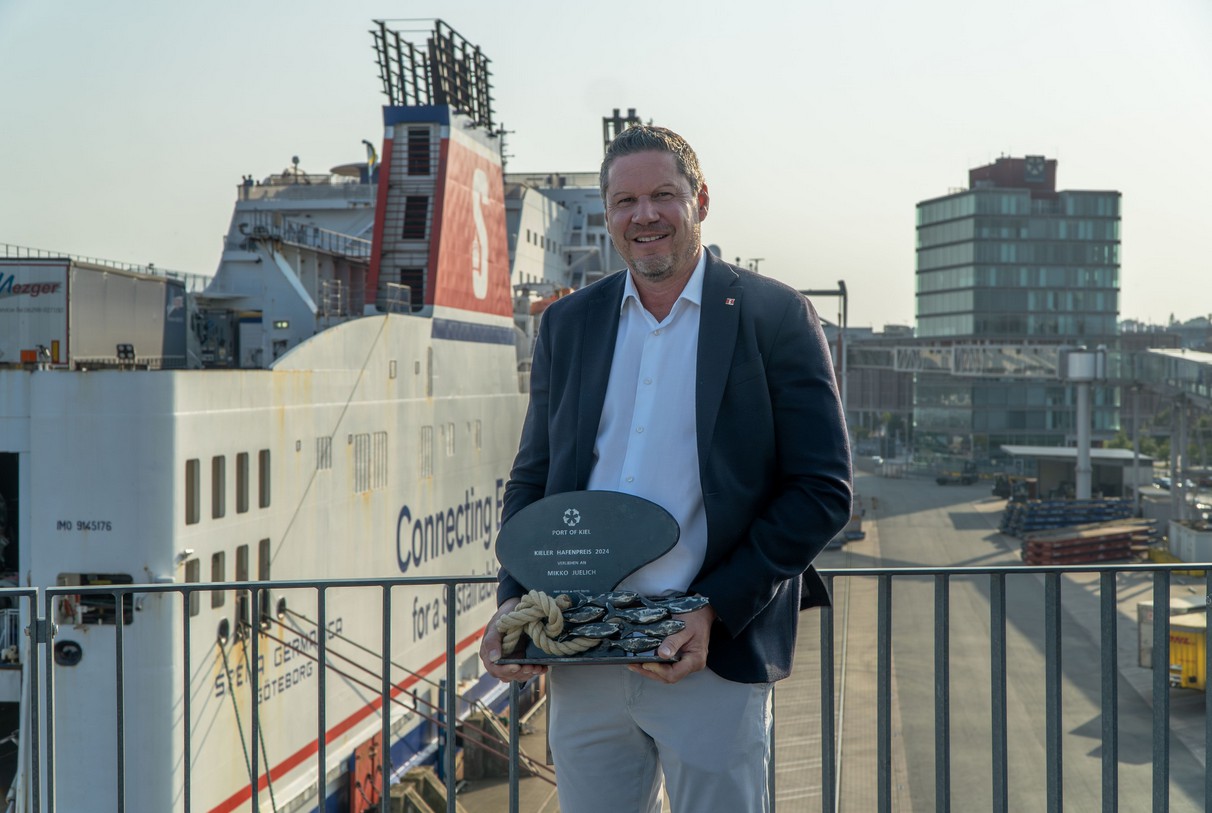
Kiel Port Award Goes to Mikko Juelich from Stena Line
Sep 6, 2024 at 3:44 PM
Webfleet with Study on the Use of AI in Fleet Management
Sep 6, 2024 at 4:37 PM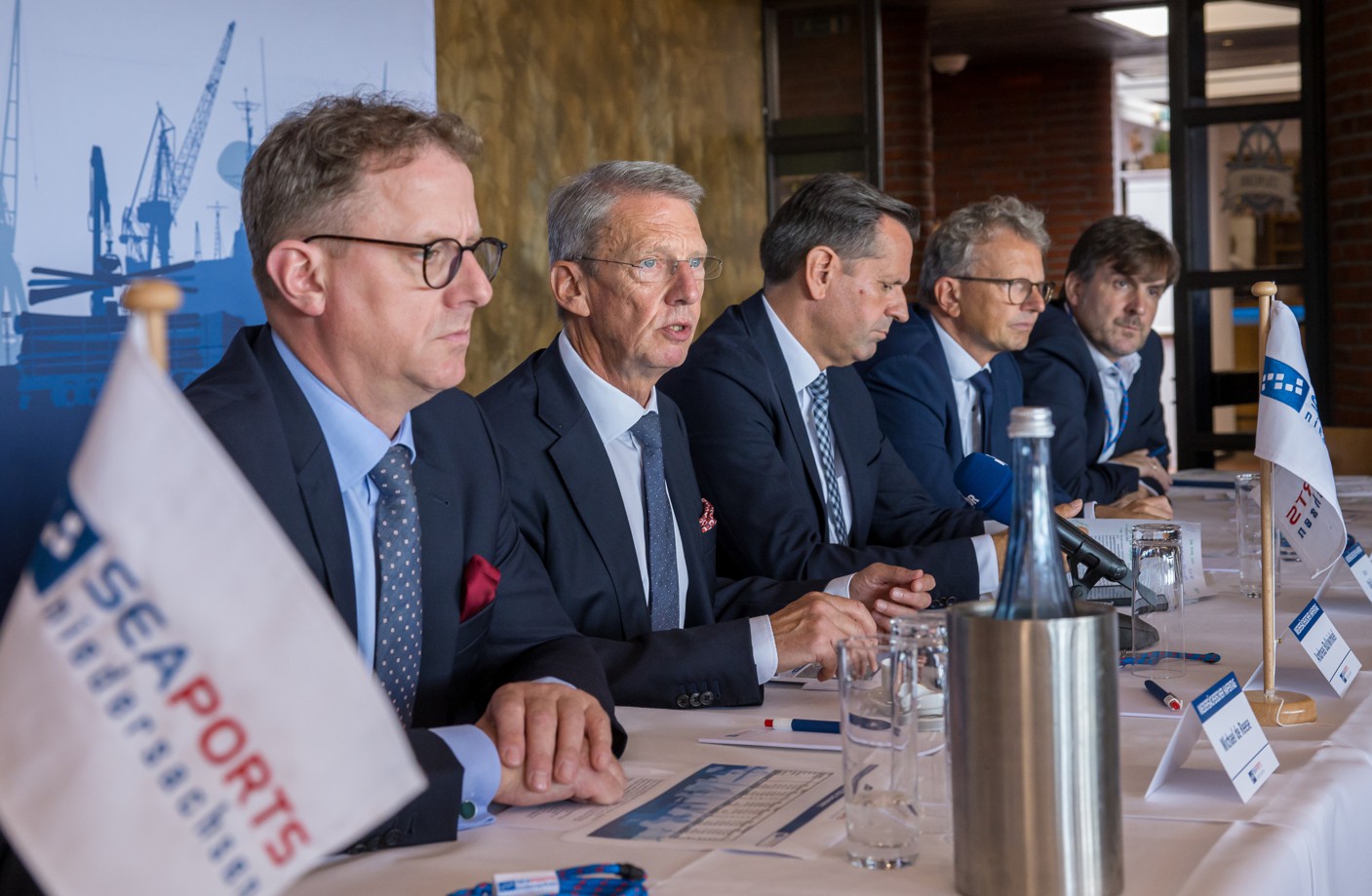
More than 220 guests from the port industry, politics, and administration were welcomed by the Seaports of Lower Saxony on the occasion of the 32nd Port Day in Nordenham. The panel discussion on current topics with Lower Saxony’s Minister of Economics Olaf Lies showcased exciting perspectives and opportunities of the various stakeholders, but also highlighted challenges.
(Nordenham) Personal exchange, maintaining contacts – the 32nd Lower Saxony Port Day was opened today at the seaport of Nordenham by Seaports Managing Director Andreas Bullwinkel in front of around 220 invited guests from business, politics, administration, and the press.
On the occasion of the Port Day, the current developments in the Lower Saxony seaports are presented. In light of the special circumstances of two damaged railway bridges and the resulting traffic restrictions in the seaports of Brake, Nordenham, and Oldenburg, the handling figures in the universal port group have remained remarkably stable: In the first half of 2024, approximately 20.824 million tons were recorded in maritime traffic (20.030 million tons in the same period of 2023), representing an increase of 1% compared to the previous year’s results. “Considering the special incidents at the Hunte Bridge, which have significantly restricted our strong Weser ports, this is a remarkable result,” said Andreas Bullwinkel.
For liquid bulk goods, an increase of 2.43% was achieved, while solid bulk goods saw a significant increase of 10.23%. Additionally, container handling at the EUROGATE Container Terminal in Wilhelmshaven was increased by 1.8% to 298,767 TEU. In the automotive sector, the sales weakness of German manufacturers manifested itself, with a total of 793,841 vehicles handled in the seaports of Cuxhaven and Emden, representing a decrease of 4.1% compared to the same period in 2023. The breakbulk sector suffered the most under the downturn of the German economy, with a decrease of 21.72% to 2.78 million tons, resulting in significant losses in this segment.
The State of Lower Saxony Continues to Invest in the Ports
Lower Saxony’s Minister of Economics Olaf Lies stated, “As the state of Lower Saxony, we will continue to invest in our ports and the associated infrastructure. The state government supports the maritime economy and the ports with a smart and targeted port policy so that we are well positioned for the future and remain internationally competitive and capable. Despite a strained budget situation, it must be clear what a crucial role the ports play: They are the key players and are therefore largely responsible for the success of the energy transition and the provision of a secure, independent, and affordable energy supply. And not only that: Efficient ports and reliable hinterland connections are fundamental prerequisites for foreign trade and supply security, but also for national security. Therefore, the good development of our ports must be regarded as a national community task and finally treated with the highest priority. To maintain the competitiveness of our economy during times of transformation, the expansion and adaptation of port infrastructure is absolutely necessary.
These transformation processes pose significant challenges for the ports but also offer considerable growth potential in the long term. The urgently required projects are associated with total investments in the billions. However, the financing of the necessary measures significantly exceeds the financial capabilities of the states and companies in the port industry. Here, the federal government is obliged, as it directly benefits from the Lower Saxony ports. We are already working well together here: This is evidenced by the recent notification of berths 5 to 7 in Cuxhaven. We have a plan, we have the financing – and now we are starting the implementation. My conclusion: We in Lower Saxony are aware of the outstanding importance of the ports.”
Growing Importance of the Port of Nordenham
The Mayor of the city of Nordenham, Nils Siemen, referred in his greeting to the increasingly growing importance of the port for the industrial location of Nordenham and thanked those involved for the quick repair of the auxiliary bridge over the Hunte. At the same time, he also had cautionary words: “The commitment must not end now; we must use the momentum gained to organize the rapid construction of the Hunte Bridge. This is essential for the ports and the entire region to continue to develop positively.”
The panel discussion, led by Tim-Oliver Frische (DVV Media Group), in which Minister of Economics Olaf Lies discussed with the Managing Director of Steelwind Nordenham, Jost Backhaus, as well as with Michael Körber from DB Netz AG and Michael de Reese as Chairman of the AG Lower Saxony Seaports, among others, about the industry’s demands for modern infrastructure and the necessary structural change in ports, provided exciting insights into the upcoming challenges for all stakeholders in the seaport traffic economy.
Michael de Reese, spokesperson for the Working Group of Lower Saxony Seaports, emphasized: “The Lower Saxony seaports and their companies are going ahead wherever possible to contribute to ensuring that the port and economic location of Germany remains competitive. However, the federal and state governments must also fulfill their responsibility for the infrastructure and the sea and land access to the seaports.
Following the event, which once again proved to be an important “marketplace” for mutual exchange, the minister and the members of the state parliament’s subcommittee on ports and shipping were invited to an excursion along the Weser River next to the Nordenham port, where the prospective developments of the port and industries were presented.
Photo: © Seaports / Image caption (l. to r.): Michael de Reese, Andreas Bullwinkel, Olaf Lies, Holger Banik, Nils Siemen