



HMM Algeciras – The Largest Container Ship in the World Leaves Hamburg
Jun 10, 2020 at 7:30 AMVrouwen in de logistiek – tegenwoordig eigenlijk geen onderwerp meer
Jun 10, 2020 at 8:00 AMWomen in logistics is still a much-discussed topic. Does it get better if we keep discussing it, or have women arrived in logistics when we no longer talk about it? Gudrun Gaus reports on her life in logistics, into which she was literally born. Due to her many years of industry experience, she can assess the topic sustainably.
By Gudrun Gaus
What about women in logistics? Initially completely convinced and self-assured: This is the topic. You can say a lot about it. I am a woman in this industry. Or is there still the inner “role” voice today: Who gets the coffee?!
Then the thought quickly arose, which is also reflected in the headline. How does one start such a topic without getting into a role discussion, without being labeled as a man-woman or a feminist? Or leaving the impression that one is too emotional, even a female diva!? Perhaps even questioning one’s own gender?
Therefore, I decided to simply write from the perspective of a woman and the experiences in this industry. Always with a certain wink, regarding what happens to one “as a woman.” Leaving it open how the other side thinks about it. Just considering it as a thought-provoking impulse. Whether there is any truth to it or not, that lies in the eye of the beholder.
Since my youth, I have been a woman in the transport and logistics industry and have experienced exciting things regarding women in logistics.
Resistance in the Family-Owned Logistics Company
Whether growing up as a daughter in the family logistics company, as an apprentice, as a clerk, as the owner of my own seminar and consulting company in logistics, as a key account manager, as a task force manager and interim manager, as an operational leader responsible for up to 350 employees in the transport sector, up to my current role as managing director, it has been an exciting journey with many insights.
It all started for me with the topic of women in logistics when I told my father after secondary school that I wanted to start an apprenticeship as a freight forwarding clerk. That was when the first contradiction arose; he said I should do something in the social field as a woman. That would be more suitable for a woman, in his opinion.
At first, I followed my father’s words, the “role” voice: Who gets the coffee? However, my heart was elsewhere, and I decided against my father’s will and began an apprenticeship as a freight forwarding clerk. What I have “almost” never regretted to this day.
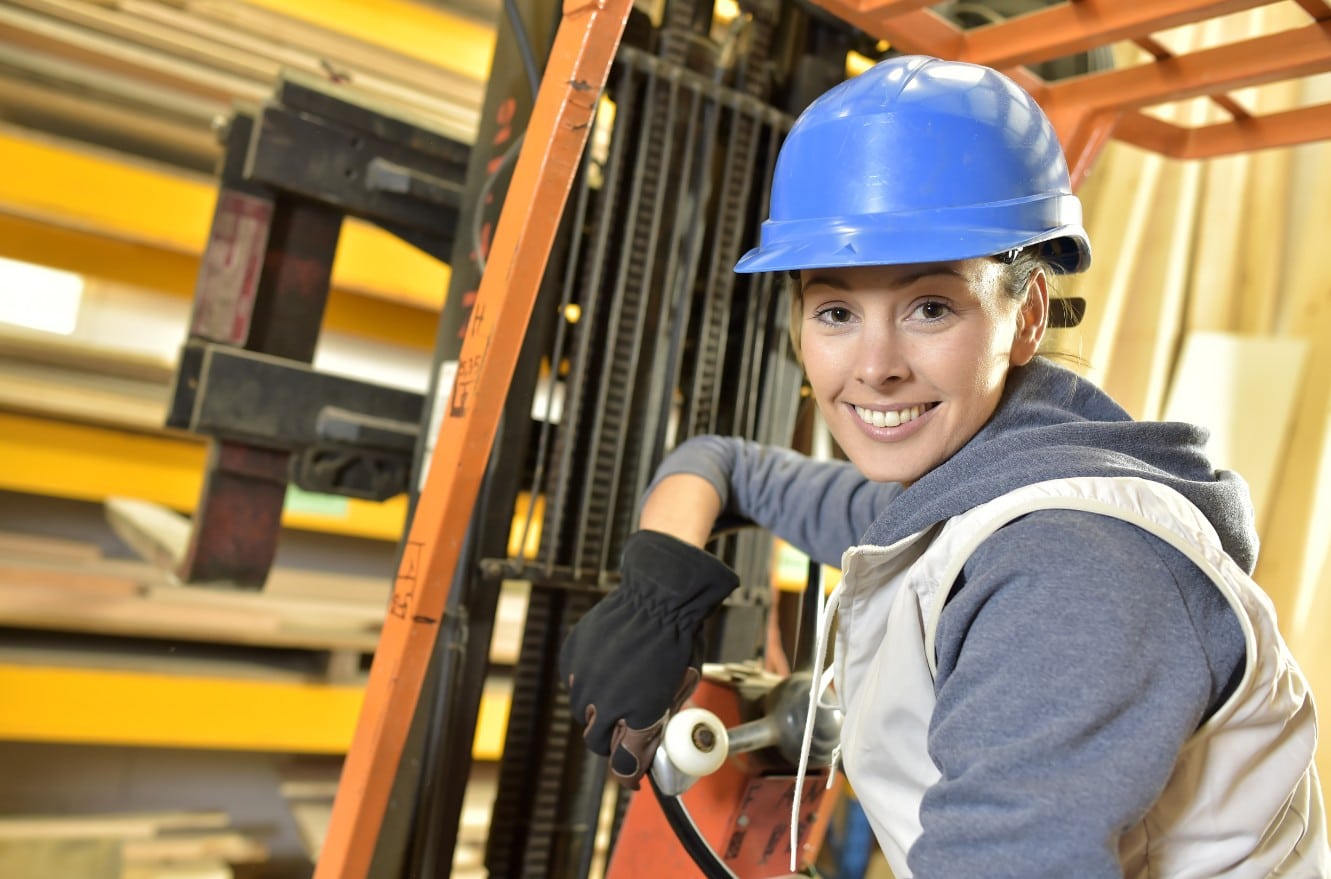
The first practical experiences as an apprentice in dispatch and warehousing in the late 80s and 90s were ahead. Back then, the role as a woman was still very clear, no doubt. And one could only get through if one was tough, refraining from wearing dresses in operations (even if they went over the knee and were worn with flat shoes). It was best to appear “undercover.” I admit, this has influenced my clothing choices for many years and still does to some extent today. Which is actually nonsense. But is it still nonsense today when a woman in logistics dresses subtly feminine? How is one still perceived today in meetings, at trade fairs, or large events?
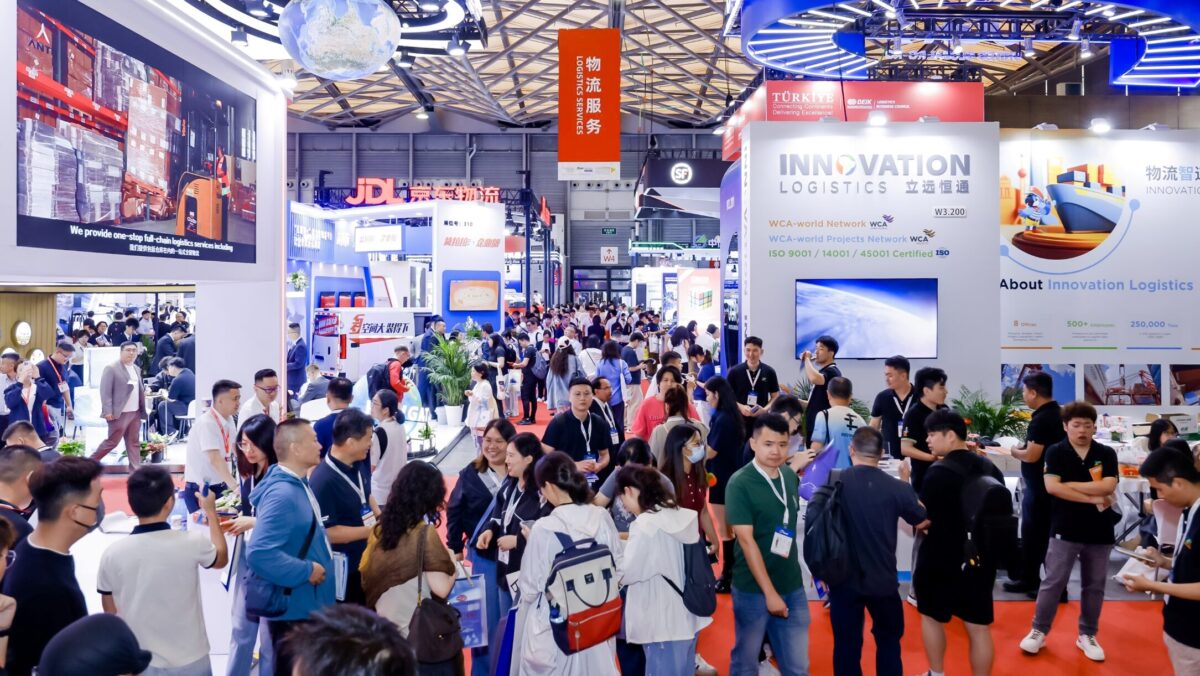
One experience was when I was dressed somewhat more femininely as a visitor at a large logistics event, standing at the reception desk to pick up my name tag for entry. A gentleman confidently approached me and said I could surely help him here; he couldn’t find his name tag. This mindset was already interesting. Admittedly, there weren’t really many women among the attendees at the event. And most of the women present worked in service or reception.
The next experience was in the mid/late 90s when my father did not want to pass on his logistics company to me, a woman. His statement was that a woman in logistics would not be able to succeed. If I had been a man, it would have gone very differently.
Thus, he sold his company, to my disappointment.
I could understand him back then. Yes, because let’s be honest, how many women were there at that time who led a logistics company or operational departments? Except as the wife of the entrepreneur in accounting or human resources.
But how many are there today!? Not really many more. And I mean operational departments, not accounting, billing, or human resources.
My father’s statement, “A woman in logistics doesn’t work,” did not discourage me. On the contrary, it motivated me even more to pursue the path as a woman all the way to the top with “now more than ever.” In retrospect, I would sometimes rather say: “to dare.”
The Attitude Towards Women Became Bolder
In the following years, logistics became bolder. A few more women had arrived in logistics. The first attempts to establish women in sales or even in dispatch took place. However, this was still more the exception and sometimes felt in the statements of the executives as if it was seen as an experiment. Let’s see if this could work.
I admit, as an operational leader and as a woman, I sometimes caught myself thinking: Can a woman, for example, succeed in dispatch? Which was actually a completely absurd thought. And yet this role model was very present. And I think it still is today.
But why does one come to this thought? Are there further reasons why the proportion of women in logistics remains so low?
The fact is, there are many well-educated women in logistics. Even among apprentices, women are no longer a rarity. But where are they after school and/or after their training? This question has occupied me and continues to do so today.
On this topic, I had an exciting invitation in 2009 as a speaker for the University of Applied Sciences for Business and Law in Berlin: https://www.gudrun-gaus.de/uploads/1240417290_0.pdf
In logistics, there was already a lack of qualified young talent back then. The audience agreed that if one were to draw on the diversity in society (meaning also women), the demand could be met in the future. Diversity management as a concept for corporate governance was discovered as an important tool for future-oriented corporate development due to the shortage.
“Discovered”: a provocative word? Are women discovered because the technical talent is running low? Or are there other reasons? Unfortunately, I received few answers to this question during the lecture.
I am aware that it was a provocative question back then. However, today, in 2020, we have an even greater shortage of young talent, especially in logistics. And I think this question is still absolutely important and perhaps even existential. Do we only need women because it is getting tight, or are there other advantages?
Before I continue with the path of women in logistics, I wanted to ask you as a reader: How would you answer this question for yourself?
Because back then, in 2009, 50% of the students in logistics-related fields were women. And there was the question: How do we manage to keep them excited about the industry? What expectations do they have of their future employers in logistics? What measures are necessary to better integrate the special strengths and needs of women and men and the existing potential, and how can prejudices be reduced?
Numbers and Facts
The Federal Association of Logistics e.V. (BVL) has also thought about this and found some interesting answers to the following questions:
- How many women are employed in logistics professions?
- How many hold leadership positions?
- How should women in leadership positions behave?
- Male domain? Opportunities for and with women in logistics.
- Why has logistics failed to build up more female specialists and executives?
You can find the answers in the link to the BVL topic paper:
https://www.bvl.de/files/1951/1988/2128/Begleitende_Publikation_zur_Session_Maennerdomaene.pdf
A few numbers and facts:
- In 1960, 42.7% of women and 90.3% of men aged 15 to 65 were employed. (1)
- By 2017, 71.5% of women and 78.9% of men were employed. However, in very different positions and time spans. (2)
- At the management level, only 8.6% of positions are occupied by women. (3)
- In international comparison, Germany ranks in the lower midfield with a female share of 28 percent in jobs in middle and upper management, according to figures from the KfW Development Bank.
- The number of female founders of women-led small and medium-sized enterprises (SMEs) is even declining, according to KfW data.
For logistics, the following numbers, compiled by the BVL, apply:
- In logistics, transport, and traffic, the proportion of women was 20.7% in 2017. Excluding the area of vehicle drivers, the proportion of female employees in the industry is 28.7%. (4)
- Women are still found in the classic office jobs, such as billing, accounting, and human resources.
- There are more women in sales than before. (It should also be noted that sales in the 80s and 90s in companies often did not exist at all and were handled by the owner or operational managers.)
- Women in sales are represented in the internal service twice as often as in external service. (5)
- The current proportion of women in logistics bachelor’s programs is 30%. This has been 25% over the last ten years. (6)
- The proportion of graduates awarded the BVL Thesis Award rose from 26.4% in 2011 to 45.6% in 2018. (6)
- 40.2% of visitors to career events in logistics are female. (6)
- But only 18.6% of the top 100 logistics companies employ women in management. Although there would be well-trained female professionals.
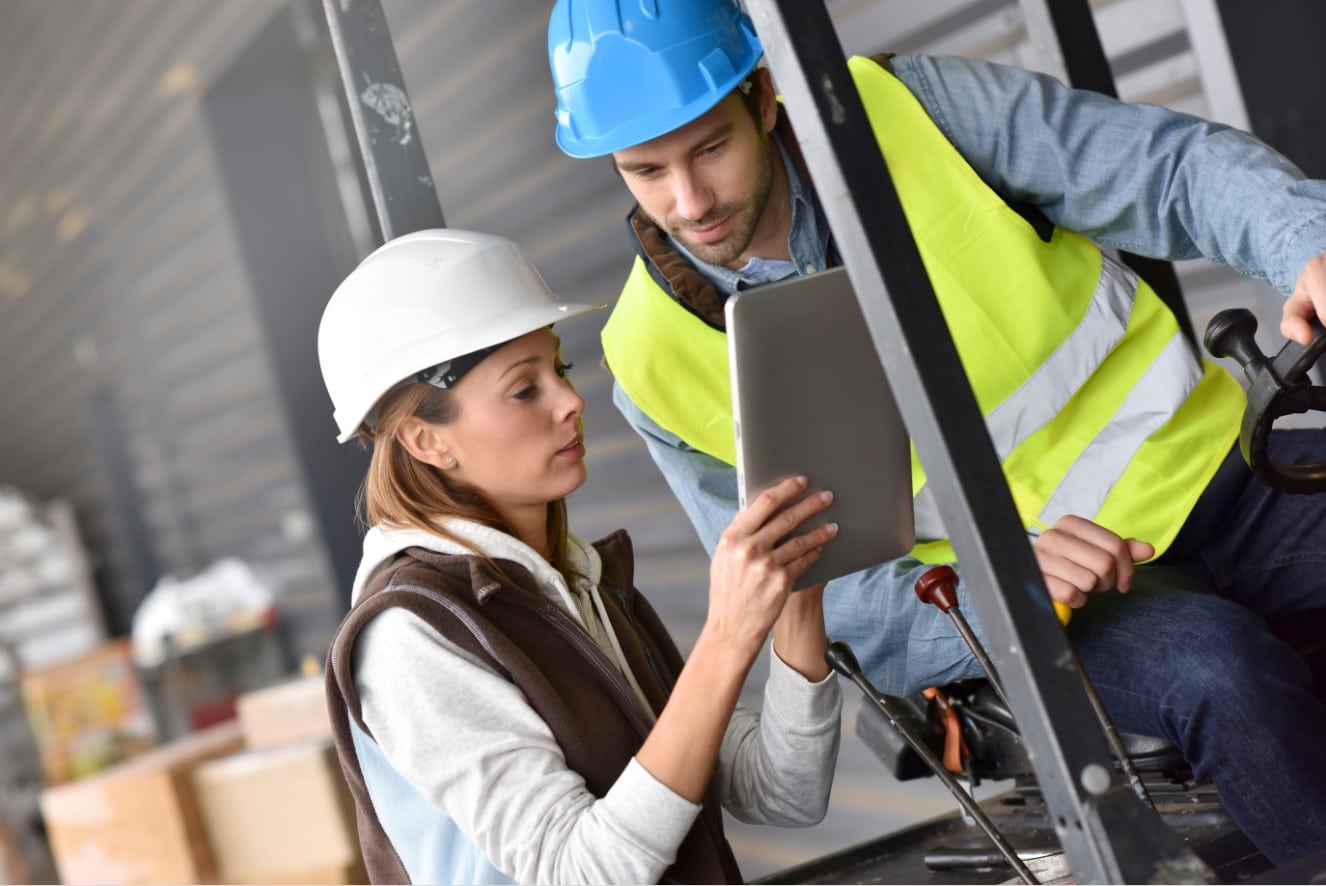
In my opinion, it is of great advantage for companies to utilize all aspects of running a business. Both the male and the female aspect.
Studies show that all parties can benefit from more diversity in companies and especially from women in leadership positions.
And, it is no longer economically viable today to ignore this potential.
Why Do Women Still Struggle in Logistics?
But what is the reason that the industry and women still struggle?
Is it the issue that women have children and cannot work consistently and continuously and develop accordingly? Is a woman still a “risk” in hiring or promotion today?
Is it annoying when children get sick and usually the woman takes over the care and thus is initially absent? Especially during the Corona period, this has become a topic again!
Is it due to the women themselves, who sometimes do not trust themselves to take the path to leadership positions? But why could that be?
Are the rather non-existent framework conditions, such as flexible working hours, home office, or even the male culture in communication, the way of collaboration and approach to tasks, different networking, which sometimes intimidates?
We should all reflect and actually ask ourselves: Does the inner “role” voice still exist today – Who gets the coffee?!
My honest answer from personal experience and conversations with other women: Yes, to a larger extent. Because the topic of role is still present in the industry. Not as strongly as before, but still there.
However, as I see it, the roles and strengths of the participants and their requirements should not be changed. Because then what makes the diversity positive would be lost.
It should be creatively considered how it can be designed together. Courage and openness are already the first steps. Approaching each other without prejudice, which is not always easy, but the advantages absolutely outweigh. This is also my experience as a leader in this industry.
A Little Anecdote to Conclude
I was a leader in a freight forwarding company and was invited by the owner to participate in the weekly management and executive meetings.
At the first meeting, I sat at the large conference table exclusively with gentlemen. Then the secretary came in and asked who wanted coffee. After the order, I stood up without hesitation and walked past the secretary to the coffee machine.
The secretary then stood next to me, puzzled, and asked what I was doing.
My answer: “I am getting coffee for us.” She only said: “Ms. Gaus, you are a leader; getting coffee is my job!” After my initially strange face, we both had to laugh out loud. There it was again – the role of who gets the coffee.
Photos: © (from top to bottom): 1. Gudrun Gaus / 2.-3. Adobe Stock
Sources:
- Federal Agency for Civic Education BPB (2010): Women’s Work in Times of Globalization https://www.bpb.de/gesellschaft/gender/frauen-in-deutschland/49397/globalisierung-und-arbeit
- Federal Agency for Civic Education BPB (2019): Employment by Gender, Evaluation of Data 2017 https://www.bpb.de/nachschlagen/zahlen-und-fakten/europa/70593/erwerbstaetigkeit-nach-geschlecht
- +3 Magazine (Issue March 1, 2019): How Does the Economy Become More Female? pp. 4–7 https://plus-drei.de/category/ausgaben/ausgabe-nr-52-vom-1-maerz-2019/?wie-wird-die-wirtschaft-weiblicher
- Institute for Employment Research (2018): Professions in the Mirror of Statistics http://bisds.iab.de/Default.aspx?beruf=BA13®ion=1&qualifikation=0
- Birdiematch (2019): Salary Report 2019 https://www.birdiematch.de/logistik-news/gehaltsvergleich-logistikberufe/
- German Foreign Trade and Transport Academy (DAV)
 |
Gudrun Gaus grew up in a logistics family business and has been closely connected to this industry ever since. Including an apprenticeship as a freight forwarding clerk, she has gone through various stages in logistics. Stations included her own company Coaching Logistics with a focus on training/coaching/interim management, key account management at the European level, and operational leadership positions with up to 350 employees, including a fleet of over 220 pulling units. Today, she is the managing director of P.S.I. Speditions GmbH in Oberschleißheim (www.psi-spedition.de) and the mother of a wonderful 20-year-old daughter. |