

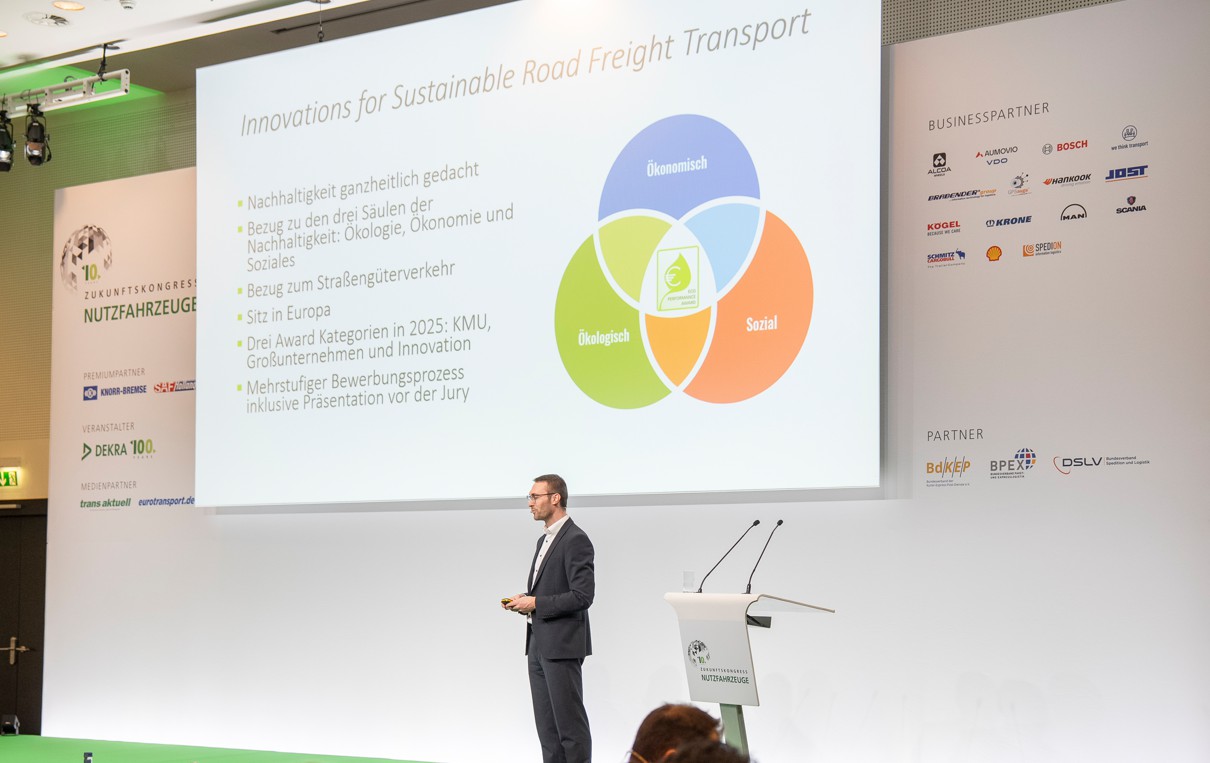
The Winners of the Eco Performance Awards 2025 Have Been Announced
Oct 30, 2025 at 9:11 PM
Lufthansa Cargo merges CB Customs Broker and heyworld
Oct 31, 2025 at 6:39 PM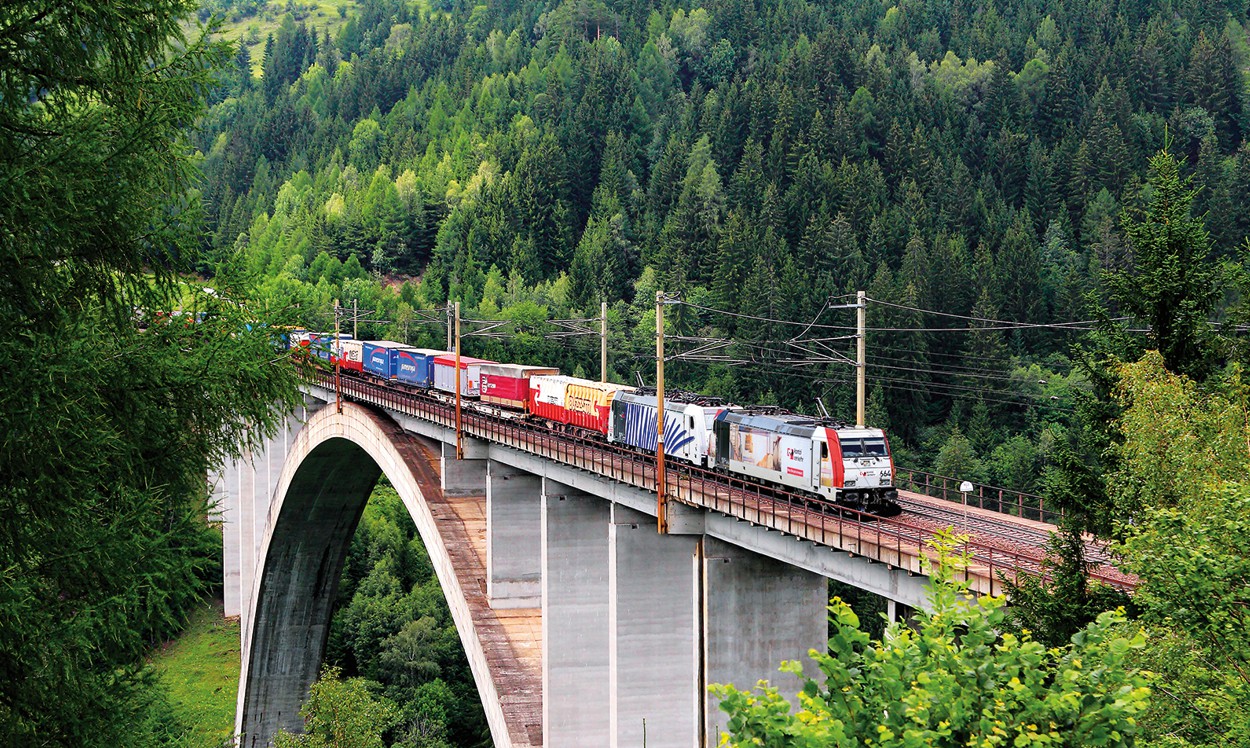
Against the backdrop of the particularly precarious situation in the industry, Kombiverkehr KG, together with other intermodal providers and associations, has addressed an open letter to the Federal Minister for Transport, Patrick Schnieder, and the new CEO of Deutsche Bahn, Evelyn Palla. The open letter informs about the current alarming developments in the areas of infrastructure, service quality, track costs, and the further impending impacts of the general renovation on particularly important corridors of combined transport.
Hupac, TX Logistik, ERFA, Fermerci, UIRR, SGKV, and Kombiverkehr simultaneously outline the necessary political measures for improving the situation.
Here is the letter in full:
Shift from Rail to Road
Save Combined Transport!
Dear Mr. Schnieder,
Dear Ms. Palla,Combined transport has been the growth driver of rail freight transport for many years – a beacon of hope for successful climate and transport policy. Shifting from road to rail seemed obvious, with annual growth rates of three to seven percent.
But that is now over. After years of gradual decay of rail infrastructure, the performance of freight transport is miserable, reliability is in the basement, and production costs are exploding due to train cancellations, detours, and delays.And now the corridor renovations are coming – in addition to the many existing construction sites, disruptions, and bottlenecks. For the six-month full closures, detours are promised, the economic viability of which is uncertain. Experiences from previous construction phases show that restrictions such as shorter trains, freight-traffic-incompatible track profiles, or significantly longer routes can be expected. Such conditions jeopardize the competitiveness of rail freight transport and lead to train cancellations and shifts to road transport.
Additionally, the costs for rail usage are continuously rising. Since 2023, track prices have increased by 19%, and further increases of between 25 and 35% are expected for 2026. Penalties for short-term cancellations are imposed – even though many cancellations are a direct result of poor network quality. Even the parking of rail cars now incurs significant costs – those cars that must be taken out of service due to lack of competitiveness.
The result: The competitiveness of rail is dwindling. While rail prices rise, road costs remain stable or decrease. No wonder that even long-term customers are turning their backs on combined transport. Daily, we hear about shifts back to the road – a process that occurs quickly and is hardly reversible. Once new trucks are procured and drivers hired, they usually remain there permanently.
The trend is already visible and documentable. On the Rhine Valley axis via Switzerland, combined transport has decreased by 7.6% in recent years, while road freight transport has increased by 7.2%, which means a shift of 86,000 trucks. For the coming years, we expect – due to the corridor renovations – a decline in rail freight transport capacity of 20 to 30% and hundreds of thousands of additional truck trips. Alone on the major alpine-crossing corridors via Austria and Switzerland, this amounts to around 500,000 additional truck shipments – with more emissions, more traffic jams, and a higher risk of accidents.
The shift back to the road would render the investments made by the federal government over decades in a modern terminal infrastructure – under the Combined Transport Handling Facilities Directive – absurd.
Also, the significant European investments in rail infrastructure, such as in the Gotthard or Brenner Base Tunnel, would be devalued in the medium to long term. These projects were realized in the belief that the Federal Republic of Germany, as an important economic location and transit corridor, would provide the necessary capacities and thus make a significant contribution to the competitiveness of Europe in the global comparison, especially against Asia.
Our demands – Save Combined Transport!
The indifference of transport policy towards combined transport is alarming. A functioning logistics system is the lifeblood of the German industry. We demand short-term and medium-term measures to stop the impending decline of rail freight transport:
- Zero increase in track prices for 2026
- An immediate measure with signaling effect. What is possible for passenger long-distance transport must also apply to freight transport. Different treatment of transport sectors contradicts the principle of non-discrimination.
- Capacity guarantee of at least 90% of today’s transport performance
- For all corridor renovations and longer construction sites.
- Strengthening suitable diversion routes
- Same parameters for train length, train weight, and train profile as on the main axes.
- Track allocation in case of bottlenecks according to market demand
- Consideration of profile, train load, and scheduling to keep as many transports on rail as possible.
- Operational hardship allowance for inferior tracks during corridor renovations
- To support connections that would otherwise have to be discontinued. With financing, for example, through the CO2 toll.
- Suspension of cancellation fees until an acceptable network quality is restored.
Dear Mr. Schnieder, dear Ms. Palla,
we can no longer pretend that everything is fine. At stake is the supply security of the industry, the competitiveness of the location Germany, the climate goals – and for many companies simply economic survival.
We are ready to work with you to develop solutions that reconcile the need for infrastructure renovation with the requirements of logistics. Our goal is to further develop combined transport as the backbone of a sustainable, efficient, and climate-friendly logistics system – in the interest of the economy, society, and the environment. The industry is ready to contribute. Let us save combined transport.Sincerely,
Companies and associations of rail freight transport and combined transport
ERFA European Rail Freight Association Dirk Stahl, President
Fermerci Giuseppe Rizzi, Managing Director
Hupac Michail Stahlhut, CEO
Kombiverkehr Armin Riedl, Managing Director || Heiko Krebs, Managing Director
SGKV Study Group Combined Transport Clemens Bochynek, Managing Director
TX Logistik Albert Bastius, COO || Dirk Steffes, CSO
UIRR Union International Rail Road Ralf-Charley Schultze, Managing Director
Photo: © Kombiverkehr