


Protection of Important Sea Routes at the Center of VDR Blue Night 2025
Sep 18, 2025 at 6:21 PM
Fiege Strengthens Its Presence in Austria with Logistics Center in Vienna
Sep 19, 2025 at 5:38 PM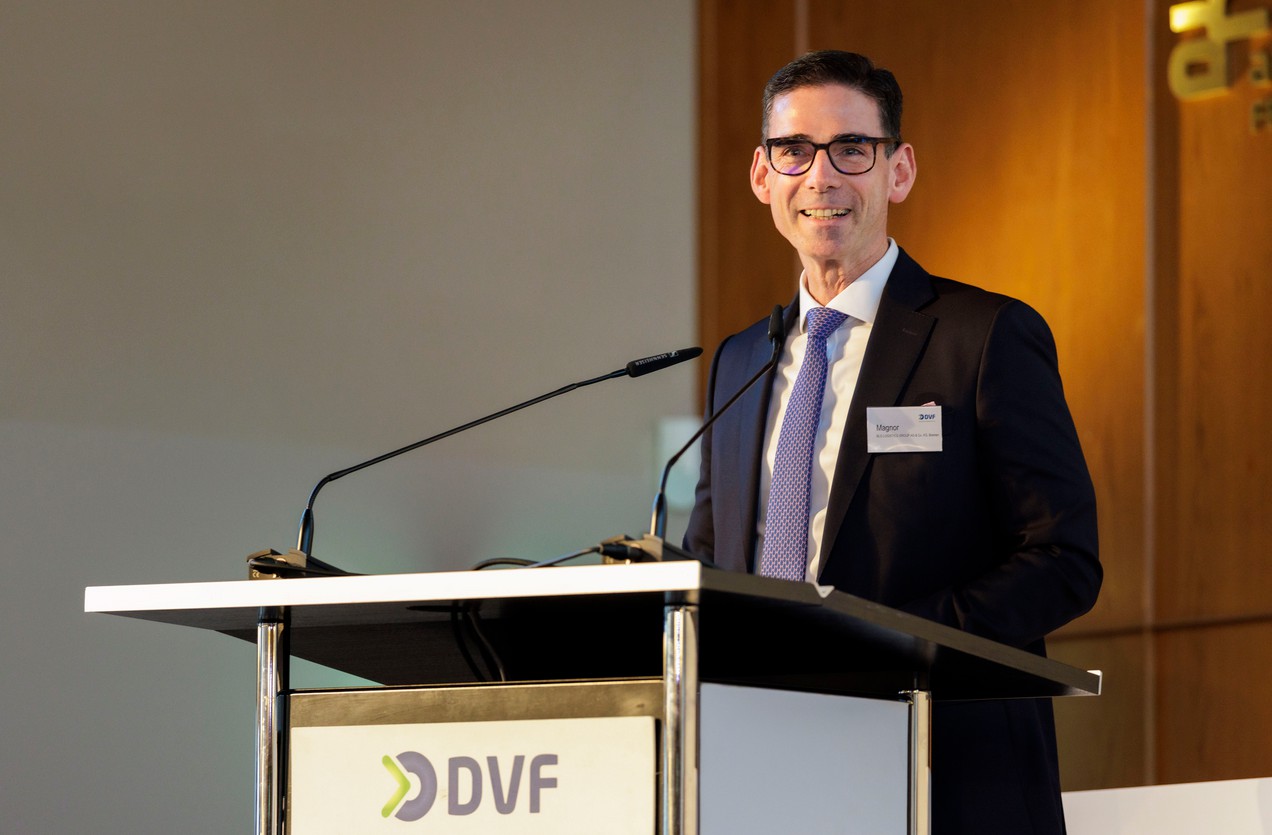
At the Parliamentary Evening on Ports and Shipping organized by the German Transport Forum, DVF board member and CEO of BLG LOGISTICS GROUP AG & Co. KG Matthias Magnor called for extensive reforms. These concern both the financing of port infrastructures, the expansion of seaward access and hinterland connections, as well as the supply of sustainable fuels.
(Berlin) “Whether transformation, energy supply, or defense capability: German ports fulfill tasks of national significance. Without substantial federal participation from special funds, these challenges cannot be met,” emphasized Magnor, advocating for a new basis for financing port infrastructure. It is also crucial for waterways that the renovation rates for infrastructure increase and funding is improved – contrary to what is planned in the draft federal budget for 2026.
Dr. Christoph Ploß, Member of the Bundestag and Coordinator of the Federal Government for Maritime Economy and Tourism, emphasized the national importance of ports: “No matter where they are located in Germany: Our ports ensure supply, export strength, and the resilience of the entire country – and they urgently need to be expanded for the future. Therefore, the federal government must provide stronger financial support to the states with various special funds. Additionally, planning law must be adjusted, for example, by introducing a cut-off date regulation, so that large infrastructure projects can be implemented quickly. The financial resources must translate into concrete projects that advance our country.”
Uwe Schmidt, Member of the Bundestag, member of the Budget Committee, and reporter for the SPD parliamentary group’s transport budget, also called for greater financial involvement from the federal government and drew attention to hinterland connections: “The performance of port infrastructures and hinterland connections is essential for Germany. We must simply do what is necessary for future security now. The increase in the port compensation is also legally possible. If we agree, it can be done. The majority of investments from the special fund for infrastructure and climate neutrality must clearly benefit infrastructure – target size 80 percent. The funds provided by the federal government must be used completely, quickly, and effectively. For this, we need mutual coverage capability between the modes of transport.”
Only with Support Can We Continue to Exist
Markus Bangen, CEO of duisport – Duisburger Hafen AG, referred to the competition in which German ports can only continue to exist with support: “The German port industry faces a double challenge: We must make huge investments in infrastructure, digitization, and transformation while state financing stagnates. Without a reliable and adequate funding framework for port infrastructure and hinterland connections, we risk competitive disadvantages and jeopardize central future tasks such as energy imports, supply chain resilience, and military logistics. Politics and industry must now develop solutions together so that our ports can continue to fulfill their role as hubs of transformation in the future.”
For this, Claudia Müller, Member of the Bundestag from Alliance 90/The Greens in Mecklenburg-Vorpommern and reporter for maritime economy, called for stronger coordination of port policy: “In times of crisis, good cooperation among German ports is vital. The federal government must provide targeted support here – within a pan-European port strategy. It should also finally publish the DENA study on port infrastructure so that informed decisions can be made. For our ports, division of labor and cooperation are essential, if only to have enough space.”
Another important topic of the evening was the transformation to climate neutrality and the supply of new energy sources. Ports play a central role in this. A supply of sustainable fuels must urgently be established for shipping.
The Industry Takes Responsibility
Dr. Arnt Vespermann, board member of the Association of German Shipowners and CEO of CPO Holding GmbH & Co. KG, reaffirmed: “Our industry takes responsibility, and we accept it. Commercial shipping proves that efficiency, innovation, and climate protection go hand in hand: We are already relying on modern ships, forward-looking drives, intelligent route management, and alternative fuels. We are consistently steering towards climate neutrality by 2050. What is still needed now is the crucial step: globally available and affordable green fuels and the appropriate infrastructure.”
Photo: © DVF / Image caption: DVF board member and CEO of BLG LOGISTICS GROUP AG & Co. KG Matthias Magnor