



Study: Only 8-10 Percent of the Global Warehouse Industry is Automated
May 6, 2025 at 6:51 PM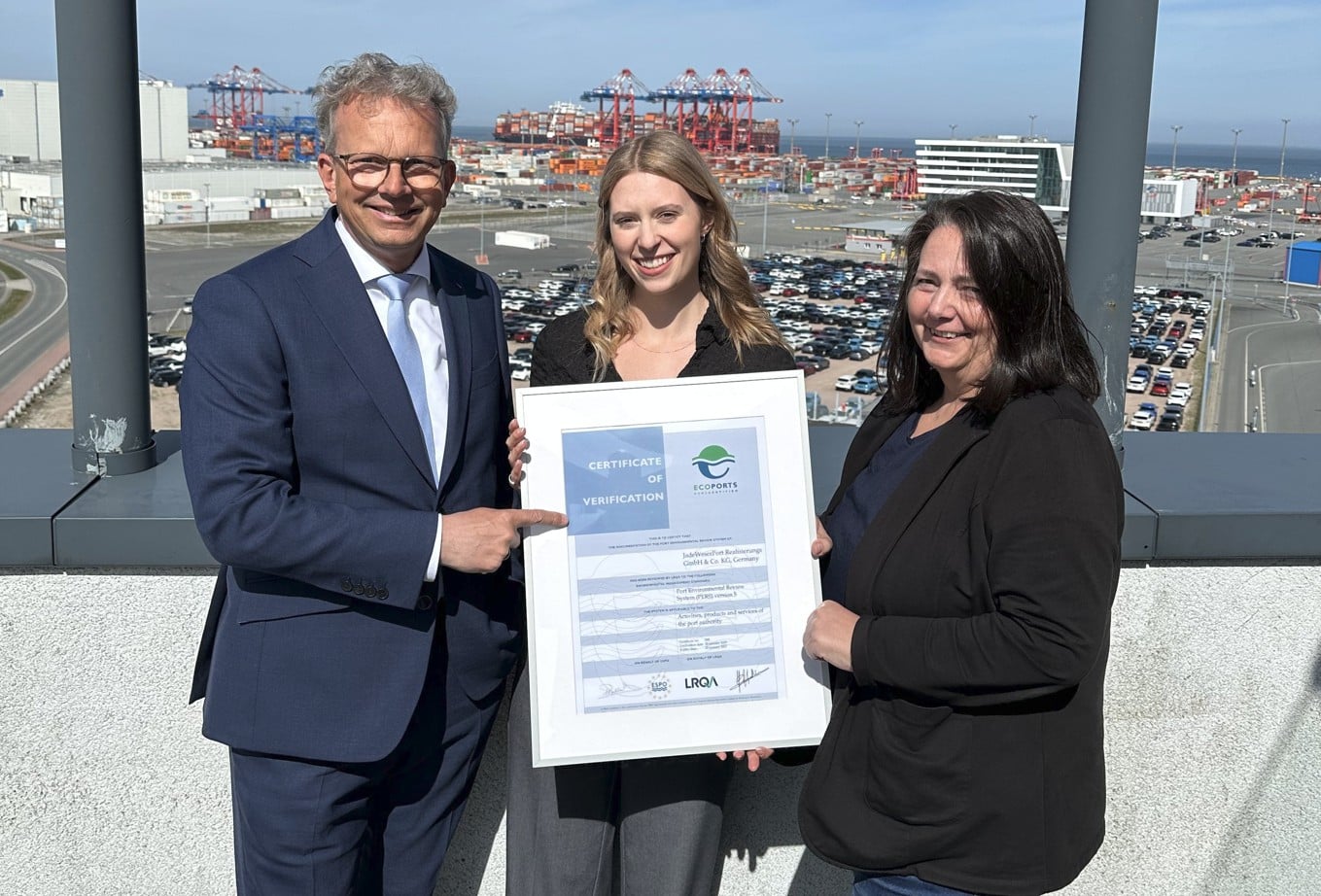
JadeWeserPort Certified for Environmental Management
May 8, 2025 at 12:52 PM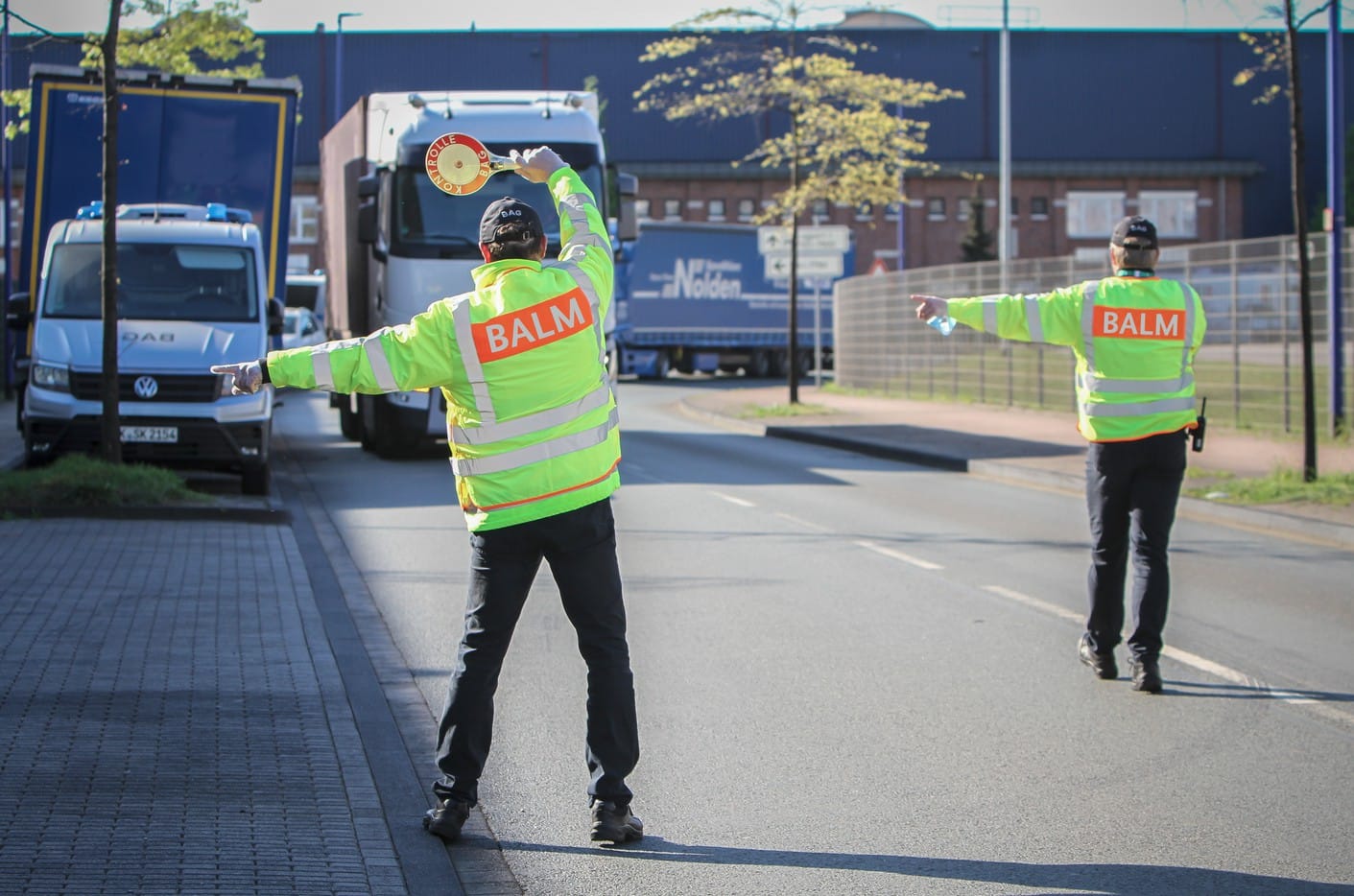
On May 7, Christian Hoffmann, President of the Federal Office for Logistics and Mobility (BALM), and Thomas Ganz, Director of the Rhineland branch of the Autobahn GmbH, met at the Rur-Scholle-Süd rest area on the A4 near Düren to inspect the site for the pilot facility of a weight control station.
(Köln/Düren) In May 2023, the Autobahn GmbH and BALM signed a cooperation agreement to establish 16 weight control stations to protect road users and the highway infrastructure throughout the country: Today, the pilot site at the Rur-Scholle-Süd rest area on the A4 heading towards Cologne was the subject of an on-site inspection.
The Autobahn GmbH plans, builds, and operates the technical facilities, while the use of the facility for conducting weight checks will be in the hands of BALM. Commissioning is expected in spring 2026.
The stated goal of the weight control stations is to protect road infrastructure. The ever-increasing heavy traffic poses a significant burden on the roads and bridge structures of the highways. Additionally, the checks on overloaded vehicles are intended to make an important contribution to road safety and environmental protection on Germany’s highways.
The location between Aachen and Cologne was chosen because large quantities of freight traffic from the ports of Antwerp and Rotterdam are transported via the A4. Furthermore, Germany’s largest container freight station, Köln-Eifeltor, is located in the immediate vicinity.
Faster and more precise checks
These new weight control stations will enable faster and more precise checks of heavy traffic in the future. Through pre-installed axle load measuring stations, overloaded trucks can be reliably pre-selected on the roadway and safely diverted using electronic display boards. These vehicles will then be weighed at the rest area on a specially designated lane. The lane consists of a scale permanently installed in the roadway with two components: a non-automatic static scale and an automatic dynamic scale. In the case of an overload, the vehicles will be unloaded or reloaded, and an administrative offense procedure will be initiated.
Photo: © BALM