



Damage from Freight Theft in Germany Amounts to 1.3 Billion Euros
Sep 3, 2024 at 4:08 PM
Grieshaber Celebrates 25 Years at the Bad Säckingen Location
Sep 5, 2024 at 3:08 PM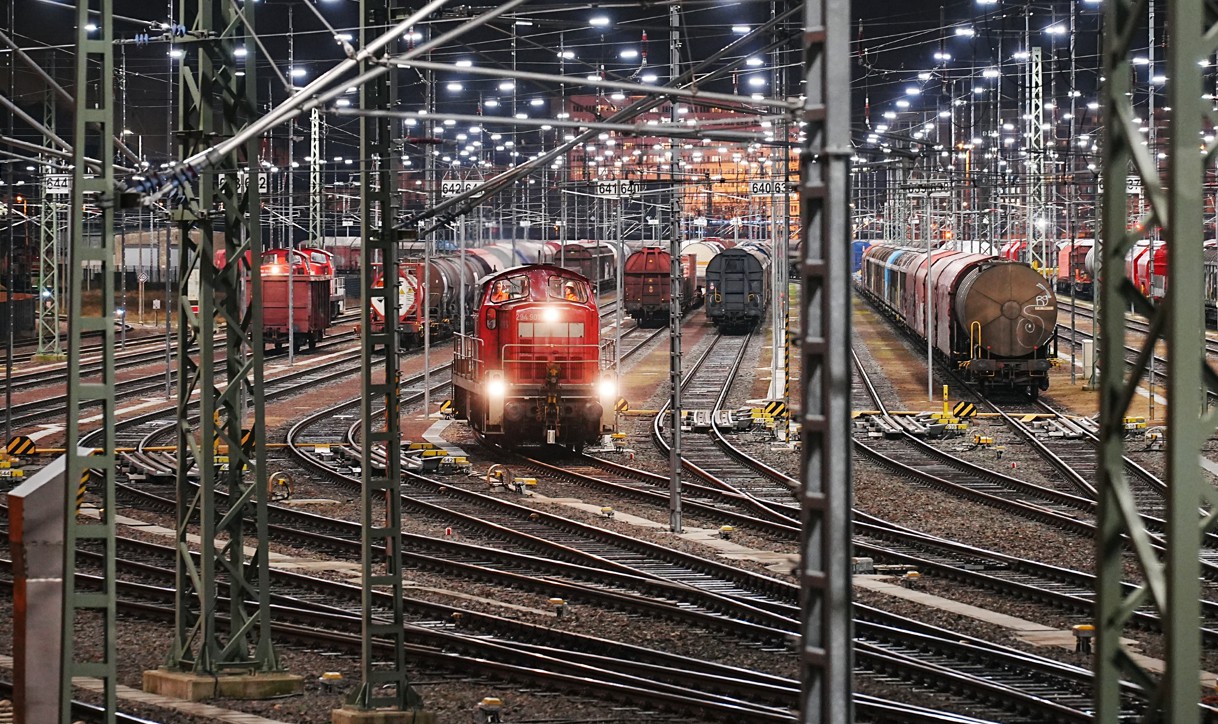
THE FREIGHT RAILWAYS, mofair, VPI, and the passenger association PRO BAHN have drawn an interim balance eight months after the official launch of the new, supposedly “public welfare-oriented” rail infrastructure company DB InfraGO AG at a joint event in Berlin. The performance of InfraGO has further declined due to poorly planned construction sites, underfunding, and growing frustration among the unfortunate employees.
(Berlin) In a catalog of demands, the four associations recommend a major railway reform that, among other things, separates the natural monopoly of infrastructure from the profit-oriented and simultaneously faltering overall DB group.
Neele Wesseln, managing director of the FREIGHT RAILWAYS, summarized in her overall analysis for the inviting associations: “DB and the Ministry of Transport had their chance. But despite grand promises, nothing has improved since the founding of InfraGO; instead, many things have gotten worse. All railway companies are operating at their limits, and costs are exploding. We are sure: only the separation of rail infrastructures from the DB group will not solve all problems, but the separation is indispensable as part of the solution.”
Dr. Matthias Stoffregen, managing director of mofair: “The traffic light parties started like a tiger in the coalition agreement but were then intimidated by the communicative drumfire of the integrated DB group. In the end, they landed as a doormat. From ‘public welfare orientation’ it became ‘general renovation’ – and nothing else. As an industry, we only see higher costs for rail infrastructure – without any demonstrable better quality anywhere. A future federal government must finally clearly separate the monopoly and competition areas. Only then will it be transparent where and how exactly the urgently needed additional funds for infrastructure must be used most efficiently.”
Prof. Dr. Lukas Iffländer, deputy chairman of the passenger association PRO BAHN: “With the current InfraGO, we have at best reached our goal by ten percent. The federal government must take greater responsibility for our infrastructure, set clear and binding goals, and monitor their implementation directly at InfraGO much more closely, instead of taking a detour through the DB group.”
Heiko Radke, secretary general of the Association of Freight Wagon Holders VPI: “The federal government must finally fulfill its task of aligning InfraGO so that it provides a stable rail infrastructure at market-compliant conditions. We will only achieve growth and climate goals if the foundation is right, on which the most environmentally friendly mode of transport can play to its strengths. A functioning, public welfare-oriented infrastructure company for rail is a prerequisite for this. Wagon holders invest in durable economic goods and must be able to trust that the rail system is and remains competitive.”
In a survey conducted before the event in passenger and freight transport, none of the railway companies have been able to recognize an improvement in performance compared to DB Netz since the launch of InfraGO.
Catalog of Demands from the Associations:
- Bring German rail infrastructure from the trough into the European top group of rail networks
- Address shortcomings and have proposals for reorganization developed by experts from a parliamentary commission by 2025
- The Ministry of Transport and DB must create full transparency for this
- Separate all rail infrastructures from the group
- Operate rail infrastructure through an efficiently managed federal company
- Ensure a constitutionally compliant, stable financing as well as competitive track prices
In their analysis, the associations conclude that while “public welfare-oriented” goals have been anchored in the statutes of InfraGO, how they relate to the ongoing goal of profit generation and when they were fully or partially achieved is hardly verifiable due to the lack of concrete target figures. The “customer orientation” of infrastructure management, which is particularly important for railway companies, appears with a sparse word in the public welfare goals, but the “price-performance ratio,” which is particularly important for the industry, does not. Meanwhile, InfraGO insists on an equity interest rate of 5.9 percent, while its own leading ministry demands a significantly lower interest rate to relieve the railway companies. Who is steering whom here?
Thus, the statement of the Federal Minister of Transport that the federally owned infrastructure will now be managed as “top priority” more tightly than ever before has left no visible traces for the railway associations. Instead of, for example, filling the supervisory board of InfraGO with representatives from the market, the previously inefficient network and station advisory boards were replaced by a “sector advisory board” – which has just as few competencies as its predecessors. Since March, the industry has heard nothing new about the “Infraplan,” which was praised at the beginning of the year as the new steering instrument.
Thus, the promise given by politics and DB for more quality in infrastructure has so far remained a promise: The burden of construction sites has not only increased, but the individual projects are increasingly poorly planned and coordinated, are postponed at short notice, or take longer. Signal boxes are often not staffed at short notice; trips must be canceled. The increasing number of complaints and procedures at the Federal Network Agency vividly documents that the direct customers of InfraGO, namely the railway companies, can no longer tolerate this. They want to transport passengers and goods reliably from A to B instead of having to explain to their customers why it is not working again.
Photo: © Deutsche Bahn AG / Volker Emersleben