nox Germany launches service “nox STERNE Time Critical”
May 24, 2024 at 6:25 AM
BITO presents new Leo Carrier with shelving unit
May 24, 2024 at 6:57 AM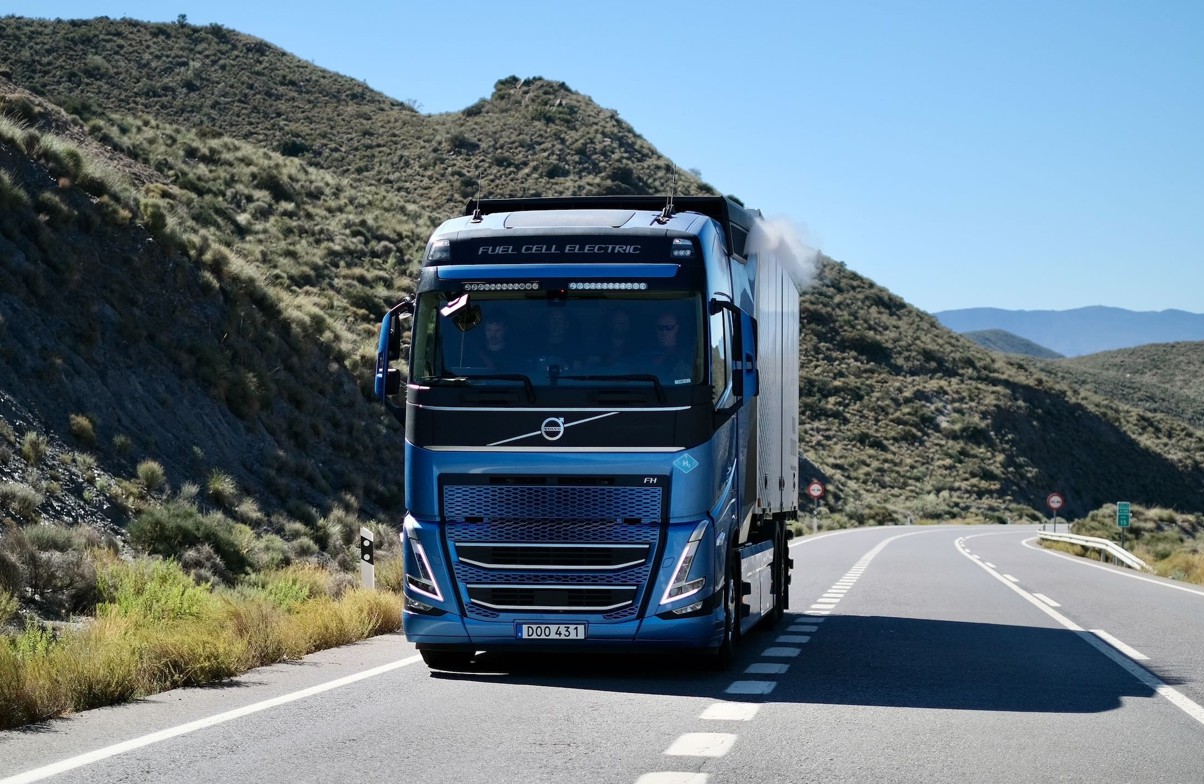
Volvo Trucks is developing trucks with combustion engines that can be powered by hydrogen. Road tests with trucks utilizing hydrogen in combustion engines are set to begin in 2026, with market introduction planned for the end of this decade. Trucks powered by green hydrogen represent an important step for Volvo in achieving its net-zero emissions goal and supporting its customers in reaching their decarbonization targets.
(Ismaning) Trucks powered by green hydrogen instead of fossil fuels offer a way to decarbonize transport. Hydrogen trucks are particularly suitable for longer distances and in regions where charging infrastructure or the time to charge batteries is limited.
Volvo will begin customer testing of its trucks that use hydrogen in combustion engines in 2026. These trucks are expected to be available on the market by the end of this decade. Testing in both laboratories and vehicles is already underway. The hydrogen-powered trucks with combustion engines will complement Volvo Trucks’ offering of alternative drive options, including battery-electric trucks, fuel cell-powered trucks, and trucks powered by renewable fuels such as biogas, biodiesel, and HVO (Hydrotreated Vegetable Oil).
“Trucks that retain the traditional combustion engine but are powered by hydrogen are expected to have the same performance and reliability as our diesel trucks, but with the added benefit of potentially very low CO2 emissions (well to wheel). They will be a valuable addition to our battery-electric trucks that have been on the market for several years,” says Jan Hjelmgren, Head of Product Management and Quality, Volvo Trucks.
Volvo trucks with combustion engines powered by green hydrogen have the potential for net-zero CO2 emissions when renewable HVO is used as the ignition fuel. They will be classified as “Zero Emission Vehicles” (ZEV) according to the newly agreed EU CO2 emissions standards.
“It is clear that different technologies are needed for the decarbonization of heavy transport. As a global truck manufacturer, we must support our customers by offering a variety of decarbonization solutions. Customers will have the option to choose their drive based on the transport task, available infrastructure, and prices for green energy,” adds Jan Hjelmgren.
Improved Energy Efficiency and Reduced Fuel Consumption
Trucks equipped with hydrogen-powered combustion engines from Volvo will utilize high-pressure direct injection (HPDI). This technology enables self-ignition by injecting a small amount of ignition fuel under high pressure before hydrogen is added. Benefits of this technology include improved energy efficiency, reduced fuel consumption, and higher engine performance.
The Volvo Group has signed an agreement to establish a joint venture to utilize HPDI technology with Westport Fuel Systems. The joint venture is expected to commence operations in the second quarter of 2024 following the official closing.
Facts
- Hydrogen-powered Volvo trucks will have a range comparable to many diesel trucks, depending on the type of transport.
- Due to the low CO2 emissions from hydrogen combustion, these trucks will be classified as “zero-emission vehicles” according to the newly agreed EU CO2 emissions standards.
- Hydrogen combustion engines emit only very small amounts of nitrogen oxides and particles.
- Hydrogen can also be used to power electric trucks with fuel cells, where electricity is generated on board the vehicle. Fuel cell electric trucks emit no exhaust emissions, only water vapor.
Photo: © Volvo Trucks