



Körber Builds Fully Automated Warehouse for Daimler Truck
Mar 12, 2024 at 7:23 PM
Amazon Opens Disaster Relief Hub in Rheinberg Logistics Center
Mar 15, 2024 at 7:28 AM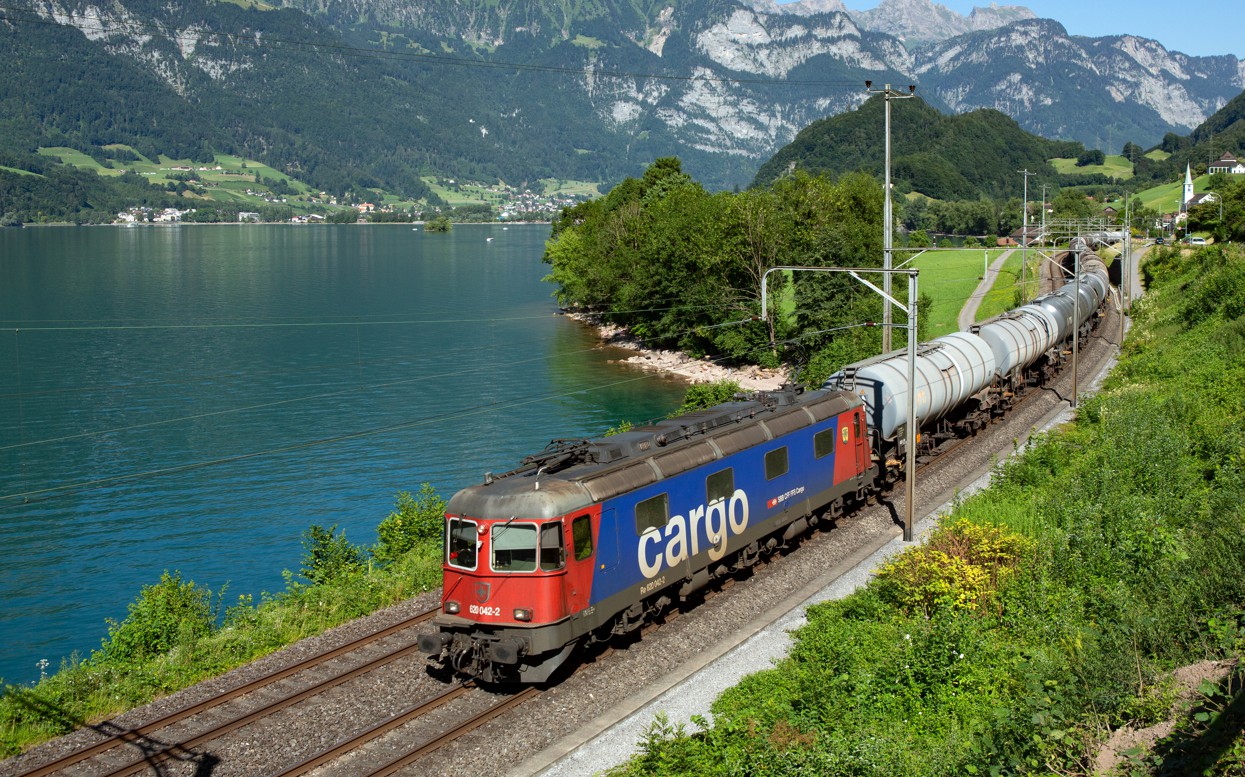
Thanks to a new record number of travelers, SBB reports a profit for the first time since 2019 in the 2023 financial year. However, the pressure to save and increase efficiency remains high due to the debt burden. SBB is intensively addressing the future. SBB Cargo continues to incur losses, but significantly less than in 2022.
(Bern) The positive trend continues: In 2023, SBB transported 1.32 million people daily (2022: 1.16 million), thus reaching the level of the record year 2019 again; this is also thanks to the SBB employees. More and more people are traveling by train in their leisure time within the country and to surrounding destinations in Europe. More passengers bring more revenue, which is why long-distance transport concludes positively for the first time in three years (2023: 117 million CHF, 2022: -47 million CHF). Together with the profits from SBB real estate before compensation payments (2023: 281 million CHF, 2022: 269 million CHF) and energy (2023: 78 million CHF, 2022: -165 million CHF), this results in a profit of 267 million francs (2022: -245 million CHF). The profit is encouraging but is not enough to significantly reduce the debt (11.26 billion CHF, 2022: 11.44 billion CHF), offset the massive losses of previous years, and finance future investments, such as in new rolling stock.
Mid-term Robustness and Flexibility
A financially healthy SBB needs an annual profit of around 500 million francs. To stabilize the situation, the company will also spend about 6 billion francs less by 2030. The cost and efficiency measures taken are on track. In particular, three major digitalization programs of SBB will help plan and execute rail operations more efficiently and productively. The federal government also aims to make a significant contribution to offsetting losses in long-distance transport during the COVID period.
Establishing Freight Transport on an Economic Basis
To transport more goods environmentally friendly by rail, SBB, with the help of the federal government, aims to establish freight transport on an economically sustainable basis: The structural deficit in the single wagon load traffic of SBB Cargo, which has been fully owned by SBB since June 2023, is to be eliminated. The operation is also expected to become more efficient with the digital automatic coupling and the automatic brake test.
Improved Cybersecurity
In 2024, a new competence center for customer information will ensure that travelers are informed quickly, easily, and from a single source, especially in case of disruptions but also regarding construction sites and replacement services. Train stations are the business cards of SBB. After modernizing the major train stations, SBB is also upgrading small and medium-sized stations, developing them into attractive, multimodal meeting places with space for local and regional offerings. SBB will become more independent from the electricity market and will secure 95% of its rail electricity needs even in winter by 2030. SBB also needs to improve in terms of occupational safety. For enhanced cybersecurity, the “Cyber Defence Center,” established in 2023, monitors network traffic around the clock.
SBB Financial Year 2023 in Numbers
The positive annual result for 2023 was particularly characterized by faster and stronger-than-expected growth in passenger numbers, a higher result in the energy sector, and a solid contribution from real estate to the overall result. The debt stands at 11.26 billion, slightly below the previous year’s level (2022: 11.44 billion). The debt coverage ratio at the end of 2023 is 7.82. Here are the key figures:
Passenger Transport
Passenger transport revenues increased by 9.9 percent compared to the previous year to 3,731 million francs. Long-distance transport reported a profit of 117 million francs for the first time since 2019 (2022: -47 million CHF). This is mainly due to the positive development of demand in weekend traffic and international passenger transport. In regional transport, the increased demand for short commuter distances led to an improvement in results to 23 million francs (2022: 11 million CHF). At the same time, costs rose, including for rail electricity, track fees, and fleet management. Targeted advertising campaigns (e.g., leisure, trial offers, and 125 years of GA) and new products contributed to the positive demand development in passenger transport. The number of general subscriptions increased again: 447,166 GAs were in circulation at the end of 2023 (+3.8%). The number of half-fare subscriptions rose further to a new record of 3.15 million subscriptions (+6.0%). The half-fare plus, available since December, is also very well received. By last week (March 3, 2024), 70,791 subscriptions had already been sold. The high punctuality (train punctuality: 92.5%, connection punctuality: 98.7%) in passenger transport was maintained in international comparison. In western and southern Switzerland, the values are still unsatisfactory.
Real Estate
The annual result from real estate, before compensation payments to infrastructure (150 million CHF) and contributions to the pension fund (78 million CHF), was slightly above the previous year at 281 million francs (2022: 269 million CHF). Thus, real estate again made a solid contribution to the overall result. The rental income from third parties increased compared to the previous year (+4.4%), particularly due to the recovery of frequencies at train stations by 8.9 percent and growth from new openings such as Basel Dreijohann and Zurich Letziturm in 2022, as well as Zurich Oerlikon Franklinturm in 2023.
Infrastructure
The recovery in demand for passenger transport also benefited the infrastructure network, as track revenues increased significantly. The result remained negative again at -23 million francs (2022: -24 million CHF). Increased maintenance costs and recharges of rental ancillary costs burdened the result.
The annual result from infrastructure energy improved significantly by 243 million francs to 78 million francs. Reasons include higher revenues from increased production and higher rail electricity prices, as well as a lower burden from declining energy market prices. However, the positive result is not enough to compensate for the loss from the previous year of over 165 million francs.
Freight Transport Switzerland and International
The result of SBB Cargo Switzerland improved by 148 million francs compared to the previous year to -40 million francs. This is mainly due to the value adjustment made in the previous year (-128 million CHF). The transport performance decreased by 7.5 percent compared to the previous year. The main drivers were price pressure, the structural deficit in single wagon load traffic, and the economic slowdown.
SBB Cargo International reported a loss of 2.5 million francs in 2023 (2022: -0.3 million CHF). The transported volumes decreased by 0.8 percent compared to the previous year due to the economic slowdown in Europe and ongoing infrastructure restrictions. However, thanks to passing on cost increases to customers, freight transport revenues were still increased by 1.6 percent. Cost drivers included additional personnel costs caused by increased demand for locomotive staff and ongoing infrastructure restrictions in Germany (especially construction sites and strikes).
More numbers and facts can be found in the SBB Annual Report
Photo: © SBB