





Kapsch and LOSTnFOUND Win Toll Project in Switzerland
Jan 6, 2024 at 6:08 PM
BLV-pro with a large truck rally on January 18, 2024
Jan 6, 2024 at 6:52 PM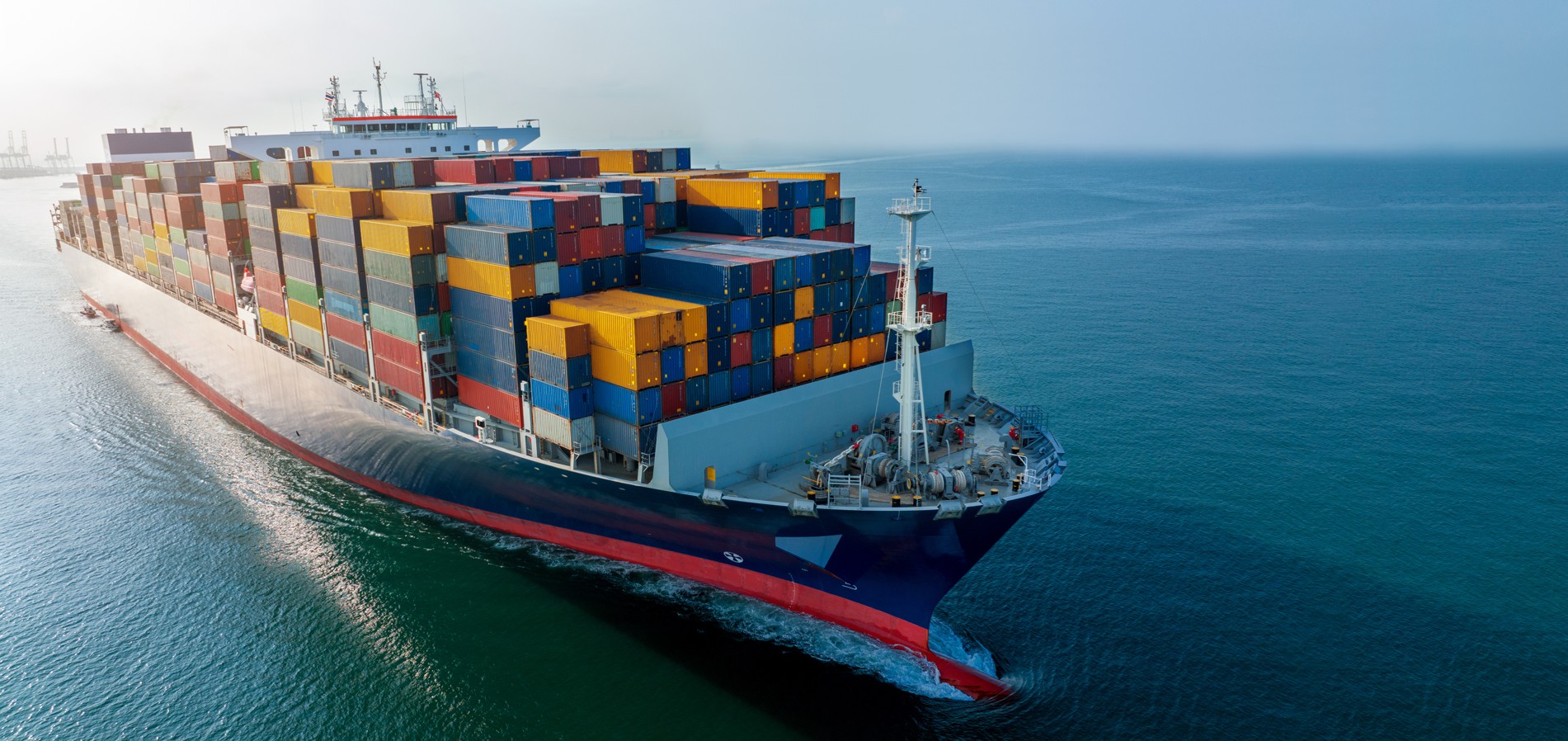
The Houthi rebels in Yemen are attacking container ships in the Bab al-Mandeb Strait with rockets and drones. So far, the Hapag-Lloyd ship Al-Jasrah, the MSC ship MSC Palatium III, the M/V Swan Atlantic, the MSC United VIII, and the Maersk Hangzhou from Inventor Chemical Tankers have been hit. The latest attack occurred on December 31, 2023. On December 14, the Maersk ship Gibraltar narrowly escaped a rocket attack.
(Munich) The major shipping companies Hapag-Lloyd, MSC, Evergreen, and CMA CGM have temporarily suspended their operations in the Red Sea. Maersk has resumed shipping traffic through the Red Sea but announced another operational suspension following the recent attack on one of its ships. The oil and energy company BP has also halted its activities in the Red Sea.
On December 18, a coalition of the United States, the United Kingdom, Bahrain, Canada, France, Italy, the Netherlands, Norway, Spain, and the Seychelles initiated an operation named “Operation Prosperity Guardian,” focusing on the area around the Red Sea. The goal of this coalition is to minimize risks for commercial vessels, prevent attacks, and protect global trade. The campaign is supported by several other countries. In response to the distress call from the Maersk Hangzhou, three Houthi ships were sunk by the U.S. Shortly thereafter, Iran dispatched a warship to the region. The attacks continue, and the deployment of a warship from a Houthi ally poses the risk of further escalation of the situation.
Conflict Disrupts Shipping Traffic
Ships in this area face the decision of either accepting the increased risk of detouring around Africa or anchoring and waiting for safe passage.
As of January 3, 2024, project44 estimates the number of ships detouring around Africa to be a total of 181. The AI-powered ETAs from project44 indicate that the transit time for most detouring ships will increase by 7 to 20 days. Some of the diverted ships have increased their speed to minimize the resulting delays. This, in turn, leads to increased fuel consumption, resulting in rising prices in the maritime transport sector.
26 additional ships remain at their current location, monitoring the development of the conflict. Despite the initiation of Operation Prosperity Guardian, these ships are avoiding passage, indicating that shippers still doubt the safety of the Red Sea. project44 observes that some ships previously marked as diverted are returning to the strait. This includes primarily ships from Maersk, which had briefly resumed operations in the Red Sea. It is likely that these ships will turn back again after the weekend’s attack.
The “Map of Container Ships Affected by the Conflict in the Red Sea” provides an overview of all 207 affected ships.
Compared to December 21, the extent of the impacts has increased. The Cape of Good Hope is experiencing stronger and more consistent shipping traffic. Many of the ships that were waiting for the situation to improve are now also detouring around the Cape of Good Hope, although some remain in place.
Despite increased risks, some ships continue their schedules as planned. In the week from December 17 to 24, a total of 66 ships passed through the canal. In the week from December 24 to 31, this number dropped significantly to 33 ships. This corresponds to a 55 percent decrease in daily shipping traffic. While nearly 15 ships per day were operating before the attacks, this number has now decreased to only 6.6 per day.
Historic Trade Through the Suez Canal
The Suez Canal was opened in 1869 to create a connection between the North Atlantic via the Mediterranean and the Red Sea to the Indian Ocean. Since then, the canal has developed into a significant trade route for global supply chains. Ships can reach their destinations 7 to 20 days faster through the canal. Disruptions in shipping traffic can have significant impacts on international trade. An example of this was in 2021 when a ship stuck in the canal halted operations for six days.
In light of the announcements from shipping companies to reroute ships around the canal, it is necessary for trade routes utilizing the Suez Canal to prepare for significant delays.
The breakdown shows the main trade routes utilizing the canal, measured by the number of trips. Trade between Asia and Europe/the Mediterranean is most affected, accounting for four out of five of the main trade routes. Trade between North America (especially the East Coast) and Asia could be more affected due to ongoing drought issues at the Panama Canal, as this is the most efficient rerouting option. Although the listed shipping routes account for the largest volume of trips through the canal, there are more than 33 other trade routes that regularly use the canal and are also affected by the conflict.
Expected Impacts of the Attacks Include:
- Extended transit times
- Disruptions to global oil supply
- Inventory issues
-
Increased Transit Times
The chart below “Average Weekly Container Transit Time on Major Routes via the Red Sea” shows the average transit time for containers routed through the Suez Canal.
So far, there has been no extension of transit times. This suggests that the diverted containers, which could extend transit time by an estimated 7 to 20 days, have not yet reached their destinations. Once these affected containers arrive at their destination ports and are processed in the coming weeks, this number will significantly increase.
Although the impacts on transit times are not yet visible, the schedule changes from shippers indicate the expected delays. The chart below “Reliability of Weekly Shipping Schedule – Average Delay Days” shows the changes compared to the original shipping schedules.
Particularly affected by delays so far is the route from Southeast Asia to Europe. Delays have increased by 105 percent between the week of December 17 to 23 and the week of December 24 to 31. Ships on this route are expected to arrive nearly 8 days later than planned on average. A delay of 4 days is forecasted for the route from China to Europe, while a delay of 2.5 days is expected on the route from Southeast Asia to the U.S. East Coast. There is a possibility that these numbers will continue to rise as shipping companies continuously update their shipping schedules.
-
Disruptions to Oil Supply
Various goods are transported through the Suez Canal. Therefore, the impacts will not be limited to a specific sector. However, the most significant commodity from this region is oil. In 2022, daily oil exports from the Middle East amounted to 15.4 million barrels. Continued conflicts are expected to lead to significant disruptions in oil supply. Despite the trend towards moving away from fossil fuels, oil is still used extensively worldwide. This is likely to lead to a price increase. Road transport is the largest consumer of crude oil globally, so higher transportation costs and higher prices for fueling private vehicles are to be expected.
Update on December 18, 2023: BP has announced a halt to all oil transports in the Red Sea. This leads to a sharp increase in oil and gas prices.
-
Downstream Inventory Issues
Another potential consequence could be a shortage of available items. The additional lead time that these shipments will require due to the unpredictable events was not accounted for in retailers’ inventory planning. After the peak season over the holidays, there is a possibility that inventories may be depleted. It is important to emphasize that this is not expected to impact the Christmas business and could instead become noticeable from February onwards.
As tensions in the region remain high, project44 will continue to monitor the situation and provide current information and insights.
Note: The information provided here is for summary purposes only and is not legally binding. It comes from both project44 and third parties. The data from project44 does not include all available market information, and project44 does not undertake independent verification of third-party reports. Similarly, this data changes from day to day. Therefore, the reader should not rely on these reports to make business decisions. project44 expressly disclaims any liability arising from such reliance. Status: January 4, 2024
Photo: © Loginfo24
Graphic: © project44