
Hellmann Measures Emissions with the Help of Shipzero
Nov 30, 2023 at 6:32 PM
DHL Builds Climate-Neutral Innovation Center in Troisdorf
Nov 30, 2023 at 6:54 PM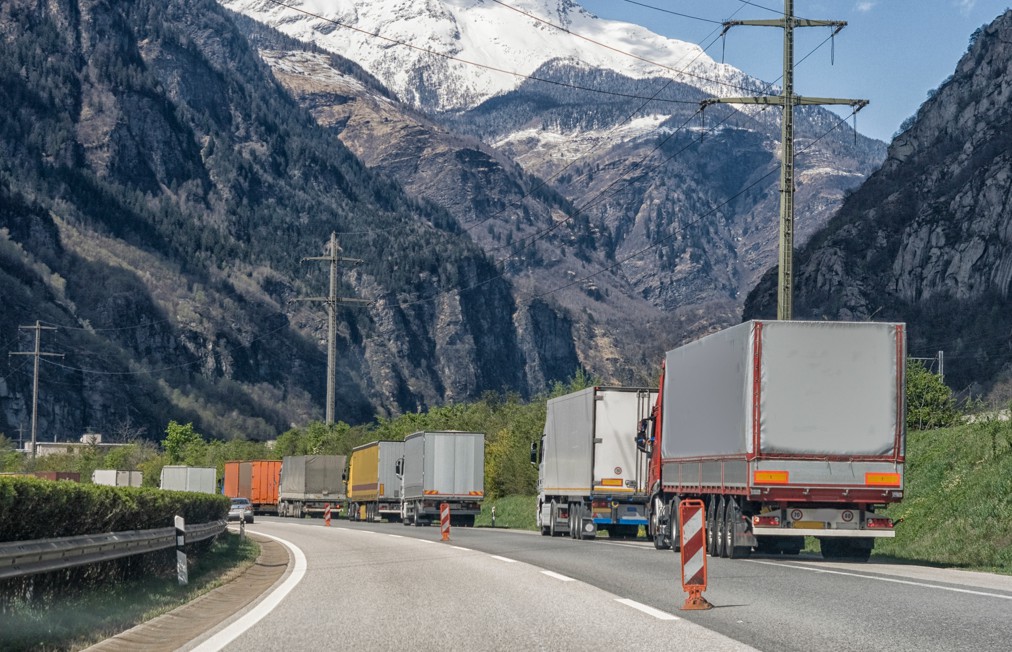
The Federal Council’s LSVA plans in today’s 2023 relocation report are only partially understood by the Swiss Commercial Vehicle Association ASTAG. The intention to support vehicles with low CO2 emissions in the long term through discounts and initial financing is encouraging. However, there is no understanding for the announced inflation adjustment. At least, the Federal Council is willing to consider ASTAG’s demand for a postponement and to raise the tariffs only in 2025.
(Bern) The Swiss Commercial Vehicle Association ASTAG has long been demanding clarity about the future of the performance-related heavy vehicle charge (LSVA). The road transport industry relies on having information about tariff developments as early as possible. Only then is there sufficient investment and legal certainty. With the relocation report 2023, which the Federal Council has adopted today, the necessary information is finally available – but ASTAG’s assessment is mixed.
The announcement that the promotion of commercial vehicles with alternative drives is to be restructured is positive. It appears that the previous complete tariff exemption exclusively for electric trucks will be replaced by a technology-neutral discount system for all low CO2 drive forms. In addition, an initial financing is to be realized, which compensates for the still significantly higher acquisition costs compared to conventional diesel vehicles. If the Federal Council and Parliament actually proceed in this way, a long-standing demand of ASTAG would be implemented. This would create equal market opportunities for all transport companies: “The redesign of the LSVA must be handled in such a way that the modernization of vehicle fleets is possible across the industry – for large, medium, and small businesses,” says Thierry Burkart, Central President of ASTAG.
No Understanding for Inflation Adjustment
The short-term outlook is sobering. The economy is developing less dynamically, and the costs for vehicles, maintenance, and energy are continually rising due to inflation. Additionally, there is an acute shortage of labor, which drives up recruitment and personnel costs. Nevertheless, the federal government insists on a 5 percent increase in the LSVA. The justification given is that the tariffs must be adjusted to inflation – to continue financing the railway infrastructure. The paradoxical effect is that inflation is only further exacerbated by this. Higher LSVA tariffs lead to higher transport prices at the expense of consumers. Moreover, the main problem does not lie in a lack of revenue; rather, the expenditures for railway infrastructure are obviously too high. At least, the Federal Council seems willing to make the adjustment only on January 1, 2025. “ASTAG has no understanding for the LSVA increase,” emphasizes Thierry Burkart: “However, we welcome that our minimal demand for a postponement is being implemented.”
Photo: © Loginfo24