


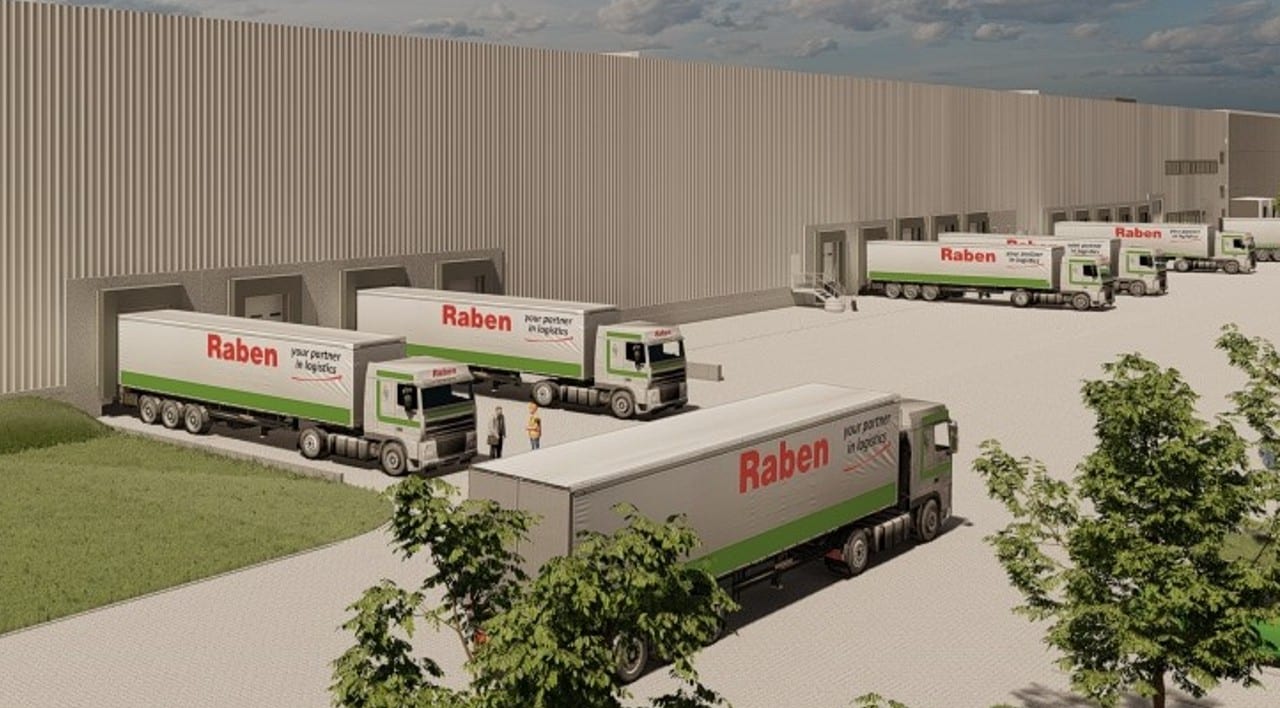
Raben Group Expands Location in Reichenberg for Contract Logistics
Nov 17, 2022 at 3:12 PM
DHL Presents Report on Semiconductor Supply Chain Resilience
Nov 17, 2022 at 3:45 PM
As of January 1, 2023, the regulations for the transport of dangerous goods in road traffic (ADR) will change again across Europe. This also means that numerous transition periods from previous ADR versions will expire, remind the hazardous materials experts from DEKRA. There are also adjustments and additions regarding the transport of lithium batteries. And for the first time, electric vehicles can be partially approved for the hazardous goods sector.
(Stuttgart) The regulations for the transport of dangerous goods are adjusted every two years to keep pace with technical progress. The next change is scheduled for January 1, 2023. As always, the change comes with a six-month transition period until June 31, 2023, which is intended to allow for adjustments to the corresponding regulations of other modes of transport. Here are some important changes at a glance:
With ADR 2023, some transition periods from the past will also expire. For example, since ADR 2019, the obligation to appoint a dangerous goods safety advisor has also been extended to the sender. This change was subject to a transition period until December 31, 2022. This transition period is now being removed. In Germany, a dangerous goods safety advisor has always had to be appointed in this case according to the Dangerous Goods Safety Advisor Ordinance. However, companies with foreign headquarters that only act as senders should check whether an appointment obligation has arisen here.
Exemption for devices and machines is removed
With the removal of the transitional provision in 1.1.46, a popular exemption for devices and machines that contain dangerous goods in their internal structure is eliminated. Previously, these could largely be excluded from road traffic. From January 1, 2023, these items must be assigned to one of twelve UN numbers, provided that the quantities of the contained dangerous goods exceed the LQ values. Items affected include pressure regulators or flow valves as well as machines that contain hazardous operating materials.
There are also adjustments for the transport of lithium batteries in the new ADR
Here are some examples:
- To prove that the transported lithium batteries are a tested type according to 38.3, a test summary must be provided; this obligation does not apply to button cell batteries in equipment.
- The form for the test summary is also changing: the signature requirement can be waived in the future.
- The marking for small lithium batteries will no longer require a phone number. However, old markings may still be used until 2026.
- The two packaging instructions for defective critical lithium batteries have been revised (P911 and LP906).
- Lithium batteries installed in goods transport units (UN3536) will be assigned to transport category 2. Previously, no transport category was assigned, which meant that the exemption for small quantities (1000-point rule) could not be applied. Now, transport up to 333 kg is possible without an ADR training certificate.
News regarding vehicles
There are also updates from the vehicle sector, emphasize the DEKRA experts. Previously, electric drive models were only allowed in the general cargo area. Vehicles that require a registration certificate were only eligible with combustion engines. This is changing in the first step for tank vehicles (AT vehicles). As of January 1, 2023, these may also be powered by battery electricity. This makes pure electric vehicles and hybrid vehicles possible. Currently, efforts are being made to enable this for FL and Ex vehicles as well. They want to wait for experiences from the 2023 changes. Additionally, a solution still needs to be found for battery-electric vehicles with additional hydrogen storage and fuel cells.
The text of the 29th ADR amendment regulation comprises around 180 DIN A4 pages. Affected companies should therefore address the changes promptly to ensure a smooth transition.
Photo: © DEKRA