



Element Logic Installs Micro-Fulfillment Center for Peterhans
Nov 22, 2021 at 5:53 PM
Euroports Orders Emission-Free Portal Crane from Liebherr
Nov 22, 2021 at 6:37 PM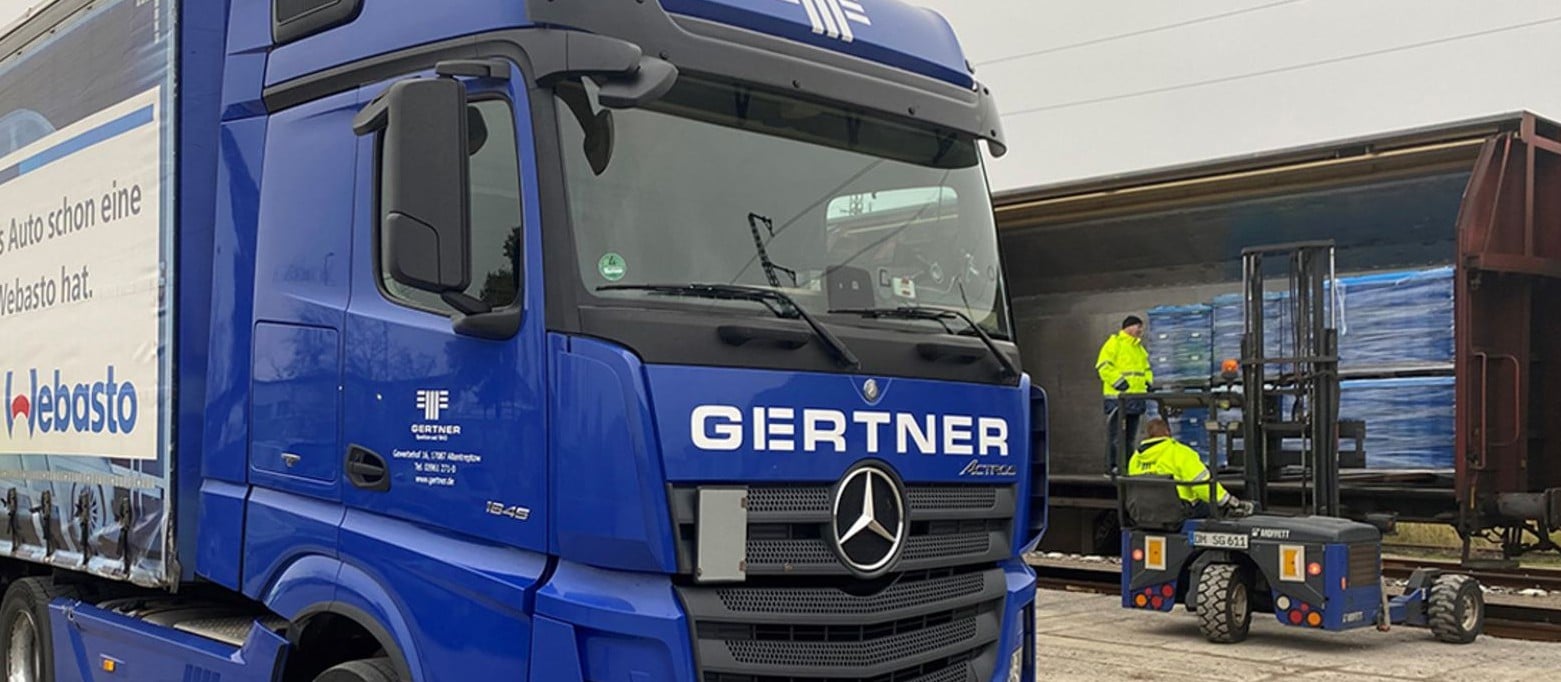
Webasto aims to leverage the proximity of its plant in Neubrandenburg and reduce its CO2 footprint. Recently, the company launched a four-week pilot project with DB Cargo to shift the transport of components for its heating systems manufacturing from road to rail.
(Mainz/Neubrandenburg) The automotive supplier Webasto has begun a multi-week testing phase for the delivery of its plant in Neubrandenburg via rail. Together with DB Cargo Logistics, the leading specialist in European rail logistics, and the company’s long-standing shipping partner Gertner from Altentreptow, Webasto has been working on a pilot project at its site in Mecklenburg-Vorpommern for six weeks with two suppliers from southern Germany and the Czech Republic. The practical test of the processes for a rail solution with the two suppliers, who provide the plant with the largest number of components for the production of heating systems for electromobility, is set to last four weeks. Regular and thus predictable volumes per route between Webasto and its suppliers, sufficient for a single wagon, are one of the prerequisites for a transition to the more environmentally friendly freight transport by rail.
From Neubrandenburg, empty transport containers are sent by rail to the suppliers, who then fill them with the required components and send them back towards Neubrandenburg. In this large-scale trial, rail transport replaces 95 percent of the 1,200 or 1,400 kilometer round trip distances that the supply parts previously covered entirely by truck. For the remaining five percent of the distance, a maximum of 70 kilometers, trucks will continue to handle the transport, as the suppliers are not directly connected to railway stations.
The Webasto plant is directly adjacent to the freight station in Neubrandenburg, allowing the company to potentially load rail wagons directly from its premises in the future. By switching to rail, the company expects to reduce its CO2 footprint in transport by more than half while maintaining costs.
Test Lasts Until Mid-December
Webasto will conduct the test transports until mid-December and will subsequently evaluate them with all parties involved. The project partners believe that by reducing the CO2 footprint in the transport chains, an environmentally friendly and reliable logistical service can be offered to suppliers and customers. From mid-next year, the transition from the pilot operation to regular operation could take place. Additionally, further potential for shifting to rail at the Neubrandenburg site will be examined.
Experiences Applicable to Other Locations
With the two pilot suppliers, 15 percent of the total purchasing volume of the plant is being moved. From today’s perspective, a handling of more than 50 percent of the supply parts via rail is conceivable. The experiences from the project will be incorporated into the global sustainability initiative of the Webasto Group, possibly as a best-practice example in the field of supply chain for other locations of the Webasto Group. Webasto is committed to contributing to sustainable development worldwide in accordance with the goals of the United Nations, together with its partners.
Photo: © Webasto