



Logistics Portrait of the Day: Jérôme Thiriet
Jun 15, 2020 at 7:55 AMBGL Enables Truck Drivers Continued Free Access to Sanitary Facilities
Jun 16, 2020 at 7:00 AMWhen supply chains are questioned and the fields of application for logistics service providers shift, the question remains, where are there still opportunities to expand? One of these markets is India, where there is still a lot of development potential. This market is always an interesting option, regardless of the development of supply chains.
Read how young Indian Vartika Chaturvedi, an ambitious logistics professional, assesses these opportunities in her home country in a rough outline. India will catch up with China in terms of population, although it is still far from doing so economically. The growth potential is enormous, even if it is currently being severely hampered by the Corona crisis, as everywhere.
By: Vartika Chaturvedi
With the introduction of tax reforms such as the “Goods and Services Tax” (GST), increased government spending on infrastructure, and the easing of foreign direct investment (FDI), the current Indian government has implemented many measures to facilitate access to the Indian market for international companies, including logistics service providers.
The Indian government launched the “Made in India” program in 2014 to make India a global manufacturing hub and introduced mandatory nationwide supply chain reforms and many investment incentives for global manufacturers. Through the government’s implementation of a unified tax system, the different tax models of the various states have disappeared, reducing previous delays and overcapacities in the transport of goods and paving a clear and transparent path for international players. As a result, for example, the French company FM Logistics acquired Spearhead Logistics based in Pune in 2018 and invested more than 8 million USD in the same year, planning further investments of 46 million USD for the construction of warehouses across India.
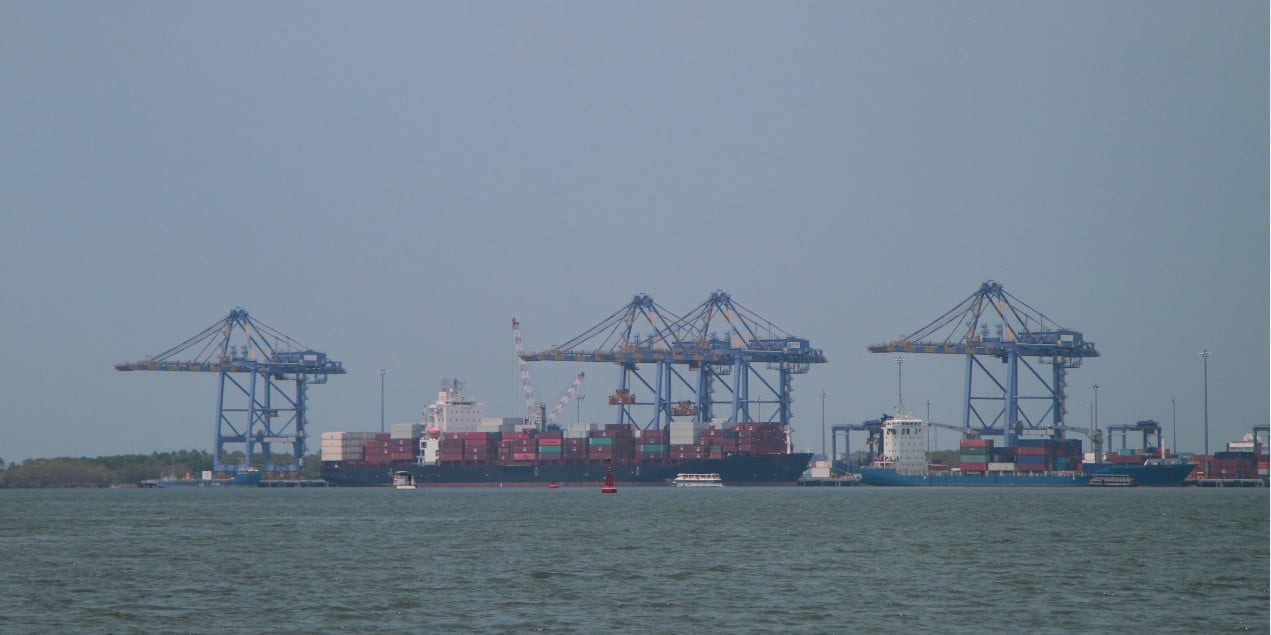
India currently has 11 major ports on three sides of the country’s peninsula region, from Kandla in the west to Kochi in the south and Haldia in the east. The country’s ports handle 95% of the national trade volume. The government has now allowed 100 percent FDI for the construction and maintenance of ports. This led to the Dubai-owned company DP World investing 3 billion USD in several sea and inland ports in 2019 in partnership with the Indian National Investment and Infrastructure Fund.
The Road Network is Being Massively Expanded
The last-mile area has been the top priority of the government, as it became clear that rail transport could not cope with the huge trade volumes. National highways have received investments of nearly 9 billion USD from Dubai-based investment firms, and the government has already established freight corridors through 15 major states across India to reduce travel time and provide companies with high-quality infrastructure.
The Indian government’s Free Trade Warehousing Zone (FTWZ) program near major cities like Delhi, Mumbai, and Chennai, along with incentives such as duty-free import of building materials and equipment, has attracted the attention of many investors and has already made an impact.
The Indian government recognized that if India were to become the global manufacturing hub, rapid, sustainable, and long-term changes in the country’s infrastructure were necessary to enable companies to transport goods smoothly and on time.
E-Commerce is Booming
International and national e-commerce giants like Amazon and Flipkart have contributed to the rising popularity of external logistics service providers (3PL) in India. 3PL offer cheaper solutions for end-to-end deliveries for everything from groceries and electronics to beauty products and clothing. For 2020, India’s B2C business transactions are estimated at 100 billion USD and B2B transactions at 700 billion USD, making the Indian market a huge potential for various 3PL companies.
Many companies in the Indian market are under pressure to maintain profit margins. Many of them strive to build strategic relationships with leading foreign providers. Companies with highly efficient procurement rates and logistics subsidiaries are also experiencing increasing demand from Indian manufacturing companies.
India currently has two major logistics companies that work for the largest e-commerce sites in India. Amazon’s logistics needs are covered by Delhivery, while Flipkart created its own logistics subsidiary, eKart, to meet logistics and warehousing demands. The expansion of the Indian market is evident in the fact that eKart alone delivers 10 million shipments per month, and Delhivery secured 413 million USD in funding from Softbank in 2019 and was able to increase its capacity to process 1 million orders per day.
This also necessitates addressing other factors such as property ownership and development, employee recruitment in India, and the process of finding a company in India to gain a complete overview of the Indian market.
Buying property in India remains difficult for foreign individuals, but regulations have been relaxed for companies. If a foreign company wants to establish a subsidiary in India, it can acquire property needed for business operations, such as logistics centers. No property can be acquired for a pure representation.
Motivated and Well-Educated Personnel
Although this may seem complex, registering a foreign company in India has become relatively straightforward, with bureaucracy being reduced.
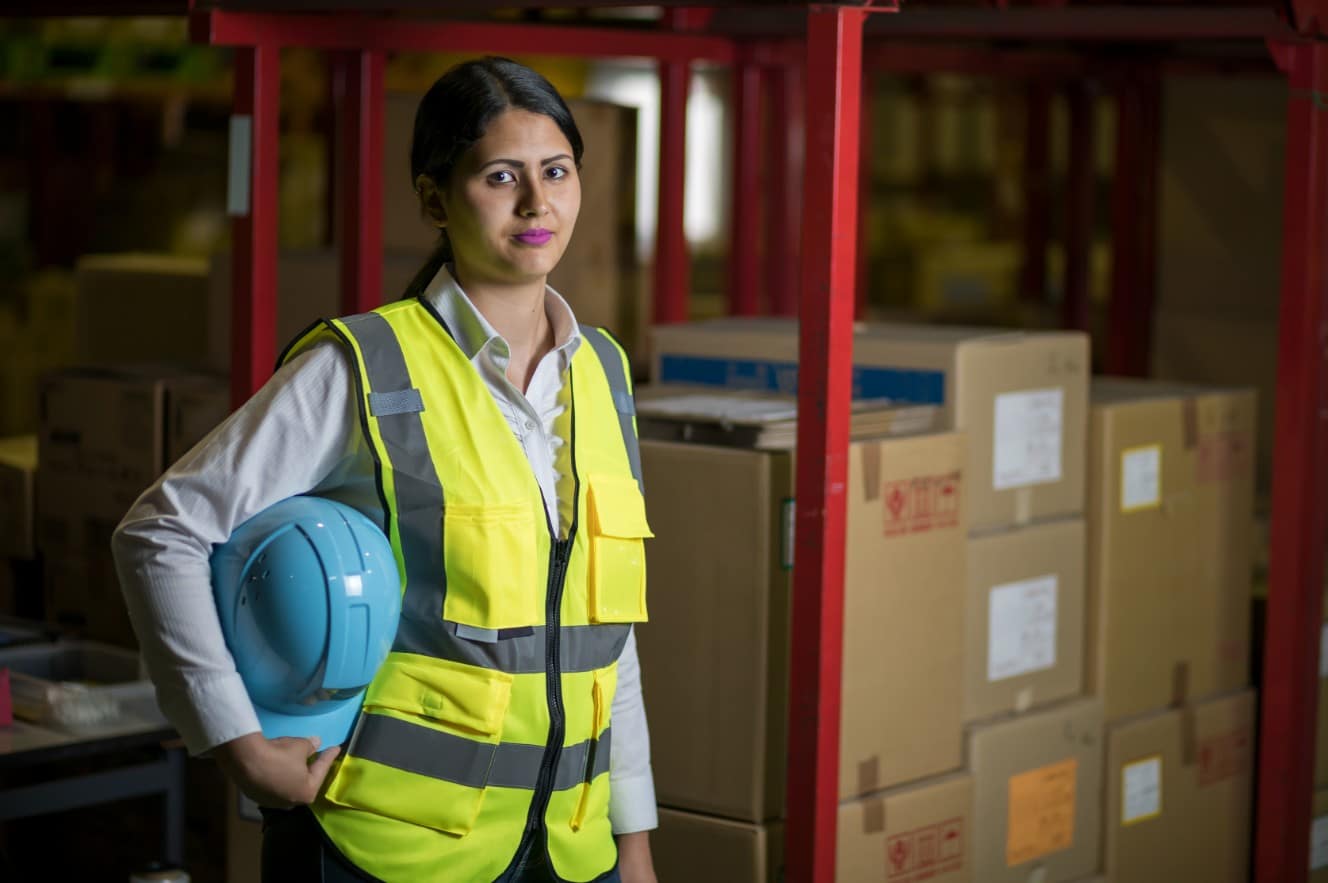
With a strong working-age population of 400 million people, making up almost 40% of the country’s population, Indian workers have a lot to offer. Population projections show that India will have an average age of 29 among its workforce in 2020, compared to 37 years in China and the USA and 45 years in Western Europe, making it one of the youngest countries in the world. The Indian youth has been a source of skilled labor for the global market for many years, which led to a shortage of skilled labor in the country itself a few years ago. However, over time and with rising wages, Indian professionals are returning to the country to contribute to the growth of the Indian economy, which can be leveraged by foreign companies.
These strengths are complemented by positive forecasts for the Indian logistics sector, which is expected to grow by 10.5% annually by 2025. With increased investments in infrastructure and the entry of international e-commerce giants into India, India remains a huge market for logistics companies.
The Indian population has become one of the largest markets for e-commerce, which in turn requires a high-quality supply chain, storage facilities, and logistics companies to satisfy customers. With the government’s initiatives and the vast market of Indian buyers and users, the Indian market remains largely untapped and could be a significant market for many companies.
Growth Market India
Given the trade wars and political distrust between other major manufacturing countries, India can be seen as a significant opportunity for many companies to invest. With well-educated personnel and various political measures to promote India as the next manufacturing hub, the potential for India to become one of the largest markets for logistics and supply chain is increasing. Therefore, it is worth keeping an eye on this market, whether as a starting point for supply chains or as a pure domestic market.
Photos: Adobe Stock / Image captions (from top to bottom): Title photo: The Port of Visakhapatnam, the second largest in India / Image 2: The Port of Kochi: The ports are the main freight hubs in India and are being massively expanded. / Image 3: India has many motivated young professionals, even in logistics.
 |
Indian Vartika Chaturvedi was born and raised in Noida, India, in 1996. Vartika graduated with honors with a Bachelor of Arts in Economics from a leading private university in India and then went to Berlin for her Master’s in International Business at Grenoble Ecole De Management. She also wrote a dissertation on “Effects of the Trade War between the USA and China on the Global Transport Industry with a Focus on the Aviation and Maritime Transport Industry.” Vartika has an economics background and recently completed her Master’s in International Business. She has solid logistical knowledge and wants to start her professional career in supply chain management as a demand planner in retail. |
| LinkedIn: | https://www.linkedin.com/in/vartikachaturvedi |