




Joint venture acquires logistics park in Bordeaux
Mar 9, 2026 at 5:45 PM
Unilode announces Super Sentinel
Mar 9, 2026 at 8:51 PM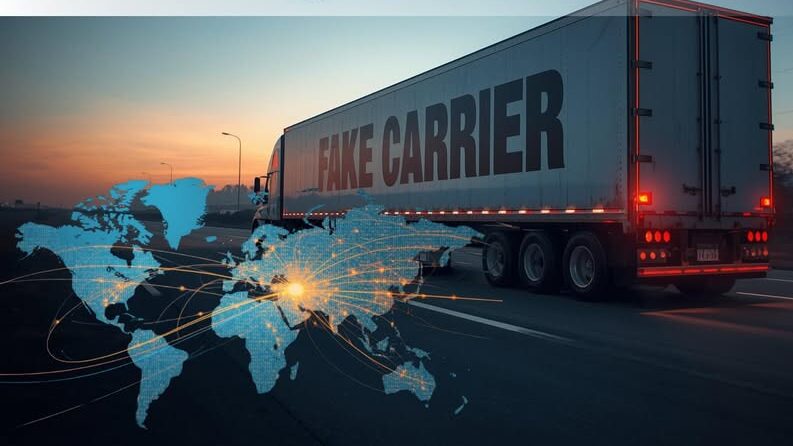
The issue of goods theft and identity fraud by transport companies in Europe has gained renewed significance. The Romanian Association of Freight Forwarders (USER) has brought this problem to the agenda of CLECAT, EUROPOL, and the European Commission. The rise of such criminal activities poses an increasing threat to European logistics chains, both in terms of frequency and financial impact.
The development of criminal methods, the digitization of transport processes, and the growing pressure from insurers lead to rising operational and liability risks for freight forwarding companies. USER, as a member of CLECAT and representative of the Romanian freight forwarding sector at the European level, has initiated the return of this topic to the agenda of CLECAT. This was done through the presentation of case studies, analyses, and observed trends at the meetings of the Supply Chain Security Institute. As a result of USER’s initiatives, supported by other member associations, CLECAT launched a coordinated analysis and action process at the European level regarding cargo theft.
European Congress on Combating Cargo Crime
These topics will be discussed in detail at the European Congress of Freight Forwarders, organized by USER under the umbrella of FIATA in Bucharest from May 18 to 20, 2026. A discussion panel titled „Security, Risk, and Compliance – Combating Fraud and Crime in the Supply Chain“ will be led by professionals from relevant national and international organizations and companies, including FIATA, CLECAT, EUROPOL, and TAPA EMEA.
CLECAT’s analysis confirms that cargo theft has evolved into a form of organized, digitized, and cross-border crime. While thefts from parked vehicles remain the most common, the largest losses arise from sophisticated logistics frauds. These include fraudulent use of transport exchanges and digital platforms, as well as „Fake Carrier“ schemes, where loads are completely hijacked without the use of violence.
Current data from Germany shows that in the first seven months of 2025, a total of 88 cases of „Fake Carriers“ were recorded, resulting in a total loss of approximately 18 million EUR, with the average loss per incident being around 200,000 EUR.
Insurance Pressure and Legal Challenges
USER points out, in accordance with CLECAT’s analysis, the increasing pressure from insurers to transfer risks to freight forwarding companies. This is done through expanded clauses on „gross negligence,“ mandatory audit checklists, and the condition that compensations are tied to detailed operational procedures. These requirements prove difficult to implement in practice, especially for SMEs, and can lead to a disproportionate redistribution of liability in the logistics chain.
Combating cargo theft requires a unified European approach, as it is a cross-border phenomenon. However, the response from authorities remains fragmented. There is a lack of harmonized European statistics, unequal police expertise between states, slow cooperation and recovery mechanisms, and limited use of existing data.
USER supports CLECAT’s position that cargo theft should be treated as a form of organized crime by strengthening cooperation between authorities rather than introducing new compliance obligations for legitimate operators.
Coordinated European Measures
As a result of USER’s initiatives and contributions from other members, CLECAT has decided to take coordinated measures at the European level. These include raising awareness among stakeholders in the logistics chain, structured information exchange on risks and practices, developing a pragmatic European guide on best practices, and dialogue with digital platforms and the insurance industry. Additionally, the involvement of EU institutions and the promotion of detailed national statistics on cargo theft are being pursued.