


Carrier Innovation Day Kicks Off Sirum’s Anniversary Year
Nov 27, 2025 at 6:38 PM
How can cargo drones be deployed in Germany?
Nov 30, 2025 at 5:29 PM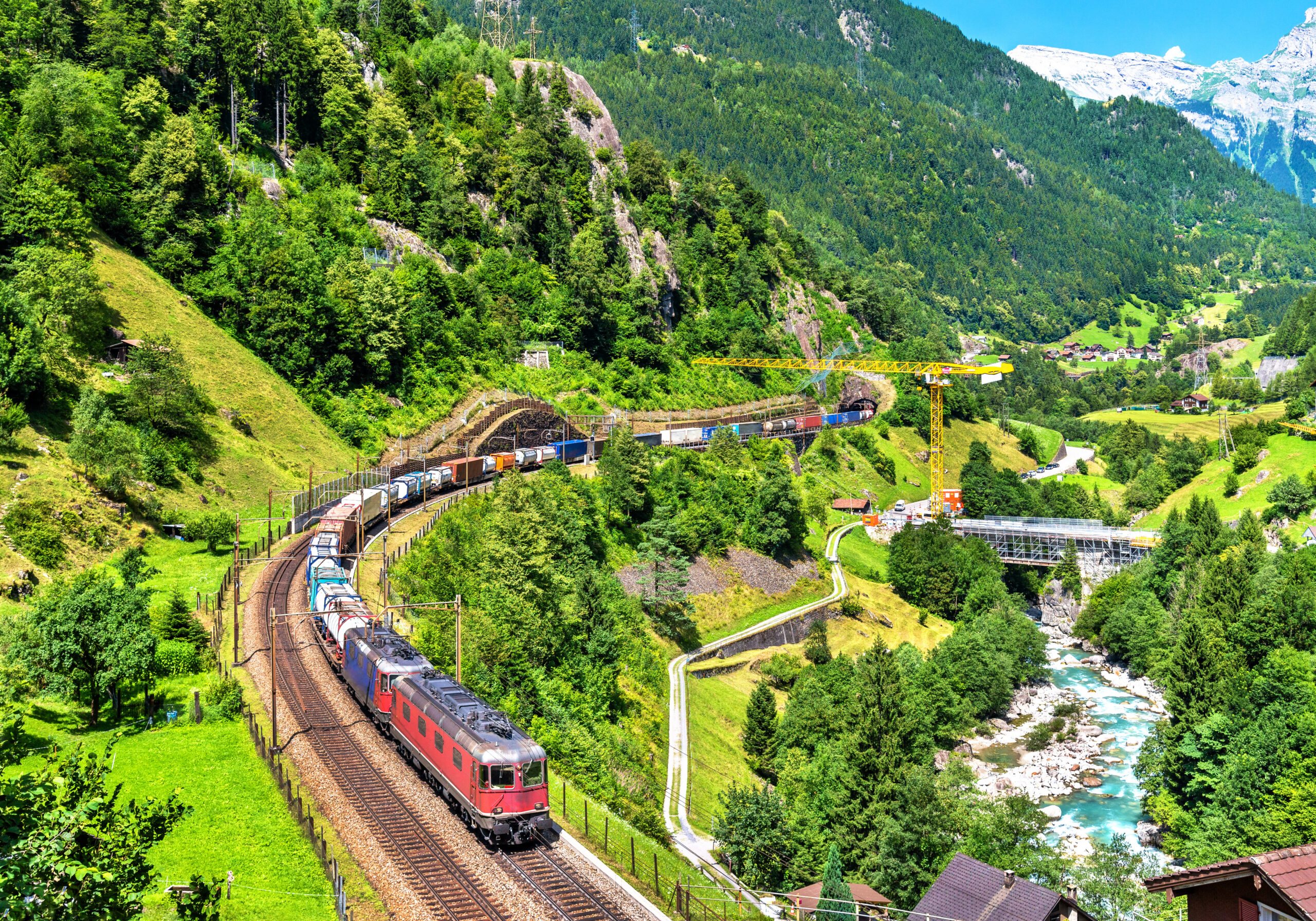
The Committee on Transport and Tourism of the European Parliament has published a report on Combined Transport. This includes a comprehensive analysis of the infrastructure, operations, and connectivity of intermodal freight transport across the European Union, relying on numerous data sources and thematic studies.
(Brussels) The results highlight the structural diversity and unequal distribution of infrastructure for intermodal freight transport in the European Union. Germany, with a share of 25-30% of all terminals, is a central hub for intermodal freight transport. The granular distribution of nodes and comprehensive intermodal coverage is reflected in the dense network and high frequency of short-distance movements.
Rail infrastructure is widespread in the EU, present at 87-93% of terminals, while inland shipping is only accessible at 21-24% of terminals. Other transport modes such as the Rolling Road (RoLa), short-sea shipping, and ferry services are still hardly present.
Analysis of a Sample of 11 Strategic Terminals
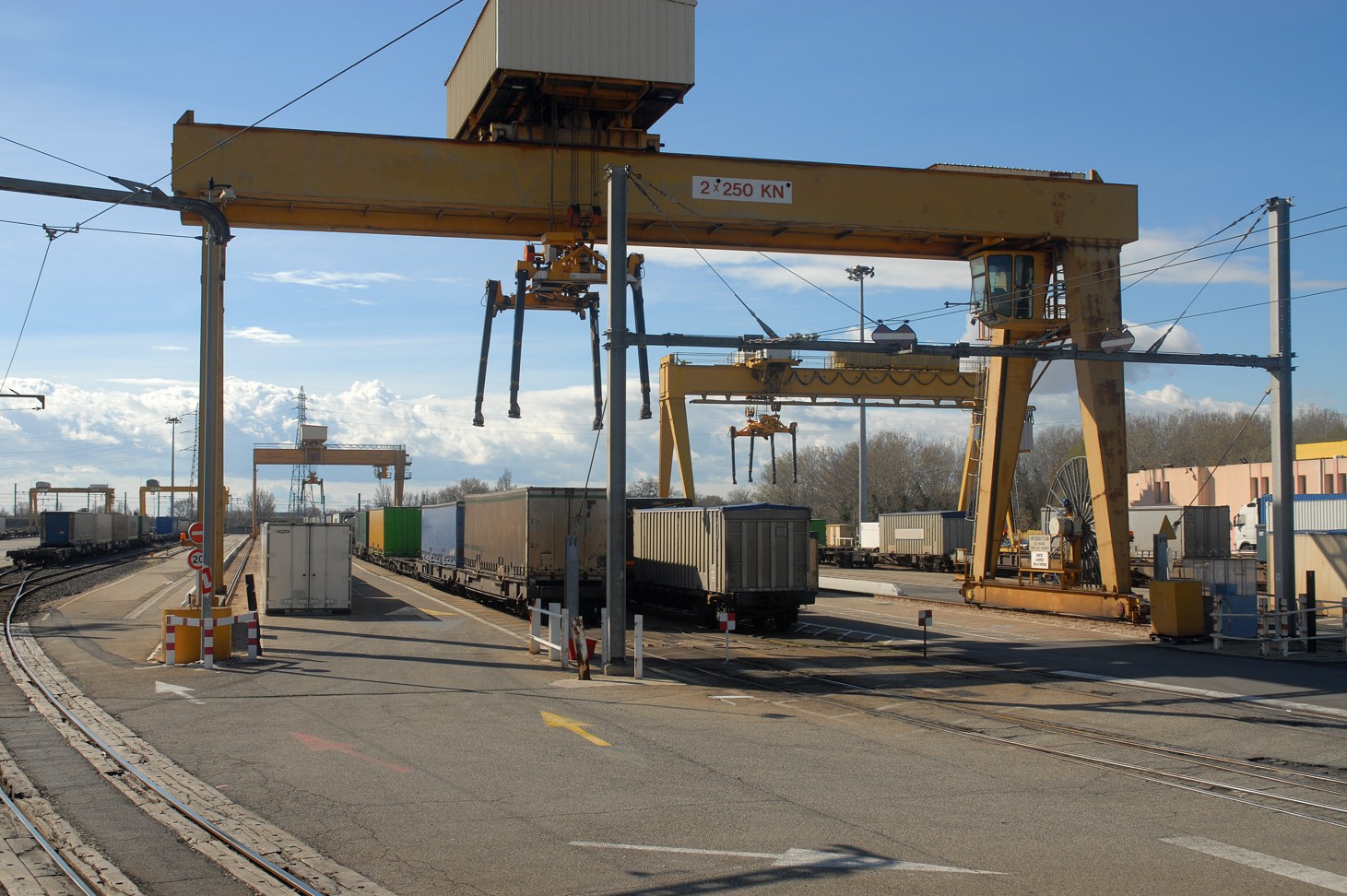
Strategic locations and multimodal connectivity are essential prerequisites for the performance of terminals. Sea access, central location along key corridors, and reliable rail or inland shipping connections contribute to strong intermodal networks. Eleven economically significant terminals examined in this study have received targeted financial support, particularly through the “Connecting Europe” facility and EU co-financed projects such as Porthos, FEDeRATED, PASS4CORE-IT, and ERFLS. A wide range of advanced logistics solutions has been implemented at these terminals, including digital services for intelligent operations, traffic optimization, real-time container tracking, advanced terminal operating systems, automated block storage, remote-controlled portal cranes, gate systems with integrated optical character recognition (OCR), fully automated gate access, and environmentally friendly vehicles. Expansion and modernization measures include improvements to road access, CO2 capture and transport projects, expanded operational areas, increased storage and handling capacities, improved rail networks and tracks, new high-bay warehouses, remote-controlled port cranes with integrated shore power supply, and – at the CLIP terminal in Swarzędz – a horizontal loading system for semi-trailers on railway wagons without cranes.
Connectivity
The connectivity analysis shows that the terminals Busto Arsizio-Gallarate, Madrid-Abroñigal, and Praha-Uhříněves are among the leading inland terminals in terms of the frequency of train connections to major sea and inland ports per week. The Busto Arsizio-Gallarate terminal offers a comprehensive range of connections to the ports of Amsterdam, Rotterdam, and Antwerp, as well as to German and Italian ports. The connectivity of Praha-Uhříněves is more regionally focused; this terminal is primarily connected to northern German ports. The connectivity of the terminal in Madrid is largely limited to Spain, with most connections leading to Valencia, reflecting the insular nature of the Spanish rail system and its non-standard gauge. The distribution of regular connections between rail and port highlights the strategic role of Central Europe, as six of the ten best-connected terminals are located in this region.
 Distances
The analysis of route distances shows that the average straight-line distance between origin/destination pairs is 602 km, with a median of 548 km. Road distances average 793 km (median 682 km), while rail distances average 797 km (median 749 km). The standard deviation for road is 591 km and for rail is 525 km, indicating high variability in both cases. Both road and rail routes are significantly longer than the straight-line distance, attributed to infrastructural and geographical constraints as well as inefficient routing. Rail routes are on average slightly longer than road routes, and the median overhead of rail (36.7%) exceeds the median of road (24.5%). This suggests that rail routes may be less direct for typical journeys. The average overhead for both transport modes is similar, at around 32%, indicating comparable detours for longer or more diverse routes.
Seaport Operations
Despite the decline in port freight, several key ports continue to play a crucial role in maintaining maritime logistics in Europe in 2023. Rotterdam remains the leading port in the EU with an 11.9% share of total throughput, followed by Antwerp-Bruges and Hamburg, each specializing in liquid bulk, container traffic, and trade between Europe and Asia. Ports such as Gdańsk, Algeciras, Amsterdam, Le Havre, Rouen, Paris, Marseille, and Constanța contribute to regional connectivity and diversification.
Truck Trips
The analysis of truck trips shows significant differences in total distances between member states, influenced by the number of routes and truck density per route. In Italy, where there are twice as many routes as in Spain, the total distance traveled by road is three times greater, indicating high truck activity. Germany and Lithuania have the shortest average edge lengths, with the figures for Germany corresponding to a network with high connectivity and the values for Lithuania shaped by its smaller geographical size and limited intermodal infrastructure. Overall, intermodal connectivity in the EU is highly variable and depends on geography, infrastructure, and the integration of transport modes, with challenges in Spain highlighting that systemic barriers affect the efficiency of freight transport and the development of the network.
Obstacles and Bottlenecks
The share of rail freight in the European transport market has stabilized at around 17%, significantly below the EU’s targets for 2030, while inland shipping continues to lose ground. Infrastructure bottlenecks – e.g., limited terminal capacities, short tracks, and congested ports – hinder the modal shift. Inefficiencies at terminals, low operational frequency, and lower reliability compared to road transport weaken the competitiveness of intermodal freight transport. High handling costs, delays, and complex procurement disadvantage short- and medium-distance flows, where road offers cost and flexibility advantages.
The directive on combined freight transport does not meet market needs, and data gaps restrict policy decisions. External shocks such as energy price spikes and geopolitical disruptions have highlighted vulnerabilities in supply chains and driven up costs for rail transport and terminal handling.
Areas where policy recommendations are made (details in the relevant section):111
- In this context, “overhead” refers to the additional distance traveled by a transport mode compared to the straight line (great circle) between the same two points.
- An edge is a short transport segment connecting two nodes that are the origin or destination of road freight transport.
Key Findings
- Clarification and modernization of combined freight transport: Adoption of a performance-based definition focusing on savings in external costs and maintaining a public terminal register.
- Expansion of infrastructure and electrification of networks: Development of terminals close to urban areas, investment in resilient cross-border infrastructure, resolution of gauge issues, and acceleration of railway electrification through incentives for low-emission rail transport.
- Improvement of terminal operations: Modernization of infrastructure with EU funds, deployment of integrated ICT systems for greater efficiency and safety, and commitment to transparency in services to enable informed choice of transport mode.
- Improvement of service quality and reliability: Increasing train frequency and access to terminals around the clock, introduction of real-time monitoring tools, and creation of a unified framework for procurement in intermodal services.
- Cost reduction and enhancement of competitiveness: Creation of financial incentives to offset transfer costs, support for innovative design of loading units, and introduction of road usage fees to strengthen the competitiveness of rail.
- Strengthening national frameworks and oversight: Commitment of member states to set targets for combined freight transport, introduction of harmonized data reporting at the EU level, and regular review of the directive.
- Enhancing resilience to external crises: Development of emergency plans for critical infrastructures and diversification of routing in transport contracts to mitigate the risk of disruptions.
- Enabling regulatory flexibility: Introduction of exemptions from driving bans for short partial routes on the road and ensuring that the directive allows operational adaptability while maintaining safety and environmental regulations.
Download the study here (english)
Photos: © Loginfo24