



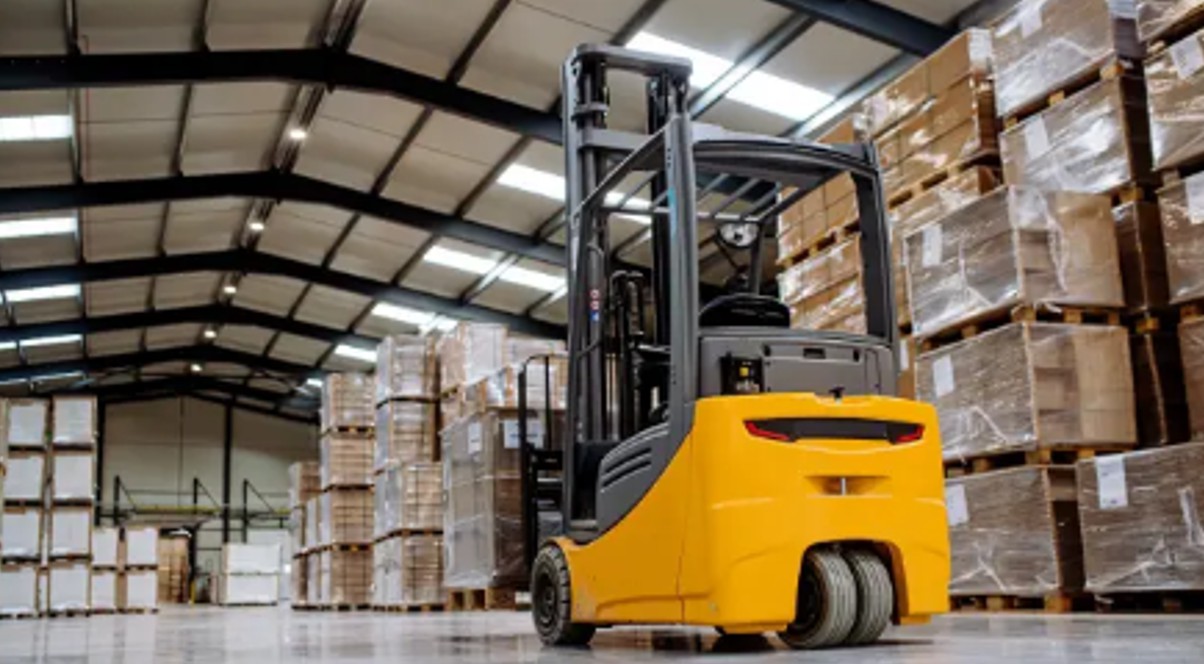
Blue Yonder Warehouse Management for Flexible Warehouse Management
Oct 31, 2025 at 7:19 PM
Online Retailer Galaxus Restructures Logistics Location in Krefeld
Nov 4, 2025 at 12:28 PM
Global supply chains are increasingly under pressure. Pandemic-related bottlenecks, political tensions, rising energy prices, and stricter sustainability regulations are putting traditional procurement models to the test. Especially in the DACH region, many companies are facing rising costs, uncertain transport routes, and growing dependence on individual suppliers. To remain competitive in this environment, businesses must strategically rethink their supply chains.
Von: Margot Königshofer
(Wien) Resilient supply chains are no longer a coincidence but the result of deliberate management. Companies that take responsibility, respond flexibly, create transparency, and focus on diversification secure their future viability. These four factors form the foundation of stable value chains and determine whether businesses withstand crises or stumble.
Responsibility as a Strategic Foundation
Sustainability is more than just an image factor today – it has become a prerequisite for stable supply chains. Those who want to produce reliably in the long term must know where their materials come from and under what conditions they are obtained. Companies that integrate human rights, fair wages, and environmental standards into their supply relationships not only build trust but also reduce legal and operational risks.
Digital monitoring systems support the verification of suppliers and allow real-time tracking of CO₂ emissions, working conditions, or material origins. This enables potential weaknesses to be identified early. The crucial aspect is the attitude: Responsibility should not be seen as a mandatory task but as a strategic lever to strengthen one’s resilience.
Adaptability in a Volatile World
Economic and political developments today affect procurement chains faster than ever before. Trade conflicts, inflation, or new customs regulations can change entire markets within weeks. Those who rely solely on low-cost suppliers in distant countries in such situations risk significant losses and production stoppages.
Therefore, companies need intelligent early warning systems that can detect changes in a timely manner. Using data-driven analyses, scenarios can be simulated, risks assessed, and alternative strategies developed. In this way, decisions can not only be adjusted in the short term but also optimized in the long term – a crucial advantage in uncertain times.
Transparency as a Trust Anchor
As the complexity of global supply chains increases, so does the necessity to maintain an overview at all times. Companies must know where their goods are located, how they are transported, and which actors are involved. Only in this way can risks be minimized and processes efficiently managed. Modern platforms allow for real-time visualization of supply chains, regardless of whether the supplier is located in the Far East or Central Europe.
At the same time, a clear countertrend is emerging: the return to regional proximity. Shorter distances facilitate coordination, reduce costs, and lower the risk of external disruptions. Regional sourcing is therefore not a step back but an extension of global strategies and strengthens control over critical processes.
Diversification as a Shield Against Failures
Resilient supply chains rely on diversity. Companies that work with only one manufacturer or a specific region put themselves in dangerous dependencies. Strategic diversification deliberately spreads risks across multiple partners and locations, thus ensuring supply even in times of crisis.
By building a network of qualified suppliers, bottlenecks can be compensated for more quickly. Digital platforms assist in comparing partners, monitoring capacities, and coordinating processes. This diversity not only increases supply security but also fosters competition and innovation within the supply chain.
Stability as a Leadership Task
Supply chain stability does not occur by chance but through smart planning and consistent action. Those who take responsibility, remain flexible, create transparency, and minimize risks through diversification lay the foundation for sustainable competitiveness. Purchasing is evolving into a key function within the company: It not only ensures cost control but also sustainability and stability.
Margot Königshofer is the founder and managing director of Procfit GmbH, specializing in the establishment and optimization of supply chains for startups, young entrepreneurs, and online retailers. With over 19 years of experience and a network of 70,000 suppliers, she has successfully supported over 800 projects. Procfit assists companies with a complete service package for purchasing and building their supply chains. More information at:
https://www.procfit.at/Photo: © Margot Königshöfer
Titelfoto: © Loginfo24