
BVL Supply Chain CX 2025 Sends Clear Signals to Politics
Oct 25, 2025 at 5:03 PM
Logistics Real Estate Fair BUILDINX Opens Its Doors in Three Weeks
Oct 25, 2025 at 6:10 PM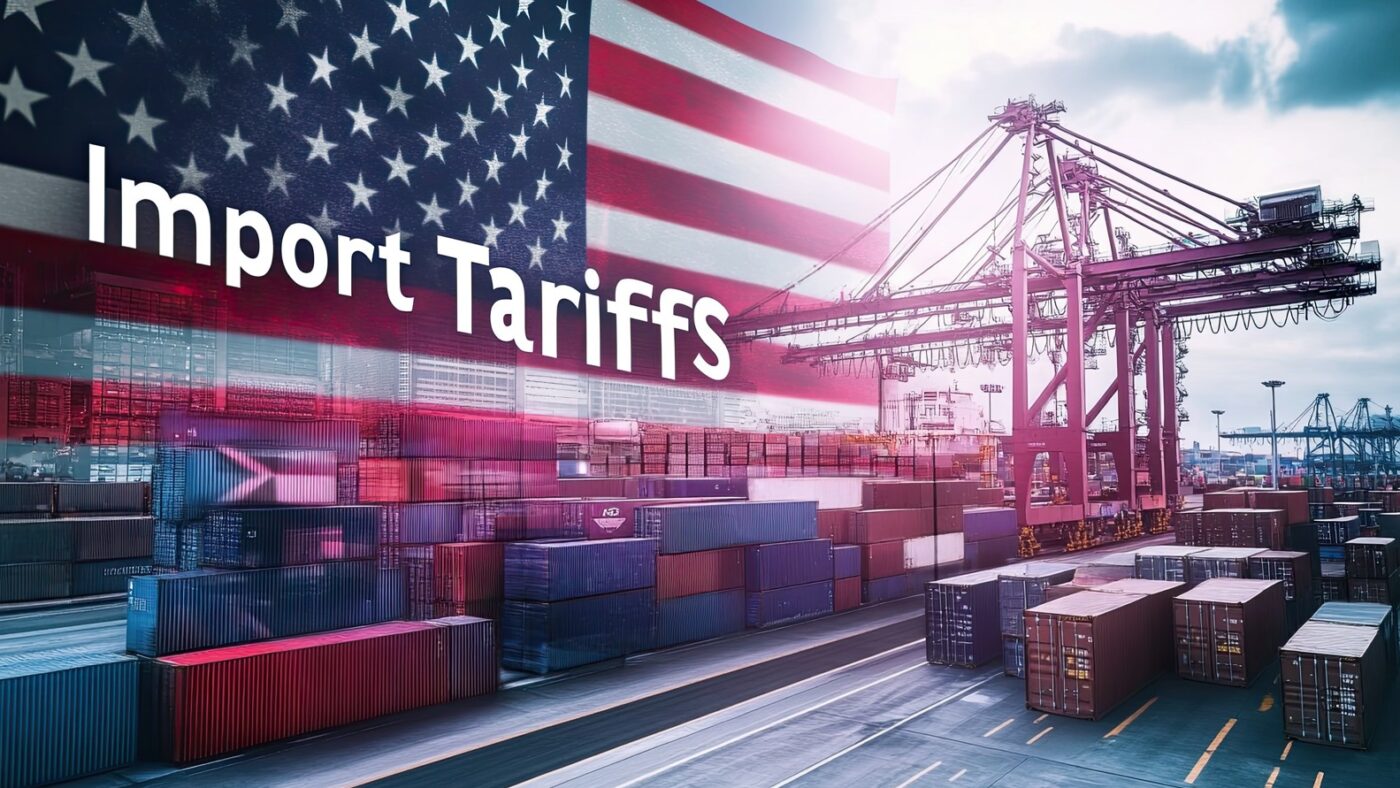
Tariffs up, tariffs down, tariffs postponed, then the agreement on 15 percent1, but only if Germany invests sufficiently in the USA. The never-ending zigzag course of the US government not only increases costs but also threatens to sever established supply chains, making long-term strategic planning nearly impossible. While AI-supported planning tools cannot prevent high tariffs, they can minimize their negative impacts.
(London/Stuttgart) Companies that want to remain competitive must either reposition themselves internationally or adapt to the conditions. This is possible with variable supply chain management and flexible cloud-based planning tools.
After decades of free trade characterized by the reduction of global trade barriers, trade tariffs are currently making a “comeback.” The unpredictable tariff increases from the USA are driving up costs, especially in key industries such as steel, automotive, or pharmaceuticals, making stable cross-border alliances and partnerships significantly more difficult for companies. This particularly affects sectors that are economically intertwined with others, such as the globally operating semiconductor industry, which heavily relies on Taiwan’s manufacturing expertise. The same applies to the German automotive industry, whose export strength makes Germany an important player in international trade. However, other sectors such as shipbuilding and aircraft manufacturing, as well as the production of specialized goods like medical devices or musical instruments, are also affected according to a recent study by DZ Bank2. According to the Institute of the German Economy (IW) in Cologne, a US import tariff of ten to twenty percent could cost the German economy between 127 and 180 billion euros in the coming years3.
Automotive Industry Under Pressure
Germany’s automotive and supplier industry has been struggling not just since the imposition of US tariffs. Job cuts at Mercedes-Benz and Porsche, revenue declines, and profit drops at suppliers like Bosch or ZF Friedrichshafen. The US tariffs are now increasing uncertainty in the industry again, as the USA is one of the most important export markets for the German automotive industry. According to VDA, nearly 450,000 vehicles were exported from German production to the USA in 2024. Almost every fourth Porsche was sold in the USA, while BMW and Mercedes had a share of just over 16 percent each, and Audi and VW had shares of eight to twelve percent4.
Dangerous Game with Patient Care
German pharmaceutical manufacturers exporting their products to the United States are currently subject to a tariff rate of 15 percent. The announced tariffs of 100% do not seem to affect EU exports at the moment. From the perspective of the Association of Research-Based Pharmaceutical Companies (vfa), high tariffs represent a significant setback for global healthcare and the innovation location Europe, with serious consequences for global value chains and the costs of drug production. Han Steutel, president of the vfa, sees this as “a dangerous game with patient care. Both in the United States and in Europe,” said the vfa president to the Rheinische Post5.
AI-Supported Scenario Planning Simulates Developments and Situations
Under these circumstances, a stable pricing strategy for companies is becoming increasingly difficult to implement. If they react too slowly to higher tariffs, their margins shrink; if they pass on price increases in full, they risk losing customers. To assess tariff risks in real-time and make informed data-driven decisions regarding price increases or production relocations, digital platforms provide valuable support. With the help of AI-supported scenario planning, different developments and situations can be simulated. The AI tools model multiple alternative scenarios at high speed, taking into account production costs or the impacts of tariffs or potential supply chain bottlenecks.
Assessing Demand and Costs in Advance
Similar to a GPS system that evaluates different routes based on criteria such as distance, time, and fuel efficiency, AI-driven systems help companies navigate complex trade environments by showing different paths and possible solutions to mitigate tariff-related disruptions. This allows companies to assess the impacts on demand and costs in advance or better estimate margin risks. For example, whether an alternative production site can reduce costs or whether the sales of products or services can be increased through a new supplier.
Understanding Changes
In times of increasing global interconnectedness, a holistic planning approach is becoming increasingly important for companies. It is no longer sufficient to evaluate the impacts of tariffs in isolation. Companies must also understand which factors of the global trade environment are still changing their business operations. AI-supported functions such as sales planning, demand sensing, scenario planning, and supply chain control tower scenario planning must therefore be integrated into strategic processes as standard. This way, companies can examine impacts on demand and costs, explore alternative production sites, or seek new suppliers. By simulating different scenarios, companies can play out and evaluate various reactions, thereby minimizing the impacts of tariffs.
Sources
1 This applies to most products. However, special duties of 50% remain in effect for certain products such as steel and aluminum imports.2 Merkur.de, 15.04.2025, https://www.merkur.de/wirtschaft/nicht-der-deutsche-autosektor-welche-branche-die-us-strafzoelle-am-haertesten-treffen-zr-93674246.html3 Tagesschau, 01.01.2025, https://www.merkur.de/wirtschaft/nicht-der-deutsche-autosektor-welche-branche-die-us-strafzoelle-am-haertesten-treffen-zr-93674246.html4 Logistik Heute 03.04.2025 https://logistik-heute.de/news/us-zoelle-vda-befuerchtet-dramatische-auswirkungen-fuer-autoindustrie-206533.html5 Frankfurter Rundschau, 17.07.2025, https://www.fr.de/wirtschaft/trump-ankuendigung-alarmiert-pharma-branche-umzug-in-die-usa-als-einzige-option-zr-93838171.html
Simon Bowes is Corporate Vice President of Manufacturing Industry Strategy at Blue Yonder. After graduating as an engineer, he worked in mechanical engineering before joining Blue Yonder 25 years ago. Here, he has held leadership positions in sales and marketing and is now responsible for strategic manufacturing management. He represents Blue Yonder’s vision for manufacturing to customers, analysts, and partners, and also works on a EMEA-specific orientation for manufacturers in Blue Yonder’s research and development. Photo © BlueYonder

Title photo: © Loginfo24