


Customs Support Group Appoints Industry Advisory Board
Oct 16, 2025 at 1:06 PM
DHL Increases Package Prices for Business Customers in 2026
Oct 18, 2025 at 7:14 PM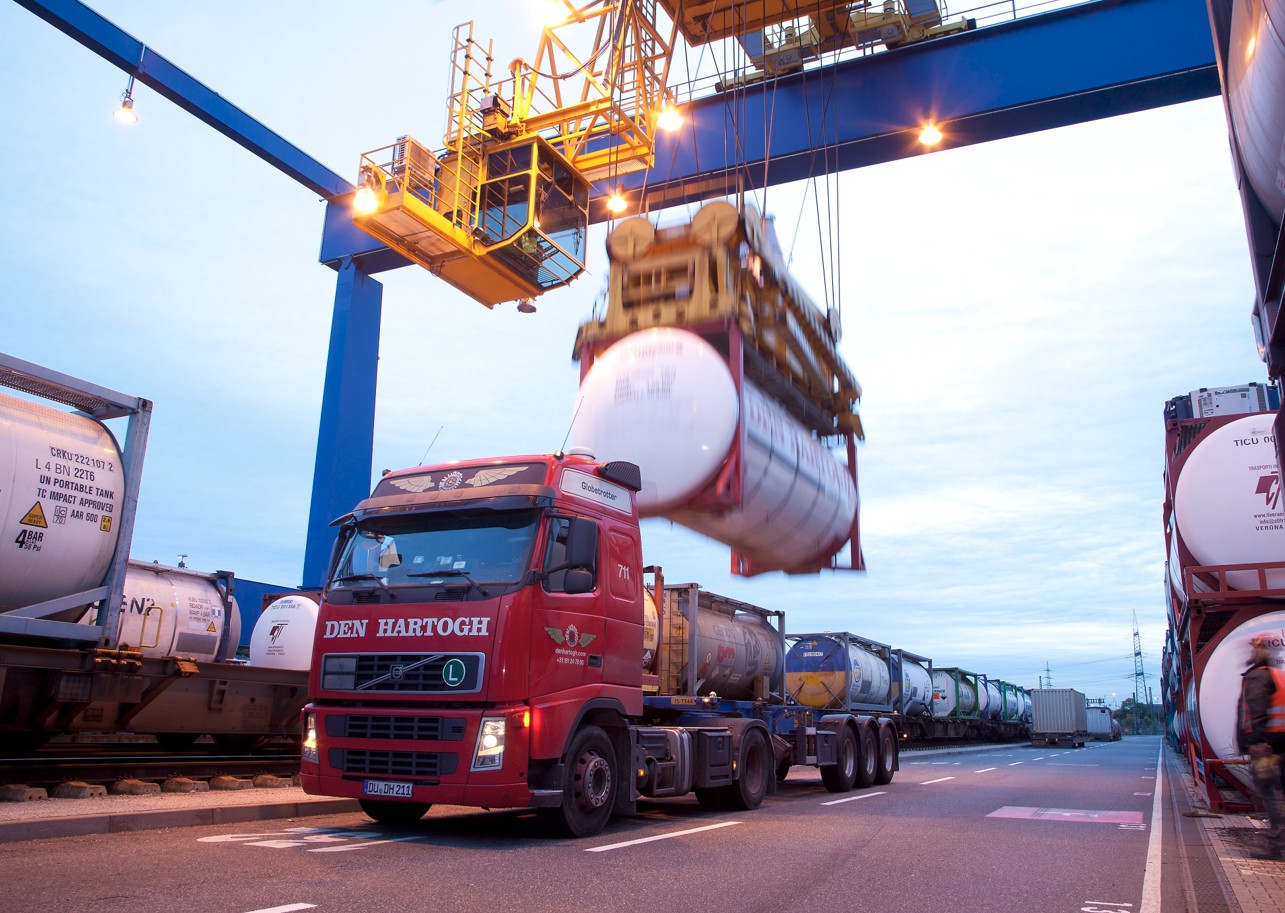
After three years of intensive research and development work, the KIBA project – Artificial Intelligence and Discrete Loading Optimization Models for Increasing Capacity in Combined Transport – has been successfully completed. Under the leadership of Kombiverkehr KG and with the participation of Deutsche Umschlaggesellschaft Schiene – Straße (DUSS), Goethe University Frankfurt am Main, INFORM, KombiConsult, Technical University of Darmstadt, and VTG, a demonstrator for a network capacity management and train loading optimization system was developed.
The goal of the project was to increase efficiency, safety, and sustainability in rail freight transport using methods of artificial intelligence (AI) and mathematical optimization. Supported by a central master data database, methods for network optimization and train loading planning were initially developed, the results of which are presented in a comprehensible manner for users through a web-based visualization. The project was funded by the Federal Ministry for Digital and State Modernization (formerly the Federal Ministry for Digital and Transport).
“With KIBA, we have demonstrated how AI can make rail freight transport more efficient. The developed prototypes help to better utilize train capacities, use resources more efficiently, and make combined transport more attractive. This is an important contribution to shifting freight from road to rail and thus also to climate protection,” emphasizes Heiko Krebs, Managing Director of Kombiverkehr.
The developed models for train loading planning ensure that the capacities of trains regarding load weight and length are utilized as fully as possible, crane paths and transshipment processes are reduced, and numerous variables are automated and considered simultaneously. The network planning combines AI-based demand forecasts with mathematical optimization to distribute loading units in such a way that trains are optimally loaded and transports reach their destinations with short transit times and few transfers.
Connection of AI and Optimization Opens New Possibilities
“The connection of AI and optimization opens up entirely new possibilities in combined transport. Forecasts for bookings for the transport of loading units can be directly transferred into optimization processes, allowing trains to be loaded efficiently and networks to be managed more stably. This creates a practical approach that directly supports operational systems and increases the performance of rail freight transport,” explains Dr. Rafael Velásquez, Director of Optimization & Integration at INFORM.
KIBA not only represents progress for combined transport but also symbolizes a bridge between theory and practice. “The close collaboration between Kombiverkehr, INFORM, DUSS, KombiConsult, and the two universities was the decisive success factor for the project. Only through the bundling of different competencies could such an innovative result be achieved,” says Krebs. “As a company that itself emerged from research more than 55 years ago, it is very important for us to bridge the gap between universities and industry. Especially in the area of AI, we see a great need to withstand international innovation pressure,” adds Dr. Eva Savelsberg, Senior Vice President and member of the management board at INFORM.
Further Steps Necessary for Productive Use
With the completion of the project, an important foundation has been laid to further test the developed solutions in practice and integrate them into existing systems. Further steps are necessary for productive use, including ensuring quality-assured data, automating the exchange of information, and conducting live tests with the respective productive systems. The prototype developed in the project is now being prepared for imminent use by terminal operators and operators in rail freight transport.
Photo: © Kombiverkehr