


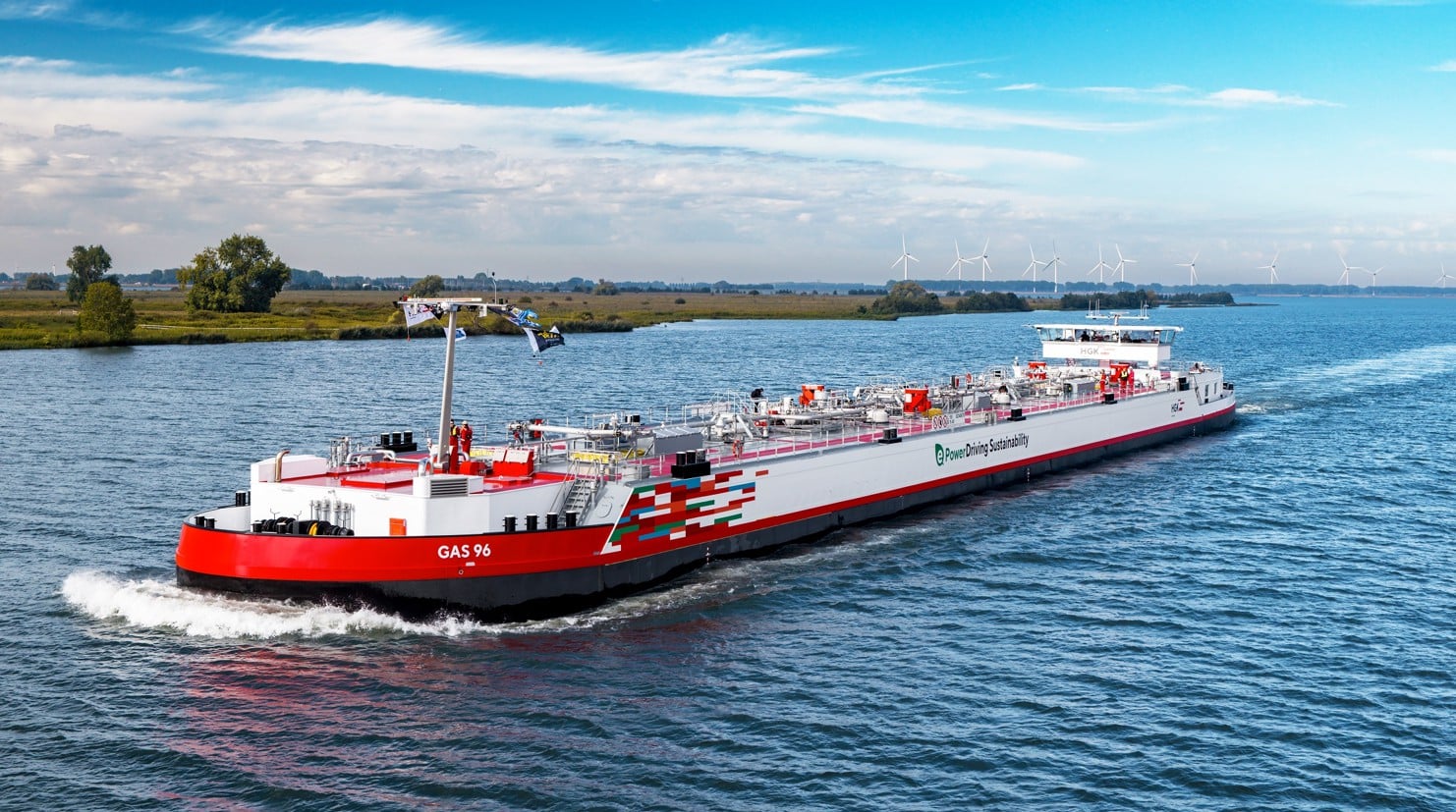
HGK Shipping christens future-oriented gas tank ship “GAS96”
Oct 10, 2025 at 8:06 PM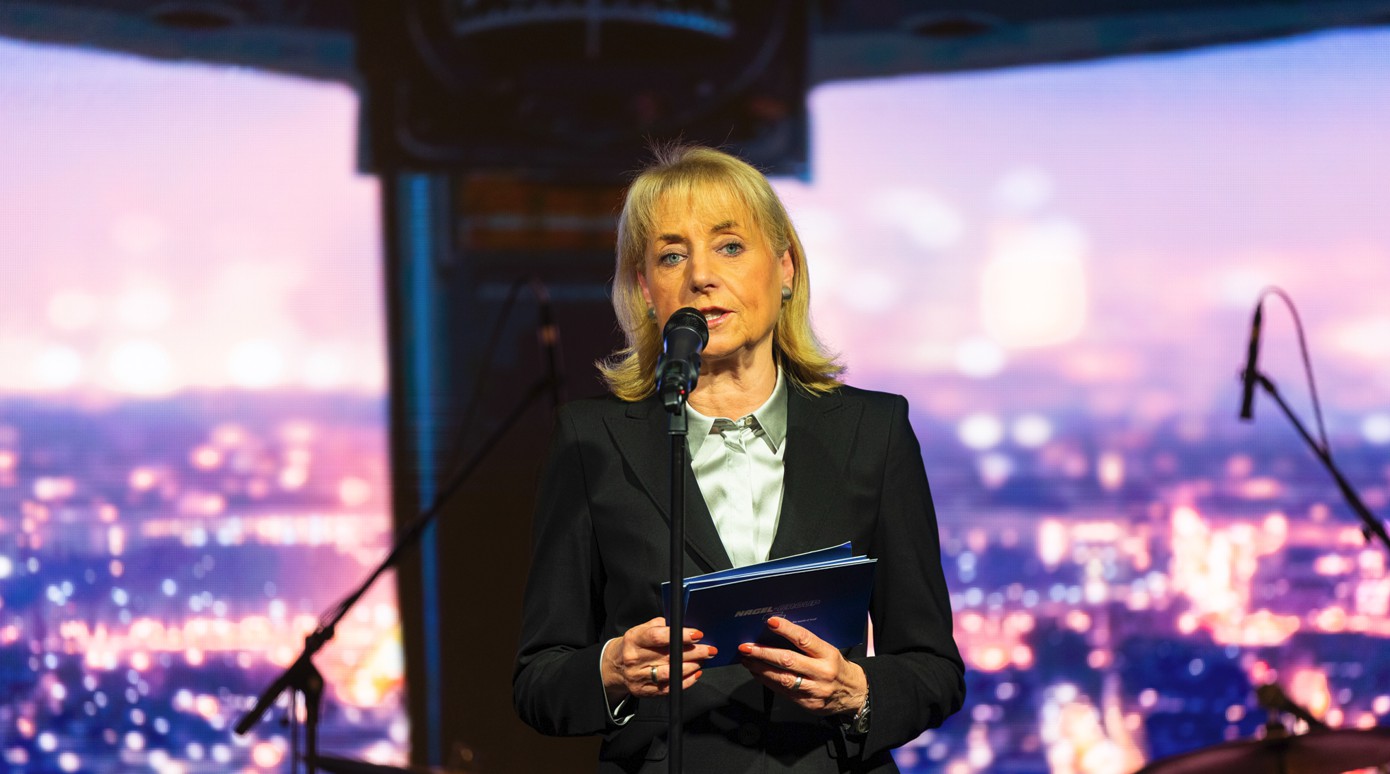
PCF Perishable Center in Frankfurt Celebrates 30th Anniversary
Oct 14, 2025 at 1:13 PM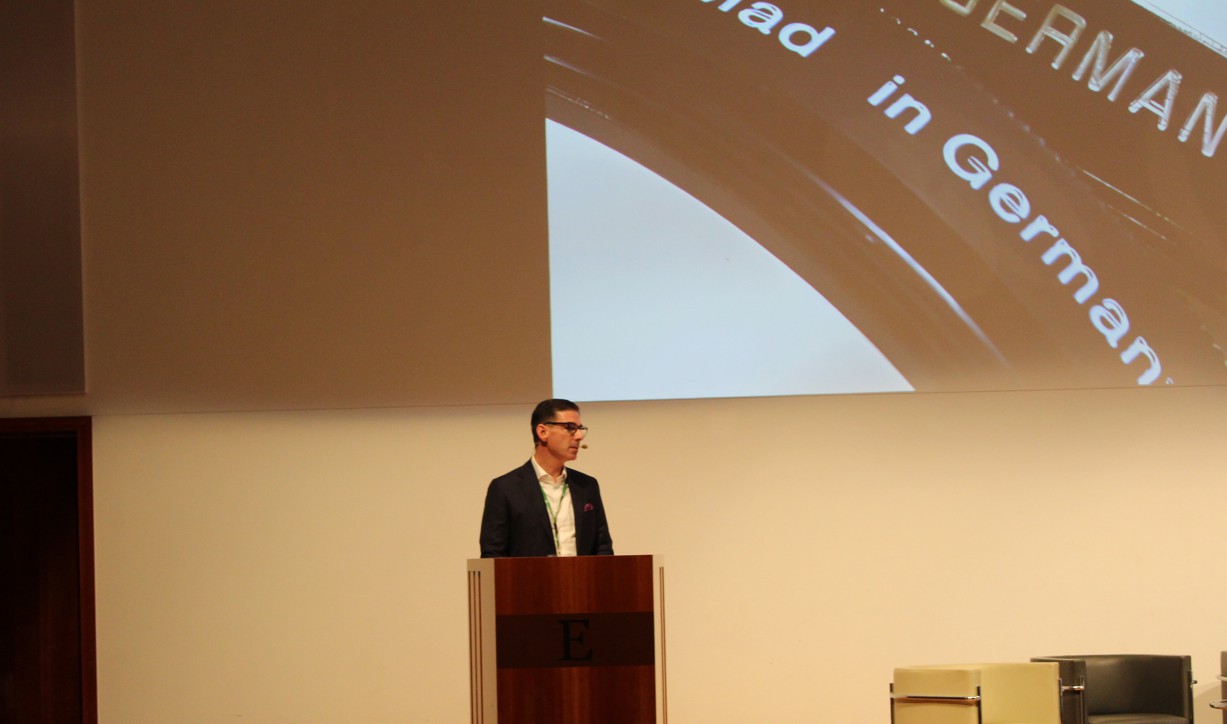
Last week, this year’s Supply Chain Innovation Day took place at the Hotel Einstein in St. Gallen – organized by the Institute for Production and Supply Chain Management (PSCM-HSG) at the University of St. Gallen. Under the guiding theme “Supply Chains in the Age of Global Uncertainties: Resilient, Connected, Future-Proof,” the event provided an impressive forum for decision-makers from business, science, and politics.
(St. Gallen) The aim of the day was to present strategies, technologies, and best practices that make supply chains more resilient and efficient at the same time. A tight program with over a dozen expert contributions, keynotes, and startup presentations illuminated the topic from various perspectives – from geopolitics to digitalization to urban logistics.
Global Tensions as Reality – Opportunities in New Markets
To kick off, Prof. Dr. Julia Arlinghaus, head of PSCM-HSG, posed the central question of whether technology in times of multiple crises is more of a “lifeline or a risk.” In a world of geopolitical fractures, Arlinghaus stated, a new balance between connectivity and resilience is needed. Holger Seehusen, Managing Director of Militzer & Münch, took the audience on a journey through global supply networks. Under the title “Key Regions – Key Issues,” he pointed out how traditional markets like Russia or parts of the Middle East are shifting, while countries like Vietnam or Indonesia are emerging as new growth centers. Especially in Southeast Asia, Seehusen noted, stable political frameworks, rising middle classes, and an export-driven industry offer opportunities for European logistics – despite still complex customs and infrastructure conditions.
Trade Crises and Tariffs as Challenges for Europe
Claudia Feusi, partner at Douana AG, provided a legal and economic policy perspective in her presentation “Trade War or Trade Change?” She analyzed the effects of American tariffs on European goods and demonstrated how companies can respond in time to impending import barriers. In addition to legal insights, she offered practical recommendations – from optimizing customs value to relocating production sites to actively monitoring liquidations. Her conclusion: “Monitoring is the new competitive advantage.” In the subsequent thematic session I, representatives from Bosch, KPMG, and Huber+Suhner discussed how companies can position themselves amid geopolitical risks, ESG requirements, and new regulations.
Holding a Mirror to the German Economy
The first keynote of the day provided ample material for discussion. Matthias Magnor, CEO of BLG Logistics Group from Bremen, addressed the participants on the topic “Tariffs, Trade and Tensions: from Made in Germany to Mad in Germany!” He did not mince words and unflinchingly criticized the weaknesses of the economy in Germany. Just a day before the Supply Chain Innovation Day, Chancellor Friedrich Merz visited BLG in Bremerhaven, and Magnor seized the opportunity to present his views to the Chancellor as well. Magnor sees the rampant bureaucracy as the biggest obstacle. He recounted a practical example where ready-made tanks did not receive operating permits because the opening hatch for pregnant women in their ninth month was deemed too narrow. However, Magnor’s presentation did not conclude without highlighting that there is also an opportunity in crisis.
Agility is the New Stability
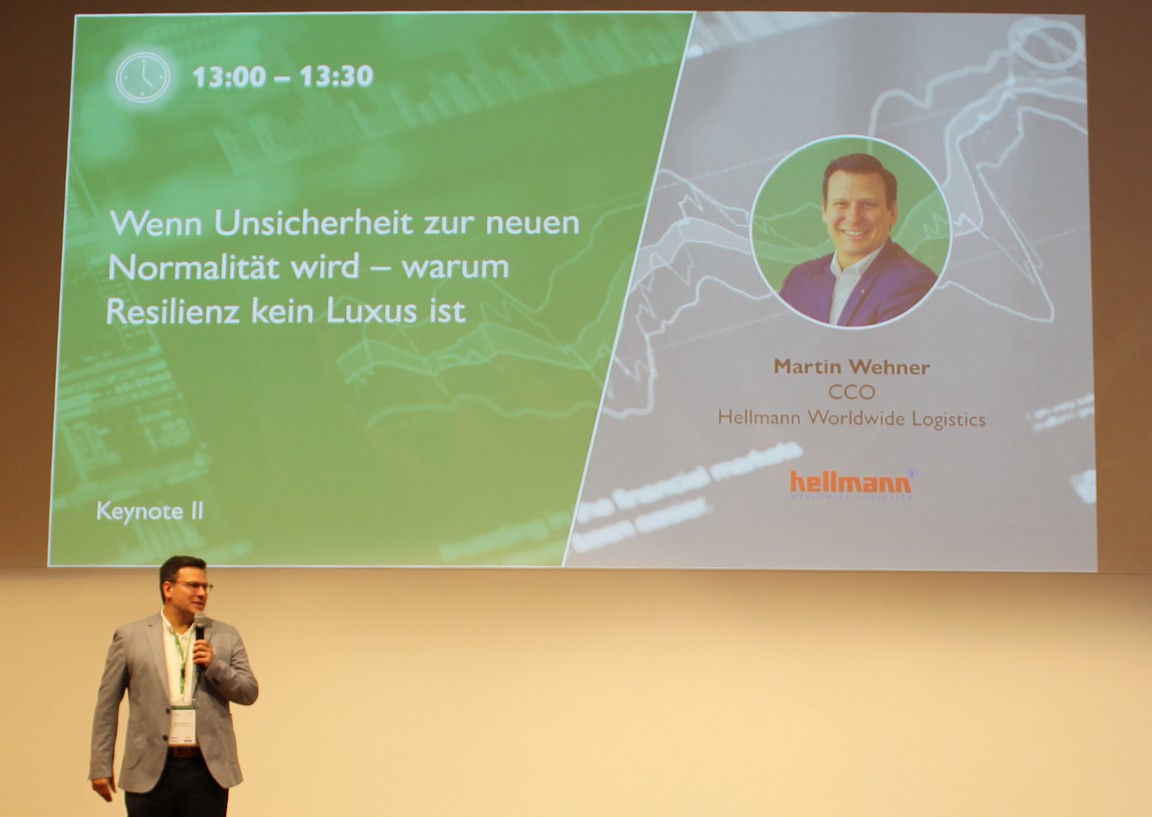
The lunchtime keynote was delivered by Martin Wehner, Chief Commercial Officer of Hellmann Worldwide Logistics, who redefined the concept of resilience: “When uncertainty becomes the new normal, agility is the new stability.” He demonstrated how Hellmann combines transparency, data, and artificial intelligence to make supply chains not only more robust but also more customer-oriented. With the “Co-Creation Program,” Hellmann invites its customers to develop solutions together – from risk analysis to prototyping to implementation. In addition to technological tools, such as an intelligent visibility platform and CO₂ reporting systems, Wehner emphasized the human factor: “Technology is important, but trust and partnership remain the foundation of functioning networks.”
 Innovations through Start-ups and Venture Capital
In the afternoon, the culture of innovation took center stage. Gregor Kress from Plug and Play Tech Center, the world’s largest innovation platform, spoke in the trend talk about “Venture Capital as a Leading Indicator for Tomorrow’s Innovations.” He showcased how start-ups are revolutionizing the logistics and supply chain industry – from autonomous electric trucks (Einride) to mobile CO₂ recovery systems (Qaptis) to digital fleet platforms (Colonia). In the subsequent start-up speed pitch, seven young companies presented their solutions for a sustainable and data-driven supply chain – including KATMA CleanControl with digital cleaning management, Pick8Ship with robot-assisted fulfillment, and Logtastiq, a platform for transparent warehousing processes. The audience received an inspiring overview of the industry’s innovation potential in compact three-minute pitches.
Digital Twins and Artificial Intelligence as Knowledge Repositories
In his contribution “From Data to Knowledge,” Antonius Gress, co-founder of Blockbrain, demonstrated how so-called “Knowledge Digital Twins” map and make usable the knowledge of experts in digital models. These AI-based systems could automate answers, processes, and decisions in the future – a crucial step to address the shortage of skilled workers in complex supply networks. The second thematic session also made it clear: companies must integrate knowledge, data, and technologies more closely to remain capable of action in times of crisis.
Autonomous Logistics and New Mobility Concepts
A visionary look at urban logistics came from Dr. Christian Kubik (LOXO). In his presentation “Autonomous Transport Vehicles – Perspectives and Opportunities for Logistics in Tomorrow’s Urban Spaces,” he presented research results from Bern, where self-driving delivery vehicles and micro-hubs are being tested in pilot operations. The result: up to 20 percent higher delivery capacity, 14 percent less working time for couriers, and a significant reduction in CO₂ emissions. Kubik sees this as “a paradigm shift in the last mile.”
Transformation of Industrial Value Creation
The conclusion was provided by Dr. Andreas Widl, CEO of the Samson Group, with a practical keynote on the digital transformation of industrial value creation. Using concrete applications – from autonomous drone inspections to AI-supported quality analyses – he demonstrated how his company integrates data, digital twins, and automation into global production networks. Widl’s conclusion: “Resilience arises from the ability to intelligently connect knowledge, technology, and people.”
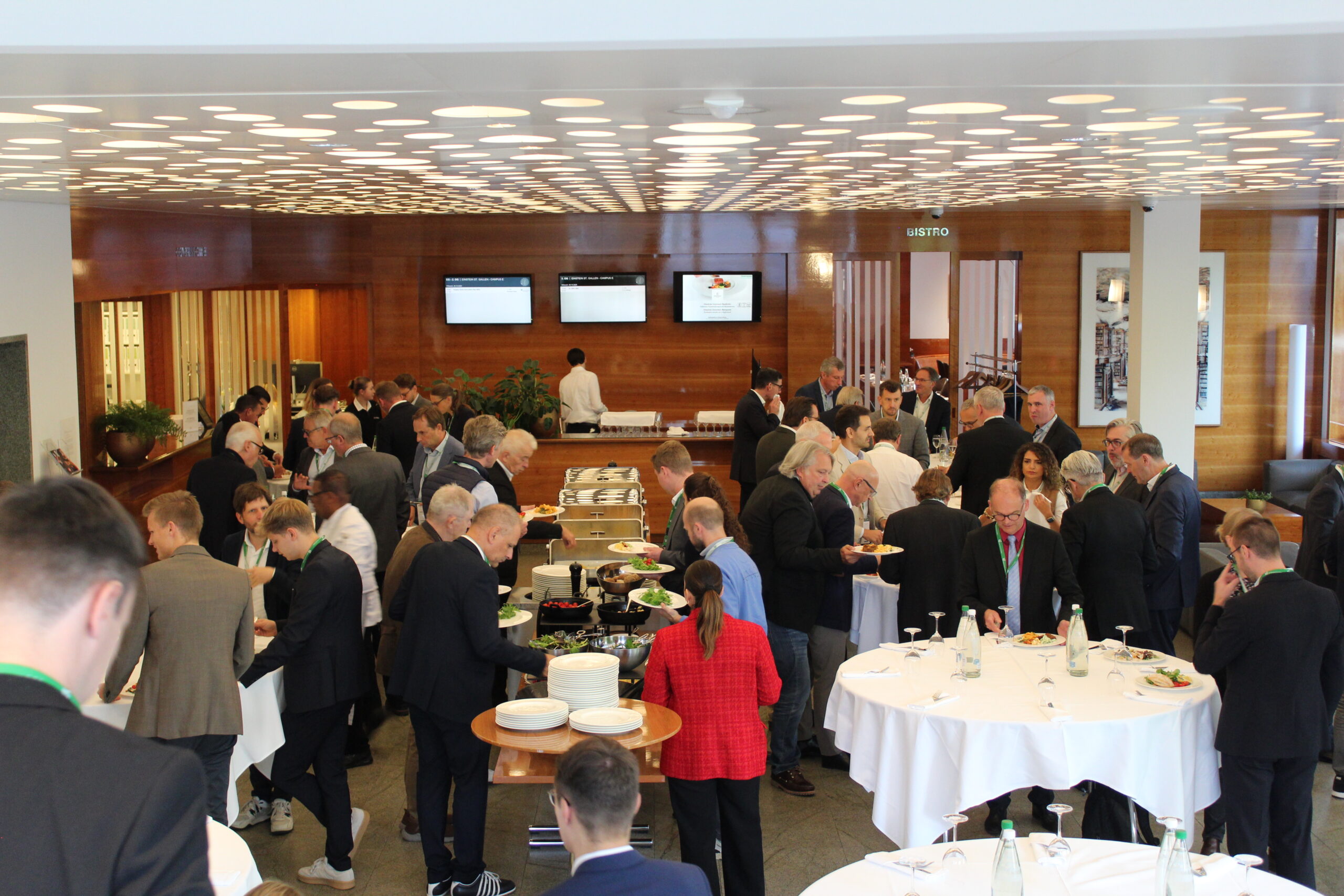 There was also enough time for networking at the Supply Chain Innovation Day in St. Gallen.
Research Meets Practice – Looking Ahead
With around 250 participants, the Supply Chain Innovation Day 2025 offered a high-profile cross-section of current developments in global logistics. Between keynotes, trend talks, and networking at the aperitif, it became clear: resilience, sustainability, and digitalization are no longer future topics – they determine daily practice. In conclusion, the PSCM-HSG support association presented its research priorities for 2026. The focus is on AI, digital twins, resilient network architectures, and new cooperation models for sustainable logistics. With this, the University of St. Gallen sends a clear signal: The future of supply chains is created where science and business think together.
Photos: © Supply Chain Innovation Day / Caption for the cover image: CEO of BLG Logistics Group spoke at the Supply Chain Innovation Day about the state of the economy in Germany.