


Mansio aims for 44 tons total weight in encounter traffic
Sep 23, 2025 at 6:10 PM
L.I.T. Group Ranked 8th Among Medium-Sized Companies in Lower Saxony
Sep 23, 2025 at 6:25 PM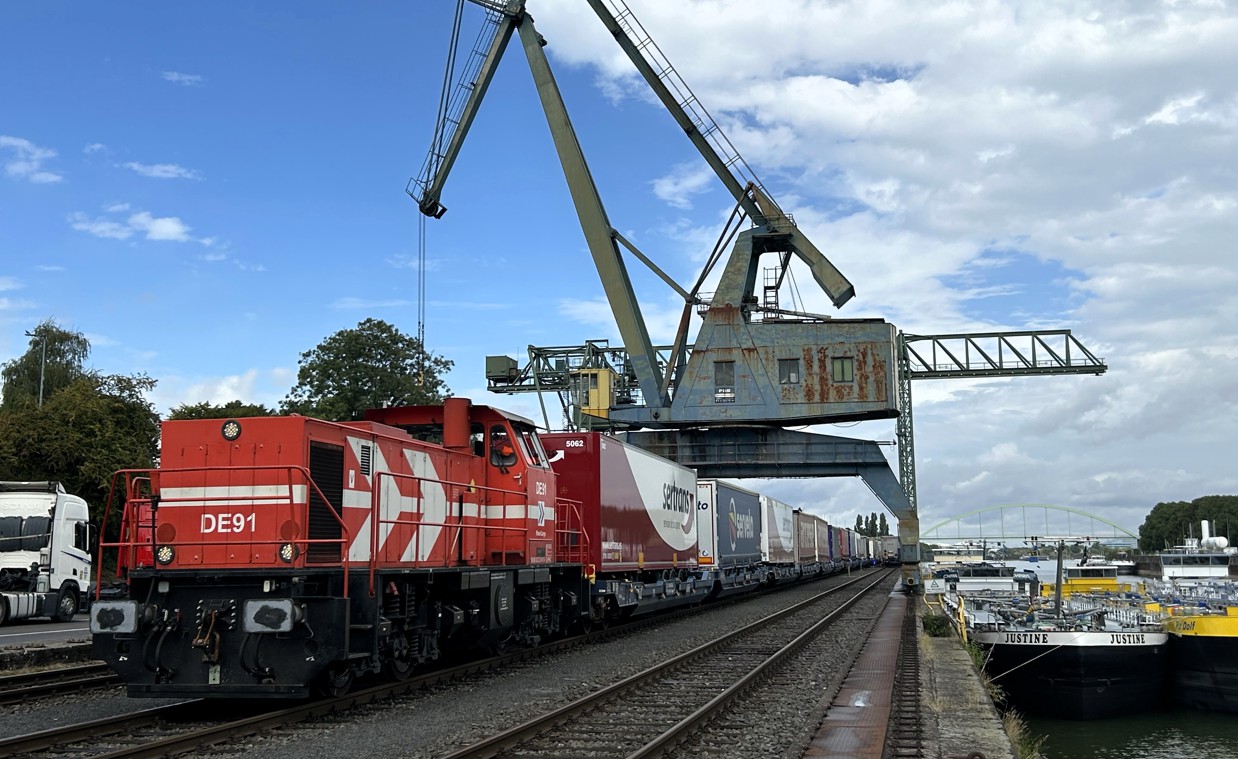
For about three months, a regular container train has been operating between the port of Cologne-Niehl and the Mediterranean. This train service connects the Westkai terminal of HGK Logistics and Intermodal GmbH with the southern French city of Perpignan. Until now, there were three departures and arrivals of the “Med Express” per week. After a successful initial phase, the frequency has now been increased to four trains weekly.
(Köln/Perpignan) The intermodal service between the metropolis on the Rhine and the Mediterranean city close to the Spanish border is operated by “Transfesa Logistics,” a subsidiary of DB Cargo. “The services have been well received by the market. We are very pleased if in the future more customers take advantage of the benefits of this sustainable concept and thus contribute to CO² emission reduction,” explains Rainer Görtler, Managing Director of HGK Intermodal GmbH.
The positive effects are clear: per train, semi-trailers and containers with a total capacity of 36 units can be transferred from road to rail. Otherwise, these would have to be transported by truck, causing corresponding burdens. Transport on the special pocket wagons, on the other hand, is efficient, sustainable, and environmentally friendly. Perpignan was chosen as the destination and departure point with care.
Majority of traffic from Spain
A large part of the goods transported to Cologne, such as automotive components or perishable goods, comes from nearby Spain. There is currently a different rail gauge there. However, by utilizing the “Perpignan Saint Charles Container Terminal” (PSCCT) in neighboring southern France, the tedious “re-gauging” of the wagons is eliminated. In Cologne, the HGK subsidiary RheinCargo takes over the so-called last mile of the trains from the terminal to the DB network and back.
Photo: © HGK L&I