



Hellmann Takes Over Warehouse for Siemens Smart Infrastructure
Sep 18, 2025 at 5:36 PM
DVF Calls for Comprehensive Reforms in Ports and Shipping
Sep 18, 2025 at 6:42 PM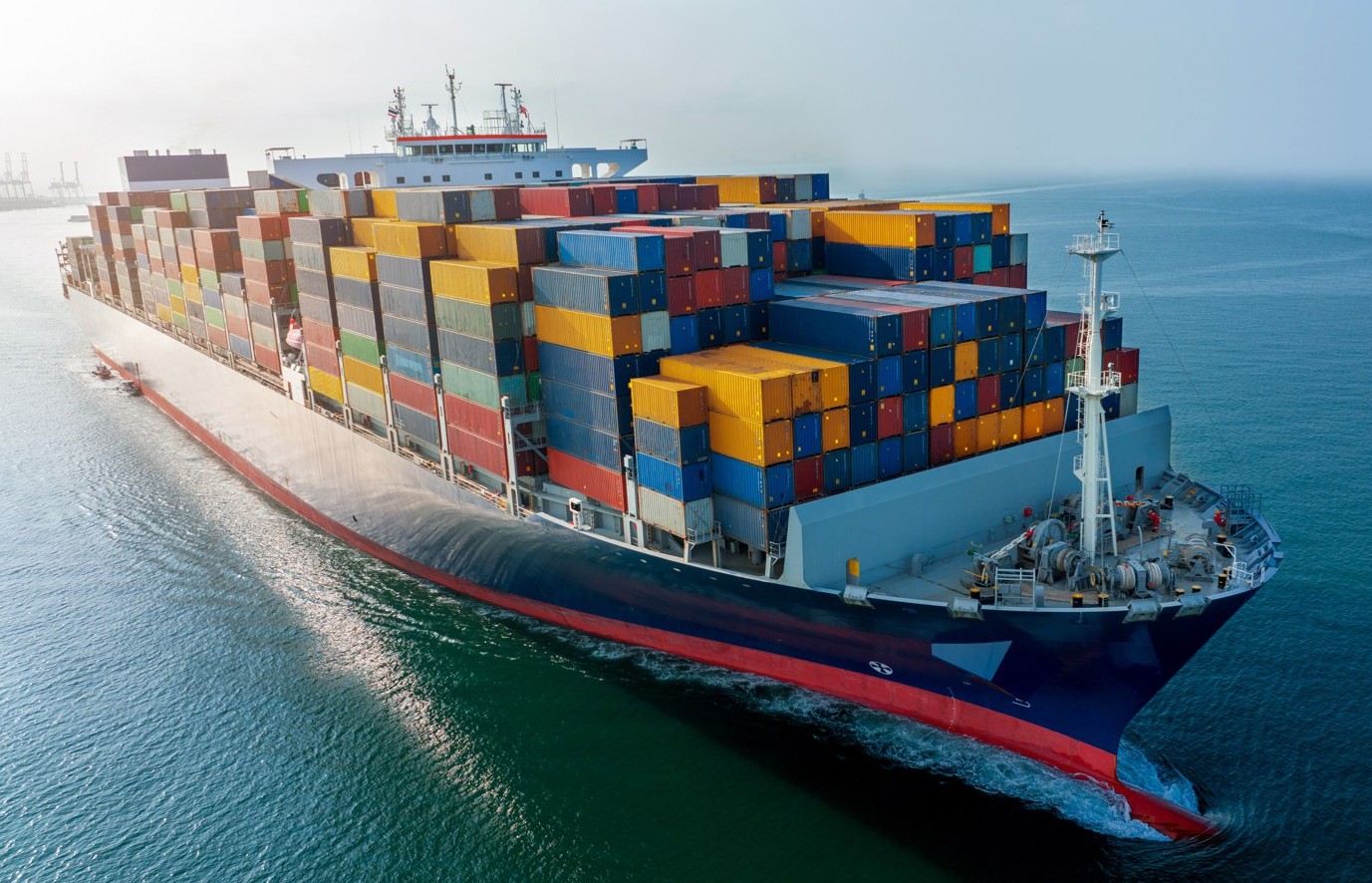
Representatives of the federal government, security experts, and the German shipping industry discussed last night at the Blue Night 2025 of the Association of German Shipowners (VDR) in Berlin how Germany’s maritime interests can be secured in a world of growing geopolitical tensions. The focus of the discussions was on the protection of important sea routes and the role of the merchant fleet as a strategic resource in the international framework.
(Hamburg/Berlin) “Our economic success, our supply security, and our place in the world depend crucially on us being a strong maritime nation,” said Gaby Bornheim, President of the VDR.
Germany is resource-poor and at the same time particularly export-oriented: About two-thirds of all German exports and imports are transported by sea. Over 200 German shipping companies operate around 1,800 ships. This makes Germany one of the largest maritime nations in the world. This merchant fleet is not only a guarantee for the supply of the population and the economy but also a prerequisite for the safe transport of military goods and equipment in case of conflict. Without it, Germany would be dependent on others. A risk that our country cannot afford in a world that has become rougher.
A particular focus of the discussions was on the competitiveness of German merchant shipping. There is fierce competition on the world’s oceans. Many countries are massively investing in their fleets and shipping locations to secure advantages in global trade. Germany must continue to assert itself, and politics must now set the right course so that domestic shipping companies do not fall behind. They are already investing in innovation, climate protection, and efficiency, but for long-term success, reliable political support, simplification of procedures, targeted incentives, and fair competitive conditions at the German location are needed.
Christoph Ploß, Coordinator of the Federal Government for Maritime Economy and Tourism: “Security and economic policy go hand in hand – especially at sea. For us as an exporting nation, free and secure maritime trade is of crucial importance: It is the lifeblood of our prosperity, our supply security, and our economic location. Therefore, the goal of the federal government is to secure a strong, innovative, and internationally competitive merchant shipping and a future-oriented shipbuilding industry in Germany. For this reason, the federal government will, for example, maintain the tonnage tax and work together with our international partners to ensure safe sea routes.”
Defensive Capability within the Framework of NATO and EU Alliances
Another central topic of the Blue Night: defensive capability within the framework of NATO and EU alliances. It became clear that security policy issues are closely linked to economic prospects. “The German business model will only work in the future if Germany and Europe can project military power globally. Maritime military and technological capabilities will determine who will be successful in the economy and trade in the future,” assessed Nico Lange, Senior Fellow at the Munich Security Conference and the Transatlantic Defense and Security Center for European Policy Analysis (CEPA) in Washington D.C.