



SSI Schäfer connects WAMAS Lift & Store with SSI LOGIMAT
Aug 30, 2025 at 2:45 PM
With Logismedia to the 10th Anniversary Gala of the Swiss Supply Chain Hall of Fame
Aug 31, 2025 at 6:20 PM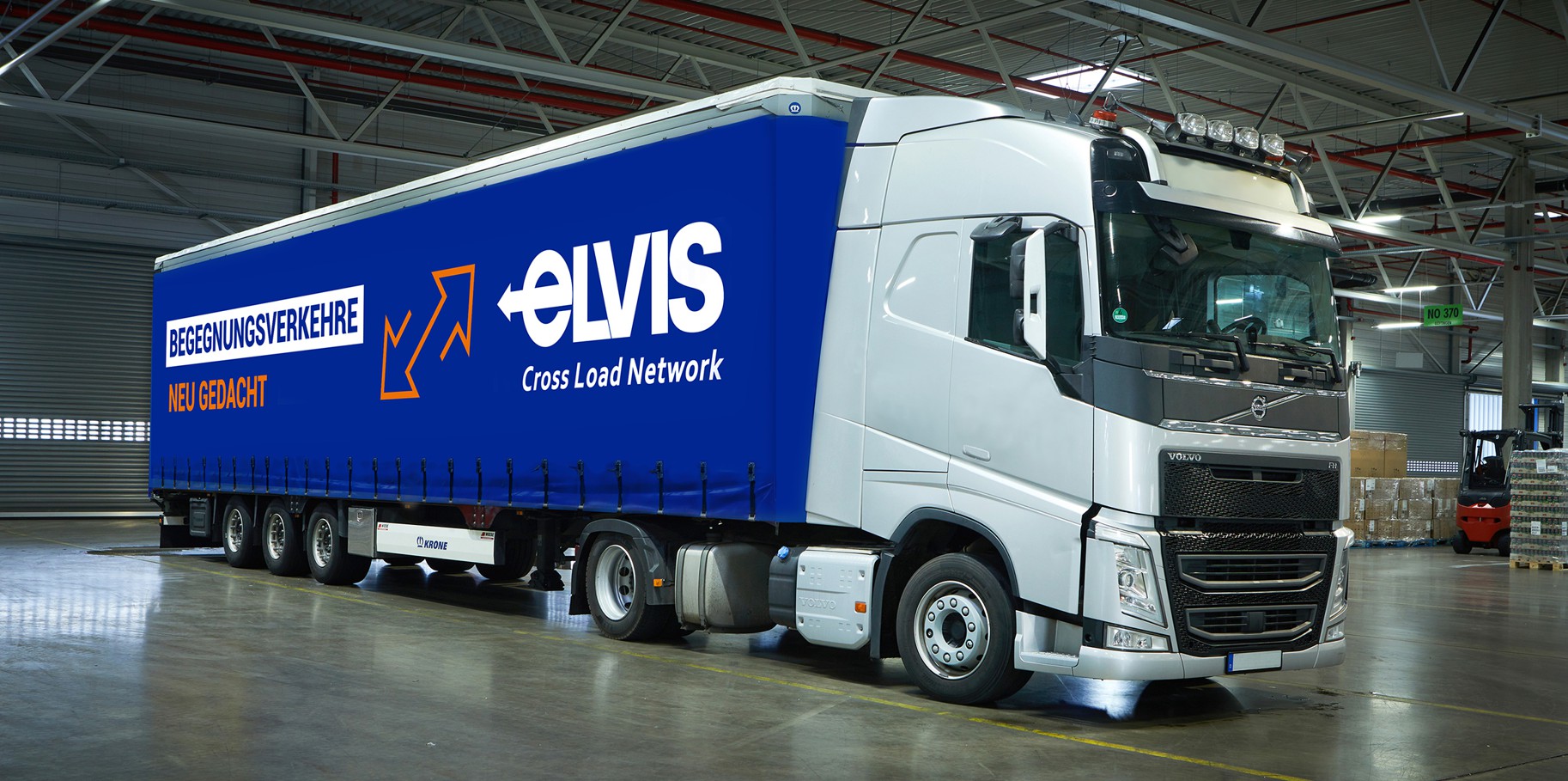
The European Cargo Alliance of International Forwarders (ELVIS) AG continues to paint a critical picture of the economic situation in Germany in its current market report for the second quarter of 2025. Although the downward trend in the overall economy and in the truck transport sector has slowed, the lack of available cargo space and rising personnel costs are increasingly putting pressure on transport companies.
(Alzenau) So far, the announced investment packages from the new government have not provided any noticeable impulses. Instead, bureaucratic hurdles and high taxes are further burdening the industry. The freight forwarding alliance therefore recommends that companies critically examine their own cost and pricing structures and invest strategically in modern technologies to secure their profitability.

Nikolja Grabowski
“There can be no talk of a turnaround at the moment: The German economy is stagnating, and the hoped-for recovery is not materializing. Particularly alarming is the weak production in the manufacturing sector, which has serious consequences for the economy,” says Nikolja Grabowski, board member of ELVIS AG. The current market report shows that the performance of German industrial production has deteriorated significantly. This is particularly evident in the year-on-year comparison: While the production of motor vehicles and motor vehicle parts recorded a decline of 4.8 percent in June 2025 compared to the same month last year, the decrease in chemical production was already at 7.6 percent, and in mechanical engineering even at 8.7 percent. Overall, industrial production fell by an average of 6.9 percent.
Sentiment Remains Positive
Despite this development, the sentiment in companies remains positive: Both the ifo business climate (+1.8 percent) and the ifo business expectations (+4.4 percent) increased in July 2025 compared to the same month last year. Only the ifo business situation recorded a slight decrease of 0.7 percent. Compared to the previous month (June 2025), all three indicators remained virtually unchanged (business climate: +0.2 percent; business situation: +0.3 percent; business expectations: +0.1 percent).
There is also no real upswing for the transport sector: In June 2025, the monthly truck toll mileage slightly decreased compared to the previous month (-4.0 percent). A silver lining: The shipment volumes remain stable – the ifo economic outlook for the “freight transport by road” sector also appears positive. The ifo business expectations increased significantly compared to both the previous month (+7.8 percent; June 2025) and the same month last year (+10.8 percent; July 2024). Additionally, the transport volume of partial loads has also risen sharply year-on-year (+8.3 percent; July 2024).
This development is supported by a non-representative survey among ELVIS partners: The majority of the surveyed companies indicated that the transport volume would remain the same in the next four weeks, both in the construction materials (48.98 percent), chemicals (29.17 percent), and industry (46.94 percent) sectors, as well as in trade (52.94 percent). Only in the automotive sector do most companies expect a decline (38.78 percent). Furthermore, the available cargo space remains tight due to ongoing capacity reductions. This development is also reflected in the transport barometer: In July 2025, the ratio of freight to cargo space in the domestic spot market was 12.2 percent higher than in the same month last year. “Recently, however, the market has slightly eased – presumably due to the beginning of the holiday season, which temporarily reduces pressure,” explains Grabowski. The value decreased by 5.7 percent compared to the previous month. “However, this relief will not be permanent,” adds the ELVIS board.
Fuel Costs Remain Moderately Low
While wholesale selling prices have hardly changed compared to the same month last year (+0.5 percent; July 2024), fuel costs remain moderately low: They increased by only 1.0 percent compared to the previous month (June 2025) and decreased by 2.1 percent compared to the same month last year (July 2024). However, the market report shows a significant increase in personnel costs: Already in the first quarter of 2025, personnel costs based on gross monthly earnings rose by 3.9 percent compared to the same quarter last year. “The labor-intensive transport service is becoming increasingly expensive. These rising costs are putting significant pressure on our industry,” summarizes Grabowski.
The change in government and the announced investment packages have also had no positive effects so far. “The current geopolitical situation creates additional uncertainty and prevents any sense of optimism. The unclear developments and global risks make economic planning difficult for companies,” says Grabowski. In particular, high taxes and bureaucratic hurdles exacerbate the situation in the transport sector: “The recently noticeable increase in insolvency numbers illustrates how severely the transport industry is suffering from cost pressure, skilled labor shortages, and regulatory burdens – a serious warning signal and probably only the tip of the iceberg,” warns the ELVIS board.
Invest in Modern Technologies
Companies must therefore continuously evaluate and adjust their cost and pricing structures to maximize their profitability. “Another lever is to strategically invest in modern technologies even in economically challenging times to digitize and efficiently optimize processes,” concludes Grabowski.
Photo: © ELVIS