


KTV Takes Over Logistics Services for Isover
Jul 3, 2025 at 3:12 PM
BALM digitizes truck parking spaces at highway rest areas
Jul 3, 2025 at 4:55 PM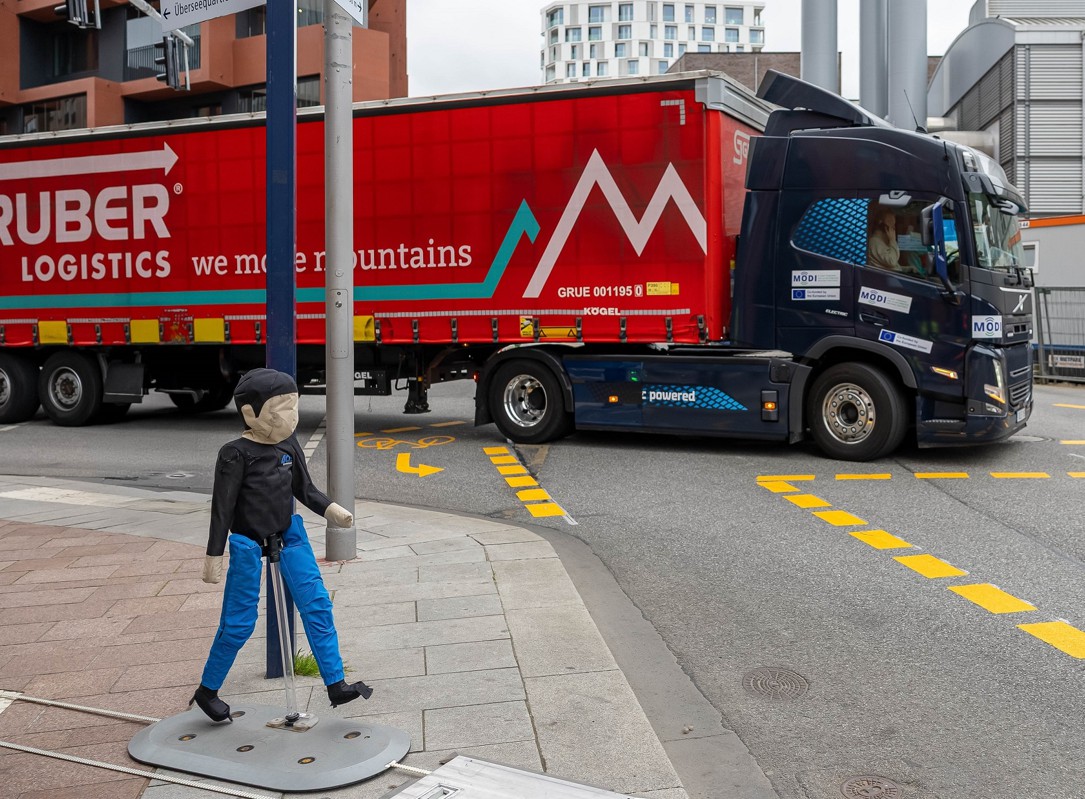
This spring, two central practical tests for the automation of heavy-duty traffic were successfully conducted in the city and highway traffic of Hamburg as part of the EU project MODI. The project partners Gruber Logistics, DAF Trucks, Volvo Trucks, New Mobility Solutions, and BAST (Federal Highway Research Institute) tested two crucial use cases in May with the participation of the Free and Hanseatic City of Hamburg: the safe, automated merging of trucks in highway traffic and the reliable detection of vulnerable road users in urban environments.
(Hamburg) MODI is a European innovation initiative that brings together 34 partners from industry and research. With a total budget of around 28 million euros, the project aims to demonstrate automated heavy-duty transport along a real traffic corridor across five European countries. In addition to technological aspects, the safe integration into existing infrastructures, environmental and safety issues, as well as legal frameworks are also at the forefront.
“The increasingly critical driver shortage forces the industry to rethink. We need to deploy these professionals where their experience is strategically necessary – for simple, monotonous tasks, the technology already exists. The automated driving functions and infrastructure technology not only enhance safety for our drivers but for all road users, not least pedestrians,” explains Martin Gruber, Managing Director of Gruber Logistics, the perspective of the logistics project partner.
Thanks to the close cooperation with Hamburg’s authorities and the responsible traffic agencies, the testing could be conducted in a real road environment – a fundamental prerequisite for the practical further development of automated driving functions. In the test scenarios that started in early May, an automated lane change maneuver in public highway traffic was successfully demonstrated. Using the “Cooperative Merging” function developed by Volvo, the participating vehicles exchanged information in real-time and shared intelligent IT interfaces at construction sites to safely navigate the obstacles installed for the test. Thus, merging into flowing traffic or navigating at construction sites was tested.
On the other hand, the integration into urban infrastructure, in so-called “smart streets,” was tested: At a central traffic junction in Hamburg, a novel detection system was used that detects vulnerable road users such as pedestrians and cyclists from up to 300 meters away. Movement patterns were analyzed and transmitted in real-time to approaching trucks, which themselves have a limited perception radius. To realistically simulate critical situations in the blind spot, child crash test dummies were also used. This is intended to ensure additional safety.
Adjusting Speed Anticipatorily
At the same time, the project partners tested the use of cooperative traffic light data. Through so-called “Time-to-Green” information, the trucks could adjust their speed in anticipation to pass traffic light phases without stopping as much as possible. At the same time, the infrastructure responded dynamically to traffic volumes: The traffic light phases were adjusted to flexibly respond to the expected arrival times of the vehicles. This mutual communication between vehicle and infrastructure significantly contributed to optimizing traffic flow, avoiding unnecessary braking maneuvers, and thereby measurably reducing both fuel consumption and resulting emissions.
Photo: © Gruber Logistics