



VNL Logistics Forum Addresses Managing Change
Jun 7, 2025 at 12:48 PM
Smart Warehouses: Answer to Customs-Related Supply Chain Risks
Jun 7, 2025 at 1:30 PM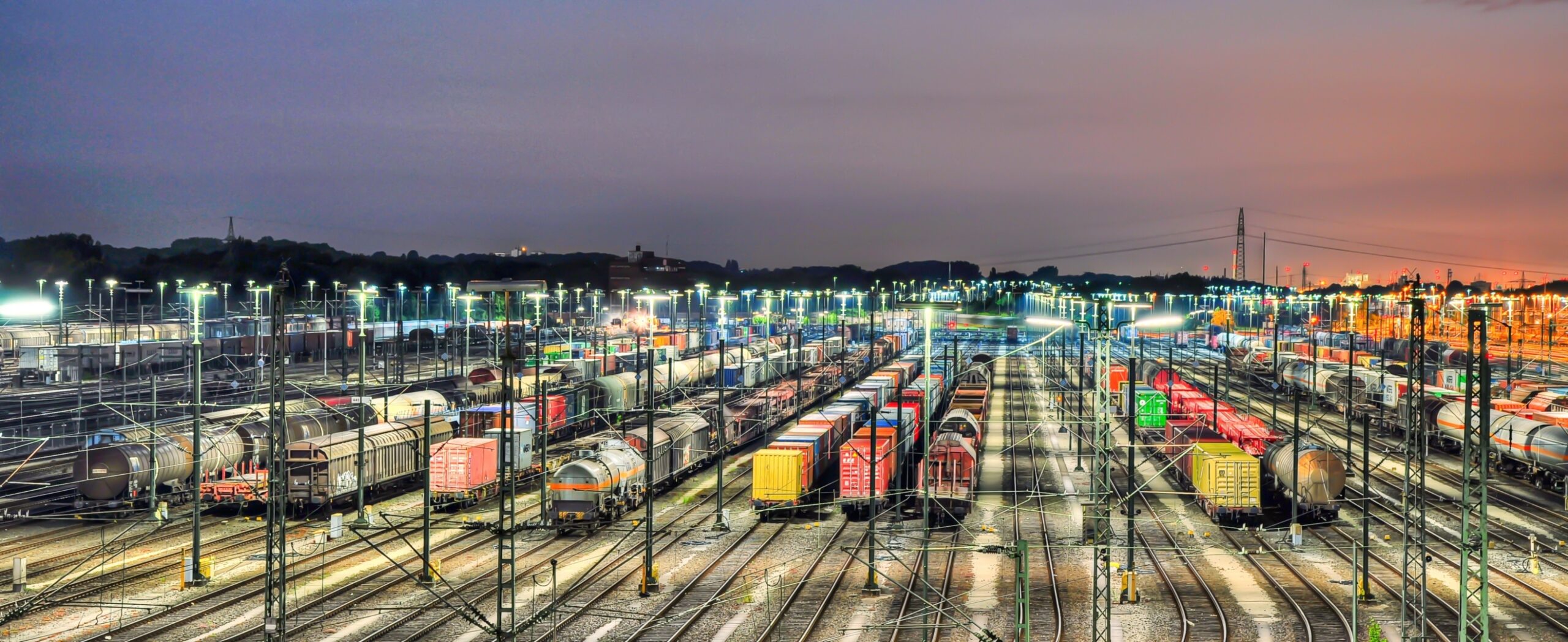
The Institute for Transport Logistics at TU Dortmund has been conducting the research project ‘Rail Disturbance Simulation (RailDisSim)’ in collaboration with the IT service provider catkin since early May, focusing on a simulation-based analysis of the impacts of operational disruptions in combined transport.
(Dortmund) In the discussion about the future design of freight transport, the shift of goods to rail is an important topic due to its advantages in terms of environment, traffic, cost-effectiveness, and safety. However, this transition is stagnating within the EU – not least due to the increasing number of construction sites as part of the urgently needed infrastructure expansion.
In this context, the question arises as to how to ensure that the goods currently transported by rail remain there and do not shift to road transport due to disruptions or uncertainties. This challenge is particularly evident in combined transport (CT), where freight transport occurs through various nodes such as container terminals and across transport modes like road, rail, and water.
Various stakeholders – including shippers, freight forwarders, operators, railway companies, and terminal operators – work closely together to handle transports efficiently. However, when an operational disruption occurs on the rail, a short-term re-planning is necessary. Typically, there are two options: using an alternative rail route or shifting to road transport. In practice, the choice of the better option often fails due to a lack of information exchange among the parties involved.
As a result, road transport is often resorted to, even though a diversion on the rail would be more economically, ecologically, or socially advantageous. Insufficient availability of information complicates informed decision-making and can ultimately lead to inefficient and detrimental developments for the entire combined transport sector.
Creating Understanding for Decision-Makers’ Behavior
In the first step of the project, an understanding of decision-makers’ behavior in dealing with operational disruptions will be established. To this end, the factors influencing the choice of diversion and thus the mode of transport, such as missing/inadequate information availability, will be identified.
For this purpose, literature reviews and expert interviews will be conducted. This information, along with data from various catkin systems, will serve as the basis for developing a weighted utility function that illustrates the prioritization of influencing factors by decision-makers. The output of the project will be a functional simulation model for traffic diversion that reflects decision-making behavior during operational disruptions.

Three Options for a Diversion
Three options for a diversion will be considered. In addition to using another rail route or shifting to road transport, the diversion can also be selected via another terminal. Finally, practical recommendations for the industry on how to deal with operational disruptions will be derived.
The goal of the project is to develop planning support for decision-makers in choosing the mode of transport in combined transport (CT). The simulation model will include various diversion options, where both the availability of information and different influencing factors can be variably designed and weighted in the decision-making processes. This will create a multitude of simulation scenarios that realistically depict a wide range of potential decisions in rail freight transport and combined transport.
Identification of Optimization Potentials
Through the analysis of these scenarios and the identification of optimization potentials in dealing with operational disruptions, practical solutions for the challenges posed by disruptions in rail freight transport and combined transport will be developed.
Photo: © Loginfo24