

MANSIO and TRAVIS Provide New Swap Areas for Trucks
May 6, 2025 at 6:38 PM
BALM plans 16 weight control stations for trucks in Germany
May 8, 2025 at 12:48 PM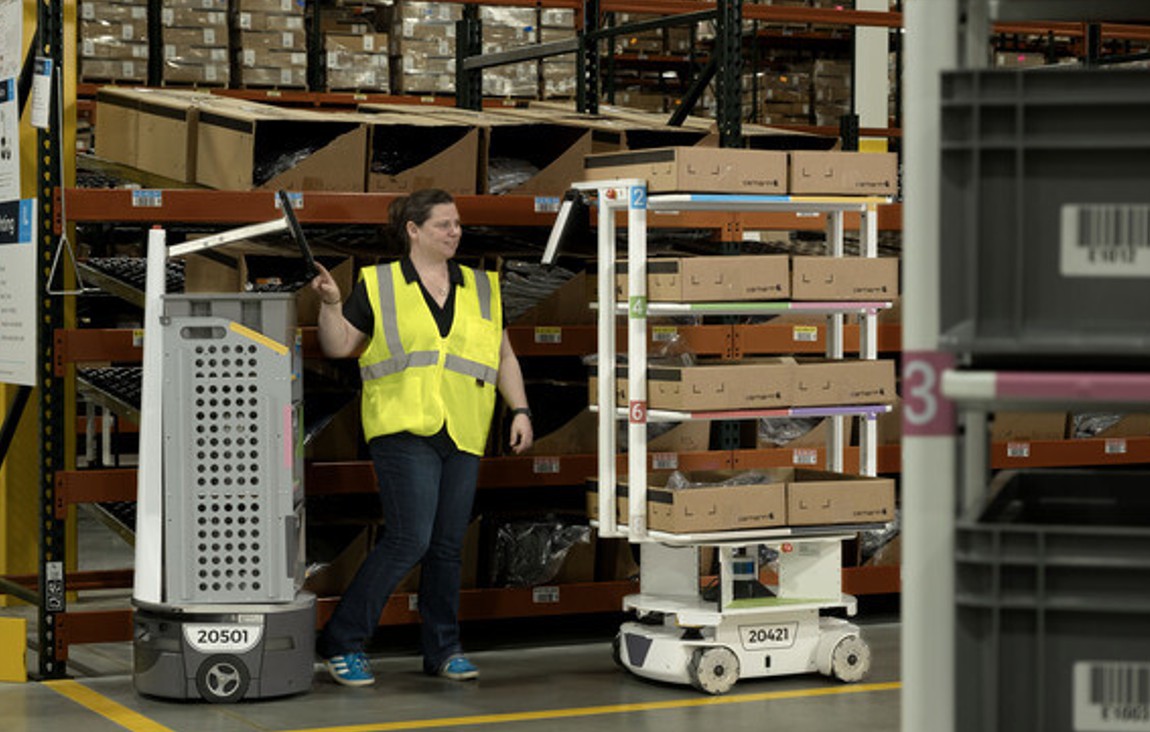
The logistics industry is under immense pressure due to increasing e-commerce volumes, supply chain disruptions, and rising customer demands. The current study “The Warehouse of the Future” by Arup shows that only 8-10 percent of the global warehouse industry is automated, even though autonomous mobile robotic systems could increase productivity by a factor of 2-3.
Therefore, 2025 should become the year of the Smart Warehouse, where modern warehousing cannot do without intelligent automation solutions.
Three reasons why AI and flexible robotics will become the decisive competitive advantage in 2025:
1. Flexible automation creates maximum adaptability
Unlike fixed automation systems, which are difficult to scale down and cannot be relocated, autonomous mobile robots (AMRs) offer maximum adaptability in uncertain times. With this technology, companies no longer need to plan years in advance but can respond to changes as they occur—whether through downsizing, relocating, or new customer requirements.
The Robots-as-a-Service (RaaS) model offers significant advantages:
- Scalability in both directions for seasonal adjustments
- Deployment of robots across multiple locations
- Expansion of the robot fleet in a few days without downtime
- Support for multiple processes in one system (picking, replenishment, returns)
AMR solutions can be implemented within weeks and can be relocated to other sites as needed—a flexibility that is invaluable in the rapidly changing logistics industry.
2. AI has long become the fundamental solution
While many providers use AI as a marketing term, it is the foundation of the entire solution in modern AMR systems. Advanced systems, such as those from Locus Robotics, collect data from thousands of robots across hundreds of locations. Every component is based on artificial intelligence—from self-optimizing navigation to dynamic task assignment.
With thousands of human-robot collaborations, the systems continuously learn and improve their efficiency with each new data collection. The deep integration of AI enables robots to operate autonomously and efficiently in dynamic warehouse environments.
3. Companies can gradually automate processes with AMRs today
Autonomous robotic solutions, such as those from Locus Robotics, set new standards in the automation of warehouse processes. A key advantage: companies do not have to fully automate immediately. The ability to flexibly and gradually implement tailored technologies at the right time is a central argument.
Starting with a small pilot project, companies can quickly recognize the benefits and expand their use based on concrete results. This gradual approach significantly reduces project risk.
“Companies that rely on intelligent automation solutions increase their efficiency while relieving their workforce,” explains Denis Niezgoda, Chief Commercial Officer, International at Locus Robotics. By automating physically demanding tasks, employees can handle a significantly higher volume of orders with a lower risk of failure.
The future belongs to the flexible, data-driven warehouse
The increasing dynamics in the logistics sector require solutions that combine efficiency and flexibility. Smart warehouses combine automation and AI to meet rising market demands. Particularly valuable is the ability to respond quickly to unpredictable developments—whether demand fluctuations or changes within the product range.
Companies that proactively address logistical challenges now will secure significant competitive advantages in the long term. For 2025 will be the year when flexible, intelligent automation becomes the standard.
Geodis increases productivity thanks to Locus Robotics
GEODIS, a leading global logistics provider, has achieved a significant milestone with Locus Robotics technology: At the Carlisle, Pennsylvania site alone, over 10 million units have been picked using the Locus solution. “The Locus solution has not only helped GEODIS increase productivity but also improved workplace ergonomics and employee safety while facilitating work with robotic automation,” explains Rick Faulk, CEO of Locus Robotics. Kevin Stock, Executive Vice President of Engineering at GEODIS, adds: “Warehouse automation brings incredible value to help us manage increased volumes throughout the year.”
Photo: © Locus Robotics / Caption: The LocusBots Origin and Vector are revolutionizing warehouse logistics: While an employee uses the user-friendly AMR technology in the modern warehouse, the flexible robots increase productivity by 2-3 times and enable scalable, AI-driven automation for diverse logistics requirements.
|