


On April 10, Germany will once again celebrate “Logistics Day”
Apr 8, 2025 at 6:32 PM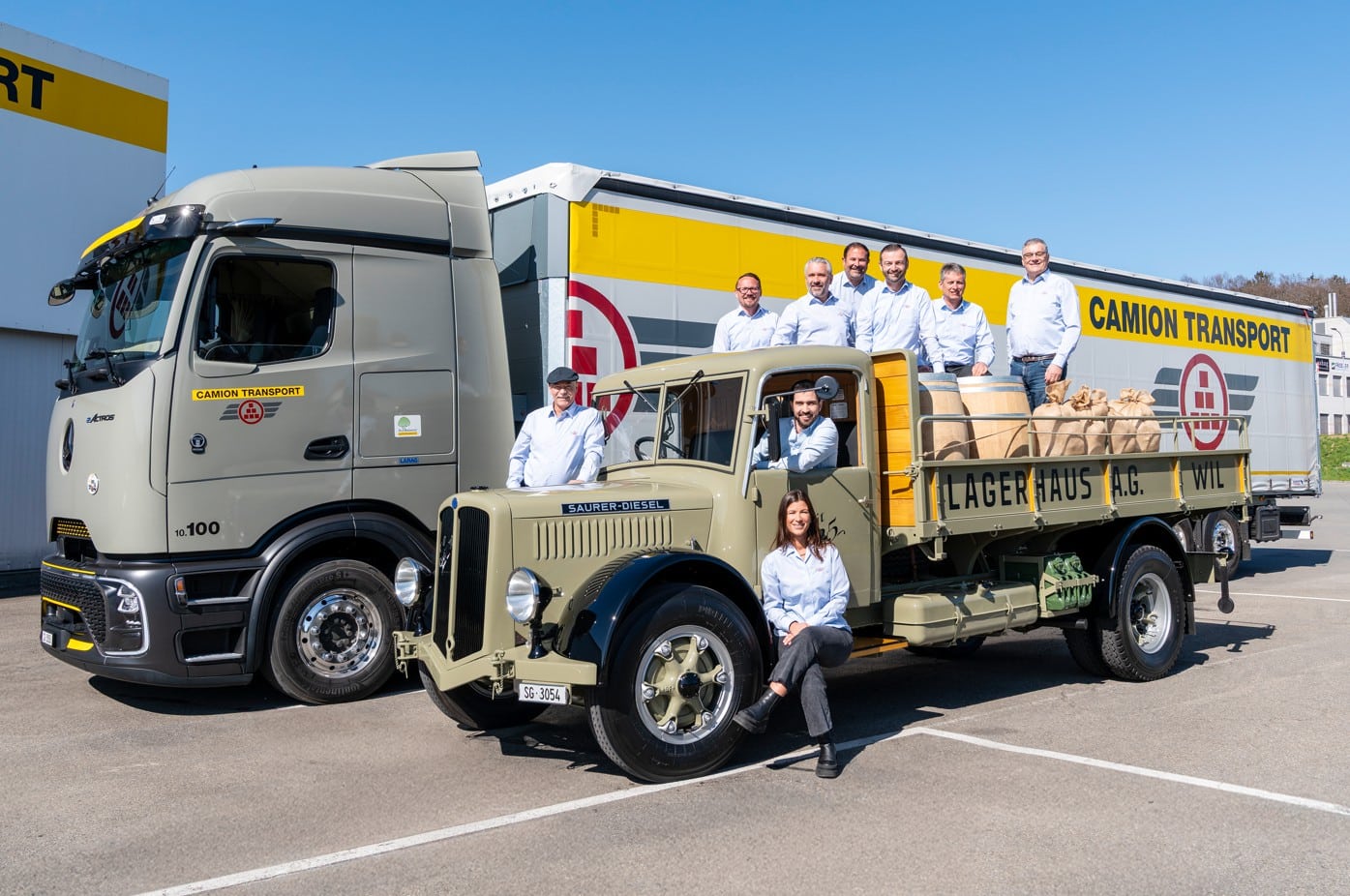
Camion Transport AG Celebrates 100 Years of Success
Apr 8, 2025 at 8:00 PM
Digitalization is steadily advancing in the transport and logistics sector, making processes within the supply chain increasingly transparent and thus more understandable. The latest study “Digital Innovations: What the Transport and Logistics Sector Needs Now” by SOTI found that 80 percent (78 percent globally) of German employees in the T&L sector feel more secure due to the technical traceability of goods for which they are responsible in their work.
(Munich) However, 61 percent perceive the tracking of company devices as an intrusion into their privacy (55 percent globally). More than half (56 percent, 49 percent globally) also stated that they find alerts issued during tracking on their own devices distracting and stressful. Yet, despite all these concerns, 74 percent (66 percent globally) of employees in Germany desire a stronger use of tracking technology – particularly for mobile devices and vehicles. These contradictory statements clearly demonstrate the need for intelligent Enterprise Mobility Management (EMM) technologies that directly address the challenges in this sector and alleviate fears regarding data protection.
Digitalization Level of the Logistics Sector in Germany Takes a Leading Position
The results of the SOTI study further show that German companies are leaders in Europe when it comes to the digitalization of their work processes. The data reveals that 44 percent of companies in Germany regularly use digital printers in their daily work (36 percent globally) and that 40 percent (35 percent globally) rely on digital forms daily. Interestingly, other studies have shown that printers are often neglected when it comes to data security, such as the distribution of current firmware or new Wi-Fi certificates to printers. GPS tracking is also becoming increasingly important: 39 percent of employees in Germany use corresponding technologies, such as digital route planners, several times a week (30 percent globally). In the UK, only 20 percent of respondents indicated this. RFID technologies, which are becoming increasingly crucial for accurate inventory identification and real-time tracking, are particularly widespread in Germany – 57 percent of companies in Germany (46 percent globally) regularly use them. In France, only 32 percent reported this. Wearable scanning solutions like wrist scanners, scan gloves, or barcode scanners are used by 36 percent of T&L employees in Germany weekly (34 percent globally).
Data Protection and Shared Devices as Challenges
While technological progress increases efficiency and transparency, the strict adherence to existing data protection regulations and the handling of shared or lost devices present new challenges for companies in Germany. 60 percent of employees in Germany (58 percent globally) express concern that customer data could fall into the wrong hands when mobile devices are shared. More than two-thirds (68 percent) of respondents in Germany (61 percent globally) also have concerns regarding data security in the event of loss or theft of devices. This shows that companies need to find solutions to ensure control, operational visibility, and improved security features of their device fleet.
Future Perspectives and Need for Action
The results of the study make it clear that while companies in Germany are pioneers in implementing modern technologies, challenges regarding their use still exist. The balance between increasing efficiency and data protection remains a crucial factor. Therefore, companies must increasingly invest in secure and transparent mobile technologies to meet both the needs of employees and regulatory requirements and security regulations.
“The results of our study clearly show that tracking technologies in logistics provide a tangible sense of security – both in terms of goods tracking and the use of vehicles and devices,” emphasizes Stefan Mennecke, VP of Sales, Middle East, Africa & Central, Southern and Eastern Europe at SOTI. “This has an extremely positive effect on both employees and customers. At the same time, it also becomes clear that acceptance can only arise when transparency, data protection, and user-friendliness are in harmony and the data is easy to interpret and use. This is precisely where SOTI focuses with its Enterprise Mobility Management solution. We create a secure and traceable device management system that offers comprehensive control, transparency, and security without overwhelming employees.”
Download the complete T & L study “Digital Innovations: What the Transport and Logistics Sector Needs Now” here
Photo: © SOTI