



EIPL certifies validation of probe calibration at Euroscan
Mar 25, 2025 at 5:43 PM
The Economic Makers Launch Initiative “Big Bang”
Mar 25, 2025 at 6:38 PM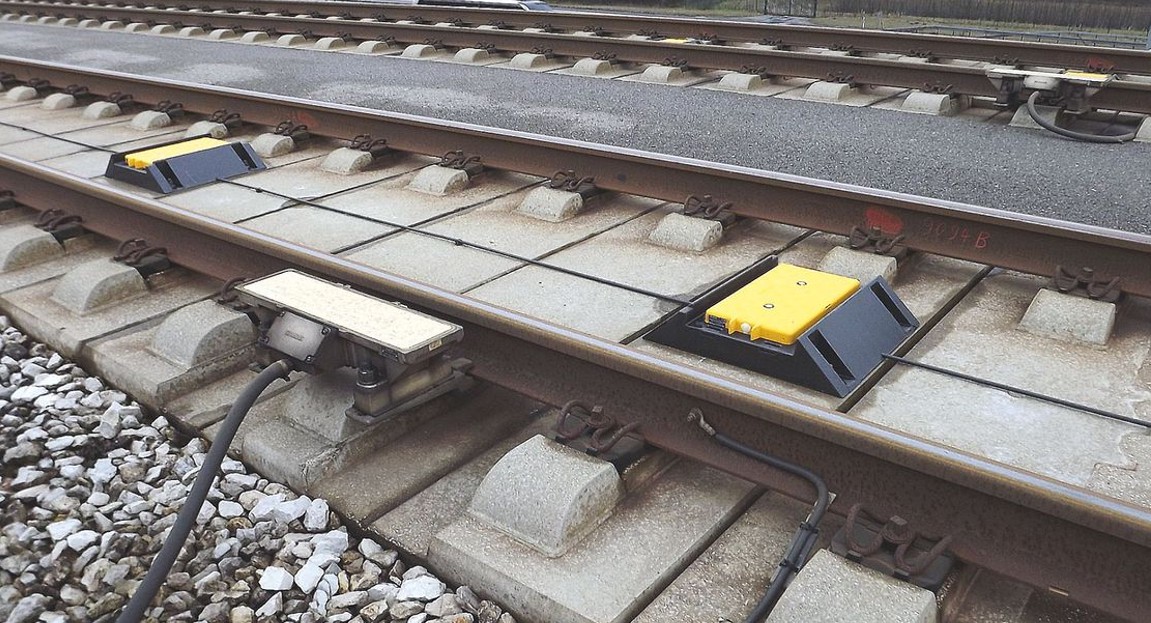
The ETCS (European Train Control System) is one of the most important innovations for the rail system. For a long time, it seemed that the Federal Ministry of Transport would reject an active, coordinating role in the billion-euro implementation process. However, State Secretary Susanne Henckel has now presented a new proposal that could meet the industry’s requirements.
(Berlin) The associations DIE GÜTERBAHNEN, mofair, and the Federal Association of Local Rail Transport (BSN) are currently filled with new hope that the control and safety technology in the German rail network could technologically arrive in the 21st century. For many months, the Ministry of Transport remained silent on the associations’ requests to take strategic leadership in the overdue and EU-mandated migration of the European ETCS system. Now, the BMDV has presented a proposal at the last “Round Table on Rail Freight Transport” on March 3, 2025, which formally meets the requirements. The significant breakthrough is that a jointly coordinated strategy for equipping routes and vehicles is to be the responsibility of the federal government going forward. The coalition of associations particularly welcomes the adoption of the industry’s proposal to organize a control unit in the form of a jointly operated GmbH. Further important steps must now follow: This includes embedding and financing ETCS as part of the special fund for infrastructure and a possible rail infrastructure fund, facilitating conversions to ETCS, and improving the European approval framework. All involved parties must also establish a technical standard for vehicle equipment for the next ten years that is both deliverable and affordable.
Perhaps the long-awaited first step?
Neele Wesseln, Managing Director of DIE GÜTERBAHNEN: “State Secretary Susanne Henckel has signaled that the federal government no longer wants to delegate strategic responsibility to Deutsche Bahn. Perhaps this can be the long-awaited first step to tackle the issue boldly in the new legislative period. We will only succeed in the ETCS rollout if the federal government, infrastructure operators, railway companies, and manufacturers pull together. The federal government must now prioritize adding the corresponding financing to this intention – a plan without money helps no one. For a new Minister of Transport, ETCS can become a winning topic – if the decision-making vacuum at the federal level ends with him or her. We can correct the castles in the air that DB InfraGO has built for a long time with a down-to-earth and binding plan.”
Stronger Involvement of the Federal Government is Welcomed
Dr. Matthias Stoffregen, Managing Director of mofair: “We very much welcome it if the federal government, in the form of the Federal Ministry of Transport, will engage significantly more in content than before. Given the amount of investment and funding required, it must do so anyway. It must always keep an eye on ensuring that taxpayer money is used efficiently. And it alone has the authority to make a final decision based on transparent criteria in case of disagreements about the order of conversions. We need comprehensive digitization of the railway to better utilize existing network capacity and make the system future-proof overall. Financial and substantive commitment from the federal government are a fundamental prerequisite for this.”
Jan Görnemann, Spokesperson for the Management of the Federal Association of Local Rail Transport: “Especially with transport contracts that have very long terms and significant investments from the states in workshops and vehicles for local rail passenger transport, this joint approach is necessary. The competitive schedule of the members of the Federal Association of Local Rail Transport already looks ahead to the year 2042. Contractual commitments over such a long period offer opportunities for targeted expansion but also tie up billions of euros in funds from the states and their task management organizations. We must handle these taxpayer funds responsibly.”
DB InfraGo Can No Longer Decide Alone
The BMDV’s proposal stipulates that DB InfraGO can no longer decide alone which routes will be equipped with ETCS. This is important to avoid “decoupling” railway companies from certain sections of track without discussing it with the industry itself. Conversely, binding commitments must be created to ensure that planned routes are actually equipped in a timely manner – without this certainty, companies would have to fear equipping vehicles with lead times of years or even decades without the corresponding ETCS infrastructure being in place on the routes. This synchronization will be crucial for the coming years and decades so that investments in the digitization of routes and vehicles are made equally and on an equal footing for all users of the federally owned rail infrastructure.
Basic Knowledge of ETCS here
Photo: © DB InfraGo