



Austrian Post Sees Significant Growth in 2024
Mar 9, 2025 at 7:06 PM
Panattoni develops 987,000 m2 in Germany and Austria
Mar 9, 2025 at 7:21 PM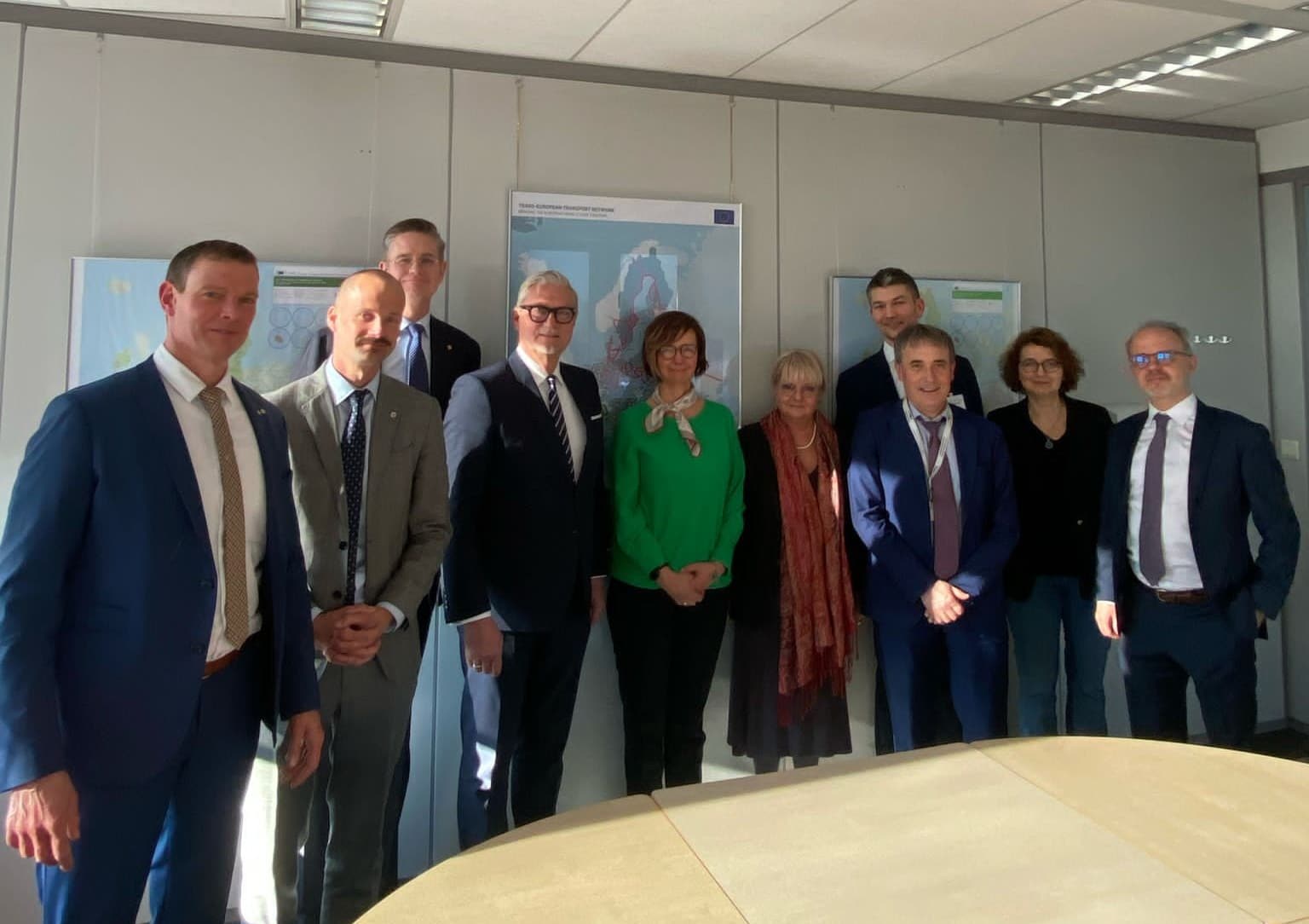
Last week, the heads of the Common Road Transport Office from BGL, FNTR, and NLA met in Brussels with members of the European Parliament, Christophe Grudler (Renew), Marianne Vind (S&D), Asger Christensen (Renew), and subsequently with the Director-General of DG MOVE, Magda Kopczyńska, at the European Commission.
During the meetings, the association leaders Prof. Dr. Dirk Engelhardt (BGL), Florence Berthelot (FNTR), Erik Østergaard (NLA) communicated the following key messages for road freight transport:
-
A more practical approach is required for the drive transition. Several important factors are still missing before the vast majority of road transport companies can invest in zero-emission vehicles. In the short to medium term, technological neutrality must remain a priority, with renewable fuels such as biogas and HVO playing a more significant role. As neither the charging infrastructure nor a sufficient supply of green electricity is available, the associations recommend an early revision of the EU regulations on the CO2 target for new heavy-duty vehicles to give the market time to adapt. For this purpose, road transport companies in particular need increased electricity capacities for operational charging, as well as for industrial areas and transshipment facilities, alongside public charging infrastructure. A special EU investment fund to accelerate the construction of charging infrastructure and mechanisms for stable electricity prices are essential measures that can help us make the green transition a reality.
A competitive European road freight transport sector is closely linked to the efficient enforcement of the Mobility Package regulations. We urge the Commission to closely examine the impact of the European Court of Justice’s repeal of the return obligation for trucks every 8 weeks to see if the mailbox company issue is becoming more pronounced. If this is the case, this rule should be reintroduced. Furthermore, the working conditions of drivers should be closely monitored. EU member states should provide adequate resources for enforcement through more targeted inspections of the Mobility Package regulations.
To counteract the dramatic driver shortage, a more attractive professional profile is required, which includes easier access for drivers to the labor market while ensuring compliance with EU regulations. The ongoing revision of the driving license directive is important to facilitate market access for young drivers. Additionally, a revision of the training directive for professional drivers is necessary to update the regulations and make them more relevant for driver training. It is also important to provide retired drivers with the opportunity to work part-time while reducing the bureaucratic burden for companies and drivers.
The association leaders Florence BERTHELOT (FNTR), Erik ØSTERGAARD (NLA), and Prof. Dr. Dirk ENGELHARDT (BGL) stated: “The road freight transport sector is at a crucial moment. Companies are strongly challenged by the economic situation, while Europe is simultaneously facing a long-term growing demand for transport. We therefore welcome the EU’s focus on reducing excessive reporting obligations. Significant investments in the green transition are necessary but are taking place in a very difficult environment. We therefore urge EU member states to invest much more in the expansion of charging infrastructure and the necessary expansion of the electricity grid required to support the electrification of high-voltage stations. Our companies continue to suffer greatly from unfair competitive practices and unnecessarily bureaucratic legislation.
Encouraging Signals from Parliament
Fortunately, we have received some encouraging signals from decision-makers in Parliament and the Commission that our issues regarding the greening of freight transport, the more efficient enforcement to ensure equal competitive conditions, and the reduction of bureaucracy for transport companies have been understood. The recent proposals from the Commission are moving in the right direction. But this is just the beginning. We need steady progress in this legislative term.”
Photo ©: BGL