

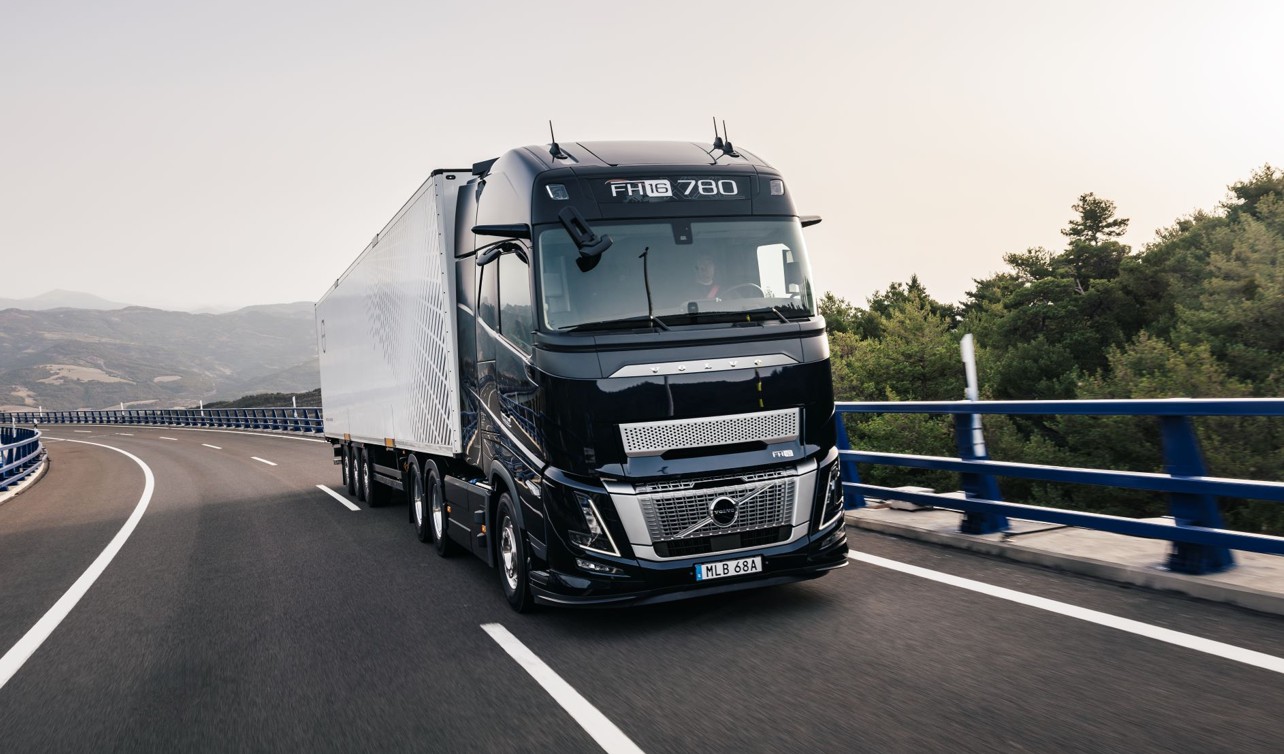
Volvo Trucks Becomes Market Leader in Europe for Trucks Over 16 Tons
Feb 22, 2025 at 5:52 PM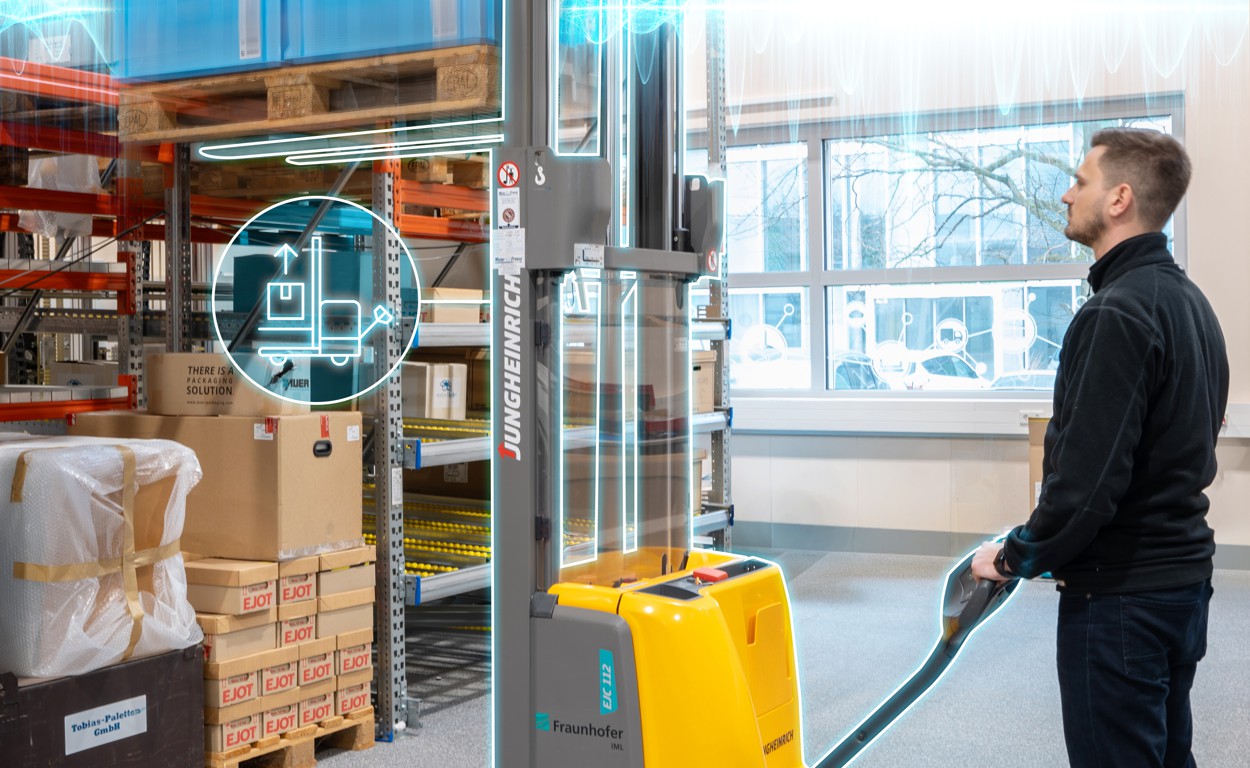
Fraunhofer IML presents results for “thinking pallet”
Feb 22, 2025 at 6:31 PM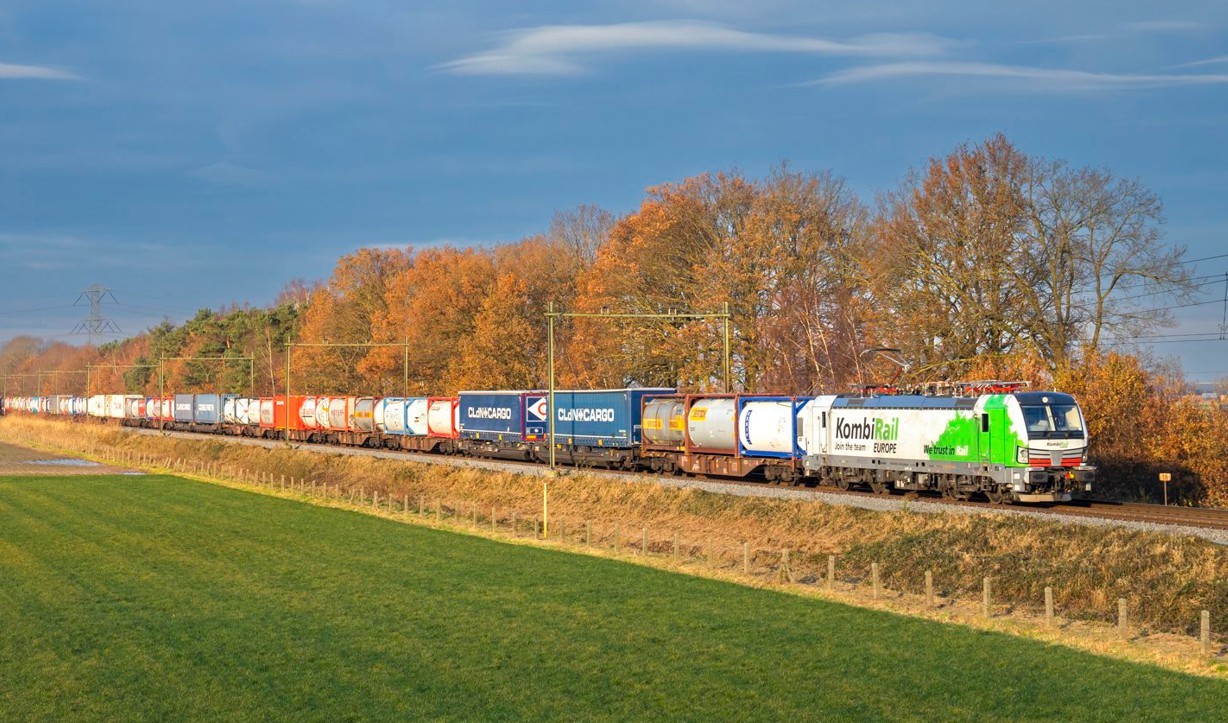
The Kombiverkehr KG has successfully completed the traction conversion project in just about half a year. At the shareholders’ meeting in June 2024, the company announced that due to an EU procedure against the Federal Republic of Germany as the owner of DB Cargo, it would reorganize the traction services purchased and transfer a large part of the traffic to other railway companies (EVU).
(Frankfurt) As of February, the Frankfurt operator, with the combined efforts of all EVUs and its own workforce, has mastered and completed this task. The conversion of the traffic in a short time was a complex undertaking. “It was about the overall handling of the traffic – from traction to wagons and order processing to the interplay in international business,” reports Managing Director Armin Riedl. The wagon management in this certainly unique project in rail freight transport was taken over by its own subsidiary, the Service Company for Intermodal Transport (DIV).
Large Service Packages with Predominantly Long-Term Partners
The alternative railway companies are mostly long-term established partners. However, new ones have also joined. Particularly large service packages are now the responsibility of four freight railways that have been partially associated with the company for a long time. These include, on the one hand, the 100% subsidiary KombiRail Europe B.V. and, on the other hand, the Munich-based Lokomotion GmbH, in which the Frankfurt operator holds a 20% stake. KombiRail Europe now handles all national traffic, the continental traffic between Germany and the Netherlands, as well as between Duisburg and Poznan. “Such a ramp-up curve within such a short time has probably never been managed by a railway company before,” assesses Managing Director colleague Heiko Krebs. It was necessary to build up the organization at KombiRail Europe accordingly, rent additional locomotives, hire locomotive drivers, and adapt the IT systems.
Lokomotion has also taken over additional traffic. New is that the specialist for alpine crossing traffic now operates in a direct contractual relationship with Kombiverkehr instead of previously as an executing carrier for DB Cargo. “We remain closely connected to our founding partner, the freight railway DB Cargo,” emphasizes Riedl. “We are very grateful that we were able to agree on early handover dates in proven close and cooperative coordination with them. Only this made a ramp-up in the traction conversion feasible, instead of switching the entire package of connections in a rush on just one day at the timetable change. DB Cargo has thus played a significant role in the successful transformation and remains an important partner in our network.” In the traffic to France and Spain, as well as for two train products to Sweden and one to Italy, Kombiverkehr continues to source traction services from DB Cargo.
The fourth traction company in the group is SBB Cargo International. They operate on behalf of Kombiverkehr from Mortara to Duisburg, Rotterdam, and Ghent. For the first time, trains are running on the Mortara–Ghent route on the French side. “This gives us a powerful and reliable alternative to the Rhine Valley route,” says Krebs, highlighting another advantage of the reorganization. This makes rail freight transport overall more resilient, as further disruptions and impairments cannot be ruled out in the coming years on the German Rhine side due to construction sites. In addition to the mentioned services, the company from Switzerland operates trains from Antwerp to Duisburg and Cologne to Basel.
Collaboration with 18 Freight Railways
After the traction conversion, 18 railway companies are partners of Kombiverkehr. Eleven of them are direct contractual partners – so-called contractual carriers – who in turn commission seven other EVUs for service provision as executing carriers. New additions to the intermodal network include, for example, the freight railway from Vienna or Hector Rail from Bochum. In total, Kombiverkehr switched partners on around 35 routes. Immediately after presenting the plans in June 2024, implementation began, and one route after another was transferred to new partners.
The pace was particularly high for the timetable change on December 15. “A dozen traffic routes were handed over to new operators. On axes with particularly high transport volumes, we offer between three and five departures per week and direction, and on the Duisburg–Lübeck route, there are even eleven departures. If you multiply the affected connections by the number of weekly departures, you get a rough idea of how many trains are now operating under new management. It’s several hundred per week,” summarizes Krebs. KombiRail Europe alone now handles more than 60 additional round trips on behalf of Kombiverkehr. This means that the traction conversion was also a significant challenge for the partners. In August 2024, KombiRail Europe took over the first additional connections for Kombiverkehr with the routes Hamburg–Cologne and Hamburg–Ludwigshafen.
Special Challenges for the Subsidiaries as Well
Not only for Kombiverkehr but also for the involved partners, the traction conversion was a major task. Two examples from the 100% subsidiaries illustrate this:
Example KombiRail Europe: The company first had to create the necessary personnel resources – in times of skilled labor shortages, this was anything but a given. “Establishing the necessary foundation in the organization was a challenge,” emphasizes KombiRail Europe Managing Director Gerd Wehland. Within just two quarters, it was possible to triple the number of dispatchers on 24/7 duty to 16 and increase the number of locomotive drivers to over 40. Thus, the number of employees has now reached three digits, as there are currently an additional 16 wagon masters and 33 experts in administration, safety management, and train service planning. Two employees from resource management have their workplace in the transport monitoring of Kombiverkehr and work hand in hand with colleagues from the parent company to ensure short information paths and the best possible process security during the traction conversion.
Example Service Company for Intermodal Transport (DIV): The specialty of Kombiverkehr’s subsidiary is fleet management and wagon maintenance with all associated certifications. Until now, Kombiverkehr purchased the wagons, including wagon management, with traction as a complete package. Now, the operator has significantly moved away from this concept and rents the wagons at its own risk. Thus, the DIV manages a large fleet of wagons and ensures their efficient use in the trains. “We had to procure the special equipment on the market in the shortest time and deploy it just in time to the corresponding routes,” describes DIV Managing Director Daniel Jähn the most fundamental task of the last weeks and months. “This was a unique task for the entire team of employees.” To illustrate the dimensions: It involves a pool of more than 1,600 wagons, which will be managed independently from the beginning of 2025.
EU Commission Procedure as a Trigger
The reorganization of the traffic was, from Kombiverkehr’s perspective, unavoidable due to existing uncertainties about the continued possibility of collaboration with DB Cargo in the intermodal block train business. The background for this decision was a procedure by the EU Commission against the Federal Republic of Germany. “If we had not acted decisively, the consequences for our customers would have been unpredictable. There was a risk that we could no longer offer train services from one day to the next. We did not want to take that risk,” says Riedl. “Intermodal customers need security and do not want to experience unpleasant surprises. In traction, we had to reinvent ourselves,” adds Krebs.
More information on the Kombiverkehr website under the Homestory section
Photo: © Kombiverkehr