


Mosolf Establishes Joint Venture for Automotive Logistics in Saudi Arabia
Feb 13, 2025 at 8:19 PM
Dachser Expands Research Partnership with Fraunhofer
Feb 13, 2025 at 9:04 PM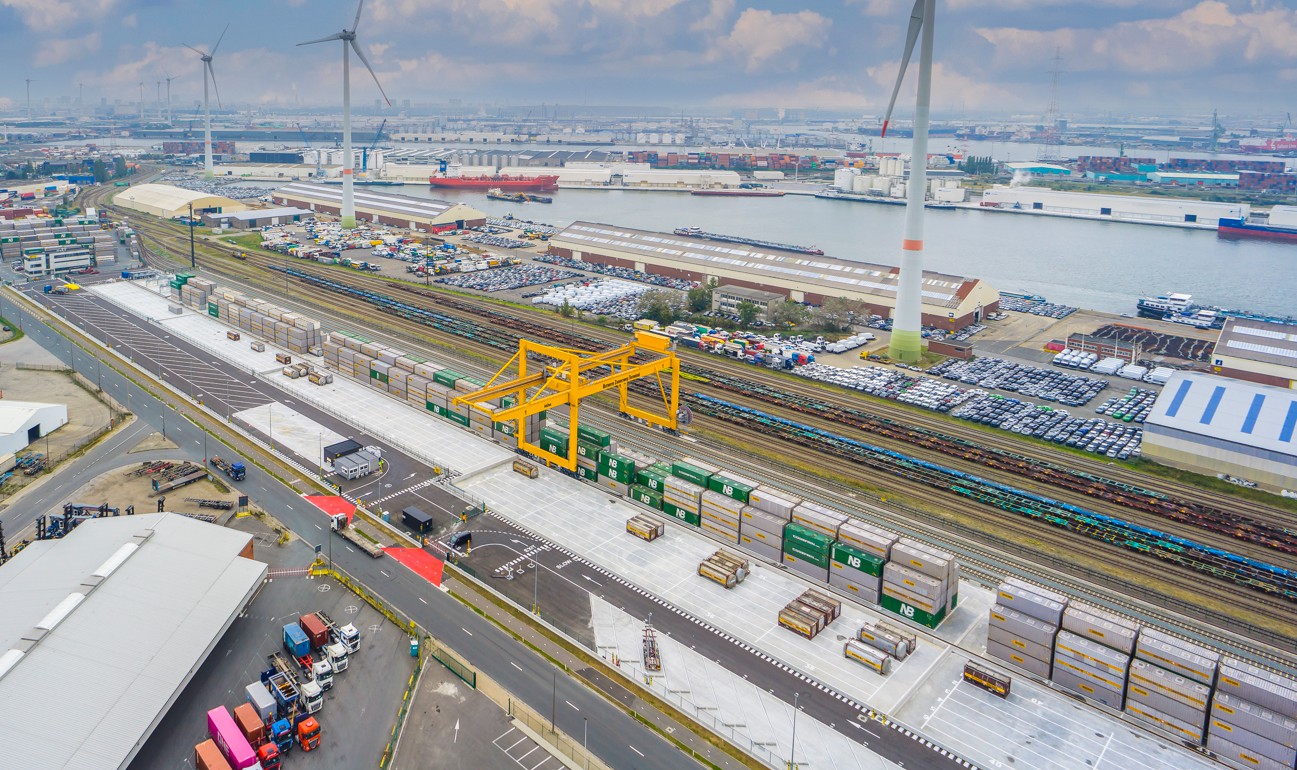
The Bertschi Group achieved a revenue of CHF 1.01 billion in 2024, corresponding to a revenue growth of five percent. Last year, significant investments of CHF 90 million were made in global expansion, the construction of new multimodal logistics infrastructures in the two major European ports of Antwerp and Rotterdam, as well as in digitization. Overall, the Bertschi Group achieved a positive financial result – albeit at a significantly lower level than in previous years.
(Dürrenäsch) In Europe, the chemical industry faced weak demand in key sectors such as construction and the automotive industry, along with persistently high energy costs in 2024. This has contributed to Europe continuing its shift from a net exporter to a net importer of chemical products, significantly altering supply chain dynamics. “Chemical production in the major European markets has declined significantly over the past two years. By 2024, a considerable number of final plant closures have been announced. Thanks to our global presence, we were able to offer our customers flexible and cost-effective door-to-door solutions from globally diversified sourcing points to the European consumer markets,” said Hans-Jörg Bertschi, Chairman of the Board of Bertschi.
Infrastructure and Market Expansion in Europe and Asia
Bertschi has made significant progress in dynamically aligning with the new needs of the rapidly changing global logistics of the chemical industry. The newly built Antwerp Zomerweg terminal, which opened in August 2024, has become a powerful hub for chemical imports from overseas to Europe. The 60,000 m² terminal is strategically located in Europe’s largest integrated chemical production cluster and focuses on the storage of hazardous goods (DG) and non-hazardous goods in isotanks, as well as trimodal services by rail, inland waterway, and truck. Equipped with state-of-the-art storage, heating, and multimodal transport solutions, the terminal was designed with sustainable global supply chains in mind, integrating energy-efficient processes and shifting transport from road to rail and waterways.
Additional Storage Capacity in Rotterdam
In addition to these investments, the significantly expanded Bertschi facilities in Rotterdam-Botlek now offer an additional storage capacity of 30,000 tons of DG and non-DG products in isotanks, integrated rail and inland shipping connections, as well as improved operational efficiency. The substantial infrastructure investments in isotank farms in the two leading European seaports support the shift of chemical imports to Europe from barrels and tankers to isotanks. This replaces traditional warehouses and storage tanks with the more flexible, sustainable, and cost-effective storage of specialty chemicals in tank containers.
In Asia, Bertschi has strengthened its presence by opening new branches in Japan and Korea, as well as a strategic alliance in India, alongside its existing global locations for isotank traffic in Shanghai, Tianjin, and Singapore, and supply chain solutions hubs in Singapore and Zhangjiagang (China). A new joint venture in Tokyo with the Japanese partner Uyeno Group and a branch in Seoul were opened in the first half of 2024. Both are already achieving promising results with increasing global ISOtank transport volumes and deepening local customer relationships. Additionally, a strategic partnership with the Samsara Group in India has been successfully launched.
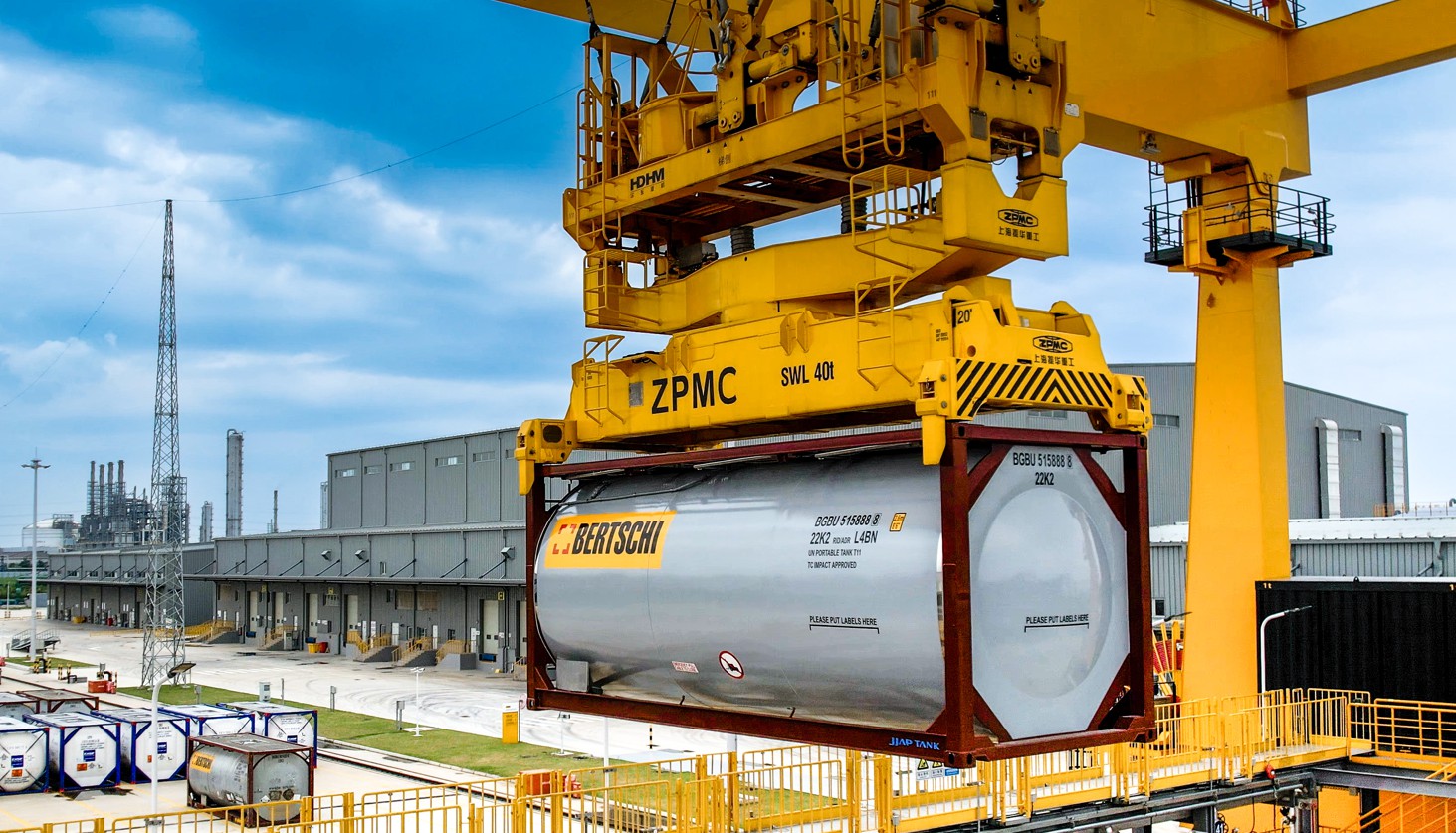 Bertschi location in Zhangjiagang/China
Bertschi is ideally positioned to handle the growing global trade flows for chemical products. Looking ahead to 2025, Bertschi will further expand its presence to support its global growth strategy. With its global isotank and supply chain solutions network, Bertschi can leverage its strengths to position itself successfully with innovative solutions for the rapidly changing goods flows resulting from the new geopolitical situation.
Customer-Oriented Digitization and Promotion of Diversity
Bertschi has significantly improved its customer service through the automation of processes for quote generation, order tracking, and invoicing. This allows teams to focus more on personal customer care, improve service reliability, and strengthen customer relationships.
To improve gender balance in the industry, Bertschi has co-initiated the Women in Logistics (WIL) consortium with 10 partners from the European chemical and chemical logistics industry. The consortium has recognized the measurable benefits of diverse teams for decision-making and operational results. It actively works to increase diversity in companies, particularly at the leadership level. “Women in Logistics is about meaningful change through collaboration beyond competition,” says Hans-Jörg Bertschi. Through joint efforts, targeted measures, and continuous collaboration with other stakeholders, WIL aims to promote equality. Women are to be supported and empowered at all levels of employment.
Focus on Supply Chains of Decarbonized Chemical Products
Bertschi is intensifying its focus on the supply chains and storage of decarbonized chemical products. The company supports the chemical industry’s transition from fossil fuels to recycled and sustainable raw materials, thereby helping its customers achieve the global climate goals of the Paris Agreement.
Through its Bertschi Renewables initiative, the company offers innovative logistics solutions for sustainable chemicals such as SAF (Sustainable Aviation Fuel), HVO (Hydrotreated Vegetable Oil), and pyrolysis oil. These products are crucial for the decarbonization of the industry and the reduction of greenhouse gas emissions. Bertschi offers insetting options such as the use of certified e-trucks and the implementation of a mass balance approach to promote sustainability efforts.
High Intermodal Rate in Europe
With over 90% of European container transport by rail or inland waterway, Bertschi continues to lead the shift from traditional road transport to intermodal solutions, which can reduce CO2 emissions in European distribution by up to 85%. Furthermore, emissions in the supply chain are further reduced through the gradual introduction of HVO and electric trucks for the first and last mile in the pre- and post-haulage to rail transport.
“These initiatives build on Bertschi’s history in intermodal transport, which combines rail, shipping, and road transport to reduce dependence on emissions-intensive road logistics,” says Jan Arnet, CEO of the group. He points out that the company celebrated its 60th anniversary in 2024 as a pioneer of intermodal transport in Europe, recalling the shift of chemical tank transport from Germany to Italy initiated by the company founder Hans Bertschi.
Optimistic Outlook Despite Geopolitical Challenges
The business situation is expected to remain challenging in 2025, influenced by geopolitical and economic developments. The current changes pose risks but also offer opportunities. The group’s global units are working to position themselves to benefit from the anticipated geopolitical fragmentation. They are focusing their growth on so-called “bridge states,” which, due to their position between major economic powers, have good prospects for gaining economic advantages in the new world situation.
China is expected to continue its strategy of exporting chemical products to global markets. With its increased presence in Asia, Bertschi is able to offer robust intra-Asian isotank logistics and serve customers in these markets with comprehensive solutions. The United States, with its favorable raw material costs, remains a focus of Bertschi’s strategic development. As trade between the USA and China could be further disrupted by import tariffs, Bertschi is prepared to offer competitive door-to-door solutions to and from “bridge states.” The global integration of sea and land transport ensures efficient route and warehouse management, reducing the need for expensive safety stocks in target markets.
In Europe, numerous announced closures of chemical plants due to non-competitive energy costs are expected throughout 2025. To offset the anticipated transport losses, Bertschi will focus more on handling chemical imports, which are expected to increase significantly. The multimodal storage and transport infrastructures in Antwerp and Rotterdam, which were significantly expanded in 2024, will support this strategy in conjunction with the dense intermodal rail network from the European ports.
Electric Trucks with Hazardous Goods Approval
Another central theme in 2025 is sustainability. Bertschi aims to strengthen its leading position in sustainable logistics for renewable energies and recycled chemicals. The company plans the next steps towards climate neutrality by 2050. Starting in 2026, electric trucks will be introduced that are approved for the transport of hazardous goods in tank containers on the road in Europe. Bertschi plans to prepare the electric charging infrastructure at a first European location for this new sustainability opportunity by 2026.
Photos: © Bertschi